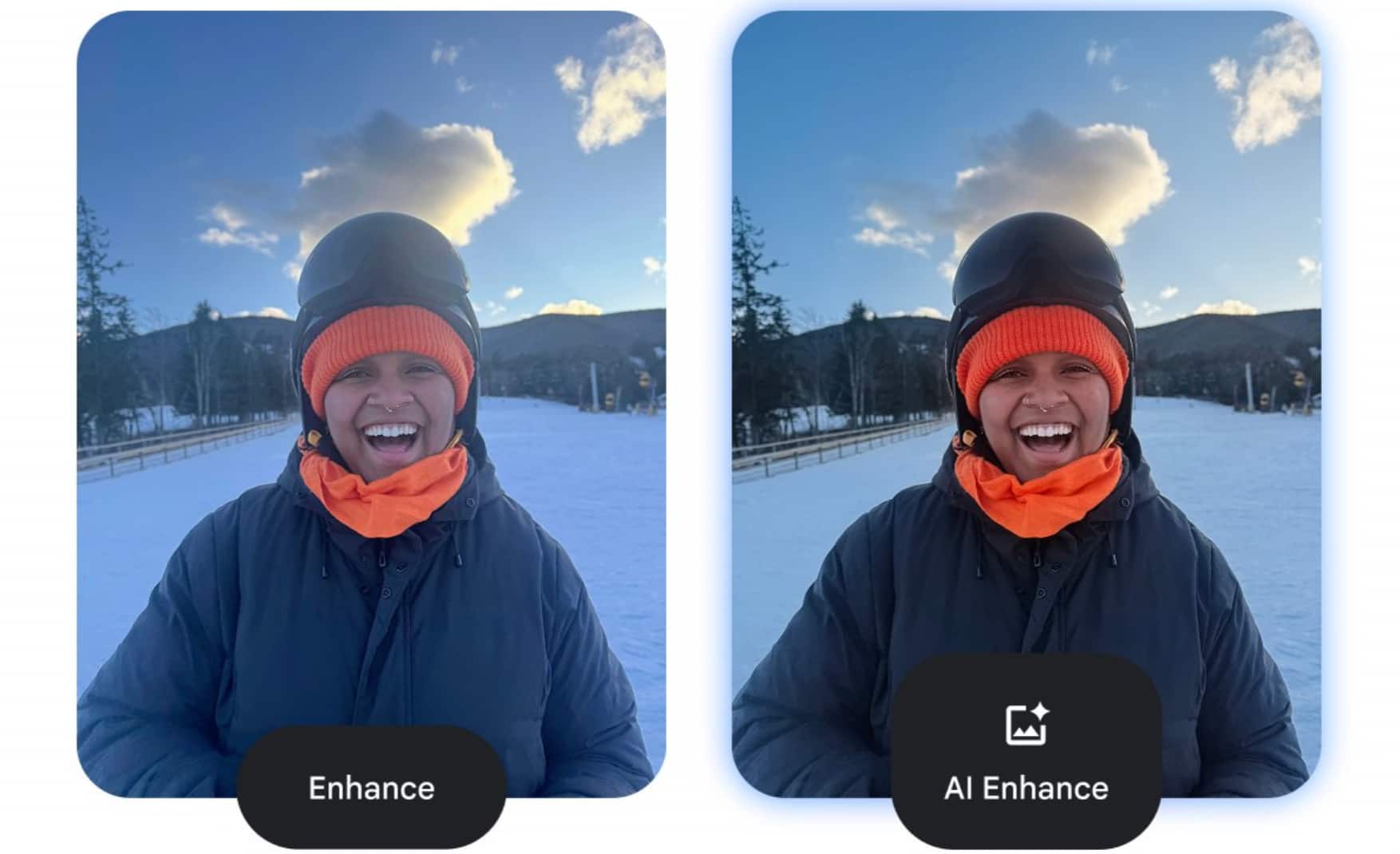
Google Photos has begun a phased global rollout of a new 'AI Enhance' one-tap editing button for Android that automatically adjusts brightness, contrast and color balance. Availability is staggered and depends on device compatibility and eligibility, with output quality tied to hardware and processing support. The feature simplifies basic photo edits and may modestly improve user engagement, but is unlikely to have material near-term financial impact on Alphabet.
This incremental AI photo UX upgrade is a classic platform-defensive move: low immediate revenue but high potential to deepen user engagement and enrich Google’s image understanding models, which feed search relevance and ad targeting. Expect modest but persistent ARPU lift over 6–24 months as better image signals reduce ad waste and marginally increase click-through rates; a 1–3% uplift in ad efficiency would justify material long-term valuation multiple expansion given Google’s scale.
Second-order supply effects favor vendors of on-device AI silicon and image ISP chains — OEMs and chip suppliers that can credibly run advanced models locally stand to gain share in premium Android segments. Conversely, standalone mobile editing apps and some subscription photo SaaS face feature erosion, pressuring churn and pricing power over 12–18 months.
Key risks are operational and regulatory: uneven quality across devices can create negative PR and retention hits, while privacy/IP scrutiny of automated edits could force product changes or compliance costs. Monitor three catalysts over the next 3–12 months — measured DAU/engagement lift in Photos, incremental paid storage or subscriptions, and competitor moves from Apple/Meta/Snap that either neutralize or escalate the arms race — any of which can flip this from a defensible moat to an expensive experiment.
AI-powered research, real-time alerts, and portfolio analytics for institutional investors.
Overall Sentiment
neutral
Sentiment Score
0.05
Ticker Sentiment
