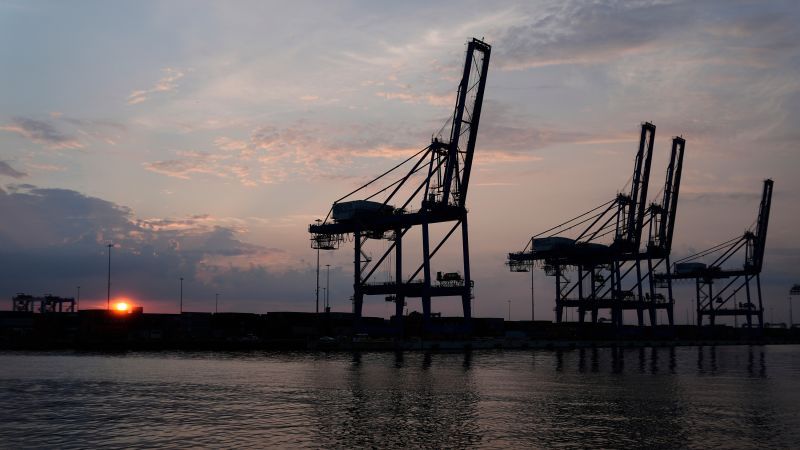
The U.S. is nearing a midnight deadline for countries to finalize trade frameworks, with non-compliance risking significantly higher tariffs. Concurrently, a federal appeals court is hearing arguments challenging the legality of existing tariffs, while President Trump is expected to announce a new 'universal' tariff, potentially raising it from 10% to 20% for most imported goods. These actions underscore escalating trade protectionism, posing substantial cost implications for importers and potential disruption to global supply chains.
The market is facing a significant escalation in trade policy risk, underscored by a high market impact score of 0.75 and a moderately negative sentiment. A looming midnight deadline for trade framework agreements introduces a binary event risk, with non-compliant nations facing the threat of substantially higher tariffs. This is compounded by the expected announcement of a new baseline “universal” tariff, which could potentially double from 10% to as high as 20% on most goods entering the United States, implying significant cost pressures for importers and potential inflationary effects. Furthermore, a concurrent federal appeals court hearing on the legality of existing tariffs adds a layer of legal and policy uncertainty. The outcome of this hearing could either validate or dismantle the current U.S. tariff strategy, making the situation highly unpredictable for global supply chains and companies with international exposure.
AI-powered research, real-time alerts, and portfolio analytics for institutional investors.
Request DemoOverall Sentiment
moderately negative
Sentiment Score
-0.60
