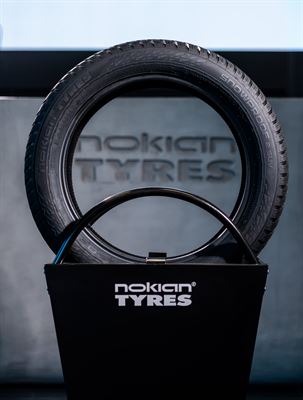
Nokian Tyres' Oradea, Romania plant produced its one-millionth tire of 2025 on Dec. 20, having begun deliveries in March after a September 2024 inauguration; the milestone tire was a Snowproof 2 winter tire. The factory — billed as the world’s first full-scale zero-CO2-emissions tire plant — will ramp toward full completion by ~end-2027 and is expected to represent roughly 40% of Nokian Tyres' total production capacity when finished; the company has over 500 employees in Romania and reported EUR 1.3bn net sales in 2024. Nokian also introduced Seasonproof 2 all-season and Powerproof 2 summer tires for Europe this year, underscoring both product rollout and sustainable manufacturing scale-up that could affect regional supply and ESG positioning.
Market structure: The Oradea plant gives Nokian Tyres (Helsinki-listed) a near-term supply advantage in the premium European passenger tire segment — 1m units in 2025 and a planned scale to ~40% of group capacity by end-2027 implies a 30–50% uplift in EU-sold volume versus 2024 baseline. Direct winners: Nokian, premium OEM-fit suppliers (Pirelli PIRC.MI, Michelin ML.PA) and local logistics/capex service providers; losers: lower-cost importers into Europe and regional second-tier producers facing margin squeeze. Expect limited immediate pricing power because tires remain semi-commoditized, but structural margin improvement possible via ~€5–15/unit energy cost savings if renewable PPAs hold.
Risk assessment: Tail risks include a >20% ramp shortfall, a major quality recall or PPA failure (operational), and a warm-winter demand shock; any of these could push unit costs +10–20% or compress EBITDA by >150–300bps. Time horizons: days (newsflow volatility around quarterly volumes), weeks/months (seasonal winter tire sales and product launches), long-term (2026–2028 capacity realization and margin normalization). Hidden dependencies: renewable energy contract terms, Romanian labor productivity vs. Finnish benchmark, and EU trade/regulatory moves (CBAM-like measures) that could change cost dynamics.
Trade implications: Tactical longs: overweight Nokian Tyres (Helsinki-listed) and Pirelli (PIRC.MI) for 6–18 months to capture premium positioning; pair trade by going long PIRC.MI (1–1.5% portfolio) and short Goodyear (GT) 1–1.5% to express Europe premium vs. US/commodity exposure. Options: buy 12-month call spreads on Nokian (long 25% OTM, short 50% OTM) sized to 0.5–1% portfolio risk ahead of next winter season; trim exposure if reported unit costs rise >10% or winter-tire sales miss by >10% vs consensus.
Contrarian angles: Consensus may underweight capex and working capital drag during ramp — real cash conversion could be negative through 2026 even if headline unit volumes grow. The zero-CO2 branding may not yield price premiums in Euro spot markets; historically Michelin/Continental capacity adds have pressured spot pricing before brand-led recovery. Unintended consequences: internal cannibalization of Finnish/US output or aggressive pricing to fill new capacity could depress regional margins; size positions accordingly and hedge product/commodity risk (rubber, oil derivatives).
AI-powered research, real-time alerts, and portfolio analytics for institutional investors.
Request DemoOverall Sentiment
mildly positive
Sentiment Score
0.35
