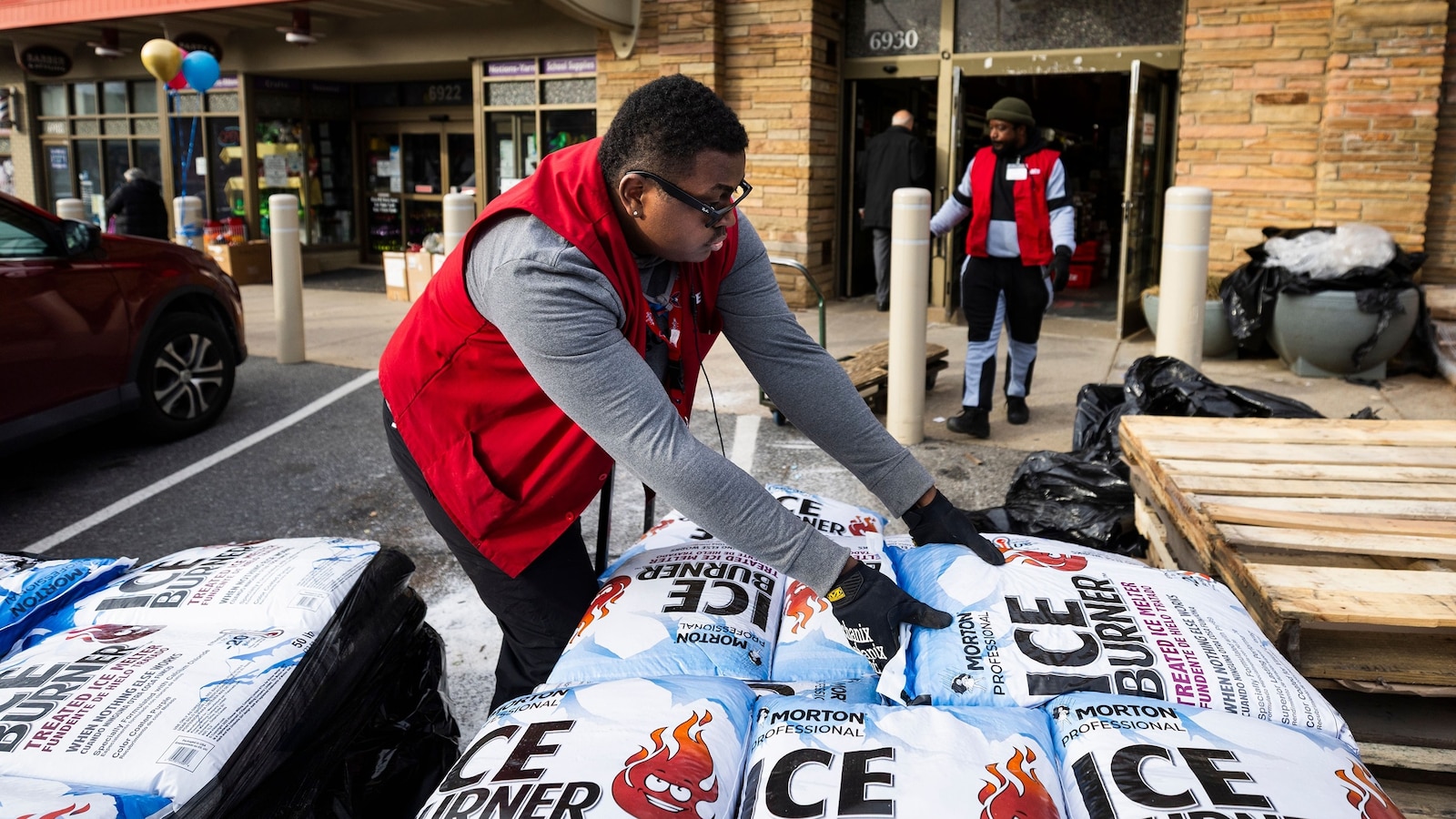
A broad winter storm threatening more than 180 million people will produce heavy snow, widespread icing and travel disruptions from New Mexico to Maine this weekend, with plowable 3–6 inch swaths and pockets of over a foot in the Northeast (New York City forecast 8–12 inches). At least 16 states and Washington, D.C. have declared emergencies, over 2,300 U.S. flights for Saturday were canceled, and FEMA has prepositioned supplies (250,000 meals, 400,000 liters of water, 30 generators) plus incident teams and 28 Urban Search & Rescue squads on standby. The storm’s ice risk (up to ~1 inch locally) threatens extended road paralysis and power outages across the southern grid, creating near-term downside for airline, regional retail, logistics operations and potential localized energy demand/supply stress.
Market structure: Short-term winners are emergency suppliers, portable-generator maker GNRC, select infrastructure contractors (J, ACM) and ground logistics (UPS, FDX) as demand for replacement power, road repairs and freight rerouting spikes; losers are airlines (AAL, DAL, UAL), airport-centric REITs and perishable freight shippers with 48–72 hour revenue hits. Pricing power shifts to spot diesel, trucking and short-term hotel rooms near airports; expect 3–10% temporary uplift in spot diesel and regional hotel rates in affected metros over 1–2 weeks.
Risk assessment: Tail risks include multi-day grid outages (>72 hours) that push natural gas and generator demand far beyond current forecasts and force insurers to allocate >$1bn aggregate claims for large carriers/regions; regulatory risk includes accelerated utility scrutiny and potential capex mandates over quarters. Time horizons: immediate (0–14 days) operational losses and canceled revenue; short-term (1–3 months) insurance and airline earnings hits; long-term (quarters) possible re-rating of infrastructure capex and reinsurance pricing.
Trade implications: Direct actionable plays favor short-dated puts on airlines (AAL/DAL/UAL) and hotel short-term exposure (MAR, HLT) for 1–3 week windows, call spreads on Henry Hub natural gas (NG) or UNG for 2–6 weeks anticipating a 10–30% price move, and tactical long GNRC (Generac) and select contractors (J) for 2–12 weeks to capture post-storm replacement demand. Use pair trades to long UPS vs short airlines (UPS vs AAL) to capture modal shift; size trades to 1–3% portfolio risk per idea and use stop-losses at 6–12% adverse moves.
Contrarian angles: Consensus pain on airlines may be overdone if rapid thaw reduces cancellations — avoid deep OTM shorts longer than two weeks; conversely, generator demand and NG moves are likely underpriced given staged FEMA supplies are finite and local outages localized — a sustained outage scenario (>72 hours) could drive GNRC +30% and NG +25% in 2–6 weeks. Historical parallels (2014 polar vortex) show utilities/capex winners take 3–12 months to fully re-rate, so convertible exposure into equities after volatility calms.
AI-powered research, real-time alerts, and portfolio analytics for institutional investors.
Request DemoOverall Sentiment
moderately negative
Sentiment Score
-0.35
