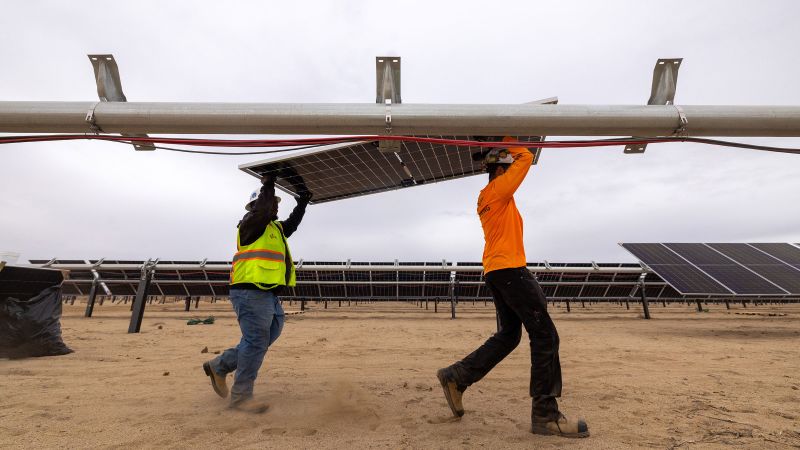
House Republicans are proposing tax legislation that would effectively repeal clean energy provisions of the 2022 Inflation Reduction Act, potentially costing the US over 830,000 jobs, primarily in Republican-held states, and jeopardizing nearly a trillion dollars in private sector investment. Independent analysis suggests the bill would significantly decrease new clean energy development, raise wholesale electricity prices by 50% by 2035, and increase reliance on volatile natural gas, raising concerns among some Republicans about hindering electricity generation needed for the AI boom and economic competition with China.
Proposed House Republican tax legislation threatens to substantially dismantle the clean energy incentives established by the 2022 Inflation Reduction Act, carrying significant economic and sectoral ramifications. According to analysis from Energy Innovation, this policy shift could result in the loss of over 830,000 potential jobs, predominantly in construction and manufacturing related to electric vehicles, wind turbines, solar panels, and batteries, with a disproportionate impact on Republican-led states where nearly 80% of the associated private sector investment—approaching one trillion dollars—is concentrated. The Rhodium Group and MIT corroborate that this bill is functionally equivalent to a full repeal of the IRA's clean energy provisions. This legislative action could not only stymie future projects but also jeopardize existing manufacturing facilities by altering their eligibility for crucial tax credits. Furthermore, Energy Innovation projects a 50% increase in wholesale electricity prices by 2035 due to a 57-72% reduction in new clean energy deployment, as cheaper solar and wind sources are curtailed, leading to greater reliance on more volatile natural gas prices. These developments occur amidst concerns from some Republican lawmakers regarding the US's increasing electricity demands, driven by the AI boom, and the strategic importance of energy independence for global competitiveness, particularly with China. The overall sentiment surrounding this legislative proposal is negative, underscored by a -0.6 sentiment score, reflecting the pessimistic outlook for the clean energy sector if these changes are enacted.
AI-powered research, real-time alerts, and portfolio analytics for institutional investors.
Overall Sentiment
Negative
Sentiment Score
-0.60
Ticker Sentiment
