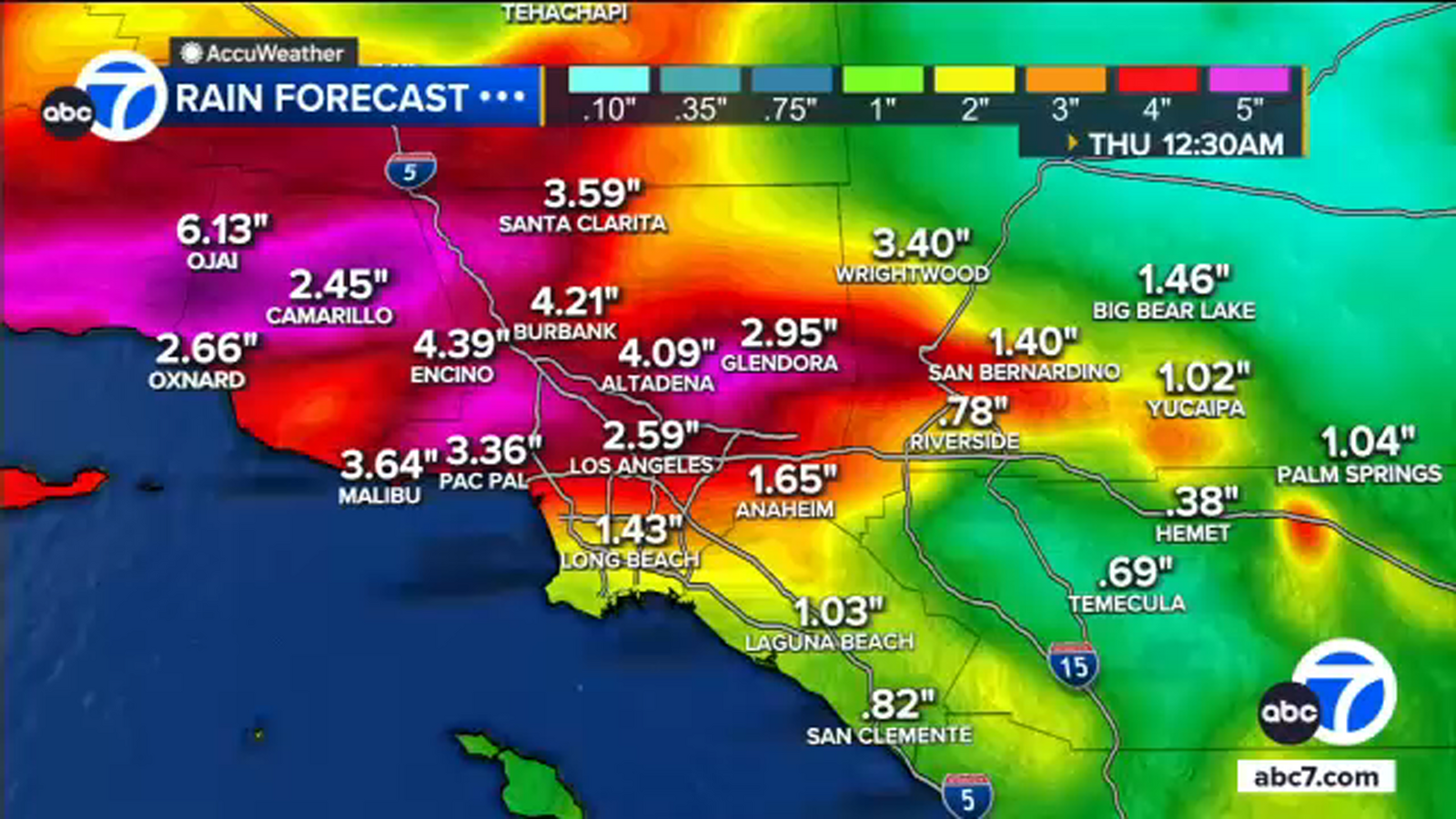
A very large atmospheric river — the 'Pineapple Express' — is forecast to strike Southern California beginning Tuesday afternoon with rain intensifying Tuesday night into Wednesday, raising risks of heavy rainfall, flash flooding and cooler temperatures. The National Weather Service has upgraded parts of Southern California north of Los Angeles (including Burbank, Altadena, Glendale, San Bernardino, Santa Clarita and Thousand Oaks) to a 'high risk' for excessive rainfall on Christmas Eve. Hedge funds should expect potential localized disruptions to retail, travel and logistics, and monitor insurance, utility and transportation-related exposures and any emerging outage or supply-chain impacts.
Market structure: Near-term winners are home-improvement retailers (HD, LOW), construction materials (VMC, MLM) and equipment rental (URI) as emergency purchases and repair cycles drive a 2–12 week demand spike; losers are regional property insurers (TRV, PGR, ALL) and local utilities (EIX) that face claims and outage costs. Pricing power shifts toward specialty contractors and materials suppliers where lead times/availability can push prices +5–15% for shingles, lumber and aggregates over 4–8 weeks. Cross-asset effects: expect a 5–15bp widening in California muni spreads if flood disrupts tax receipts, insurer CDS to cheapen by 10–30bp on headline losses >$1bn, and near-term down-tick in gasoline demand and travel-related equities.
Risk assessment: Tail risks include catastrophic flash flooding creating insured losses >$5bn (10–20% equity hit to regional insurers) or major infrastructure failure triggering federal disaster aid and longer muni credit questions. Immediate (0–7 days): supply-chain and retail foot-traffic disruption; short-term (2–12 weeks): repair-driven revenue boost for HD/LOW, URI; long-term (quarters): insurer reserve increases and higher reinsurance pricing at Jan 1 renewals. Hidden dependency: Jan 1 reinsurance renewals could reprice if losses materialize, amplifying insurer margin effects.
Trade implications: Direct trades favor small, tactical longs in HD/LOW and URI for a 6–12 week repair cycle and targeted short/put exposure on TRV/PGR sized to insured-loss thresholds (e.g., increase shorts if CA insured losses >$1bn). Use options to time volatility: buy 6–12 week call spreads on HD/LOW and 3-month puts on TRV/PGR; hedge utility exposure with 1-month put protection on EIX if outages exceed 48 hours. Entry window: deploy within 24–72 hours; exit on 8–12 week completion of repair cycle or on price moves of ±12–15%.
Contrarian angles: The market may over-penalize insurers because widespread reinsurance and catastrophe models typically absorb first-year storm noise—insurer pullbacks >8% could be buying opportunities into Q1 2026. Conversely, the retail rebound is front-loaded; a rain-driven short-term foot-traffic drop could create a 1–2 week window where HD/LOW underperform before rebounding. Historical parallels (California 2017–2019 storms) show quick recovery in building-material demand within 6–10 weeks, so time the trades to the repair cycle rather than headline volatility.
AI-powered research, real-time alerts, and portfolio analytics for institutional investors.
Request DemoOverall Sentiment
mildly negative
Sentiment Score
-0.25
