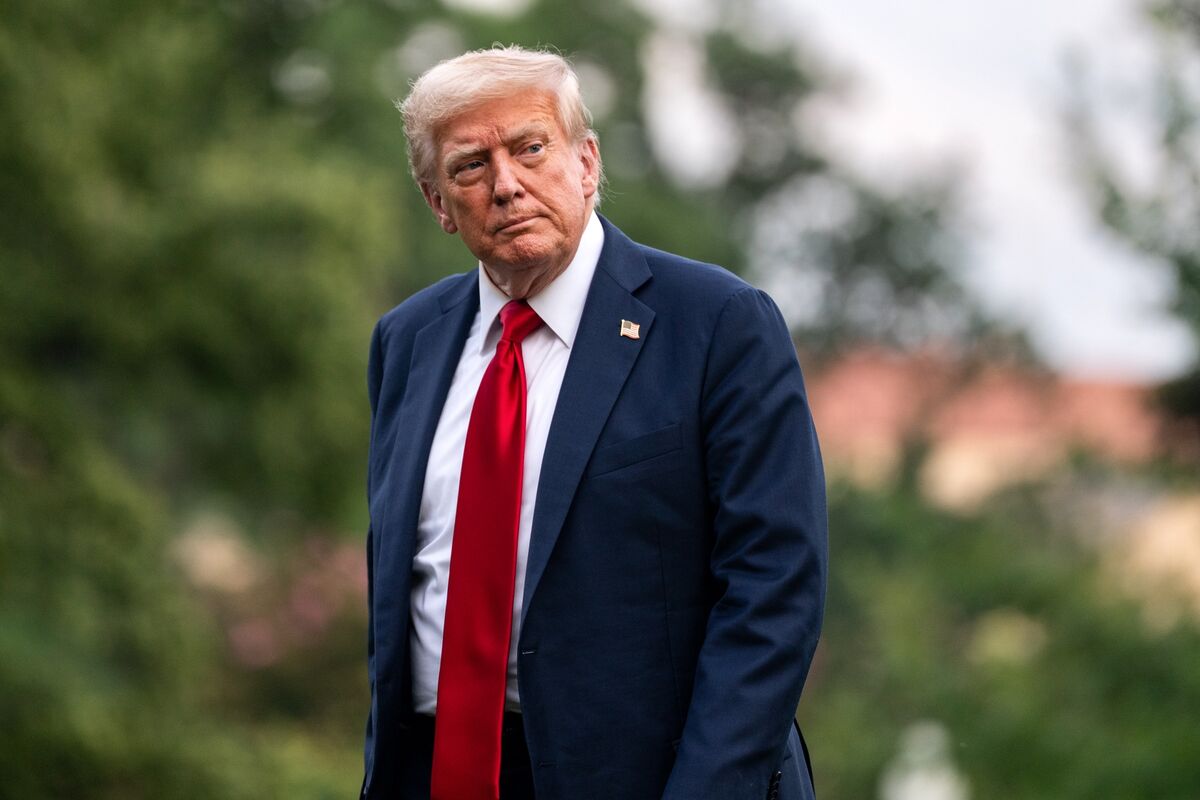
The Financial Times reported that former President Donald Trump, in a July 4 call, asked Ukrainian President Volodymyr Zelenskiy if Ukraine could strike Moscow if provided with U.S. long-range weapons. This query, emerging after Trump pledged new European-funded weapons supplies to Kyiv and threatened severe economic penalties on Russia if the conflict isn't resolved within 50 days, signals a potentially more aggressive and escalatory U.S. foreign policy approach to the Ukraine war.
A Financial Times report detailing a conversation between former President Trump and Ukrainian President Zelenskiy introduces a significant new dimension of geopolitical risk. Trump's alleged query about Ukraine's capability to strike Moscow, coupled with his recent pledge for new European-funded weapons and a 50-day ultimatum for Russia to end the war, signals a potential shift towards a far more aggressive and escalatory U.S. policy. This development, categorized with a strongly negative sentiment score (-0.7) and a high market impact score (0.7), suggests that markets would price in a greater probability of direct conflict escalation under a potential future Trump administration. The threat of 'stiff economic penalties' further amplifies uncertainty, placing a spotlight on the intersection of U.S. domestic politics, sanctions policy, and the stability of global energy and commodity markets.
AI-powered research, real-time alerts, and portfolio analytics for institutional investors.
Request DemoOverall Sentiment
strongly negative
Sentiment Score
-0.70
