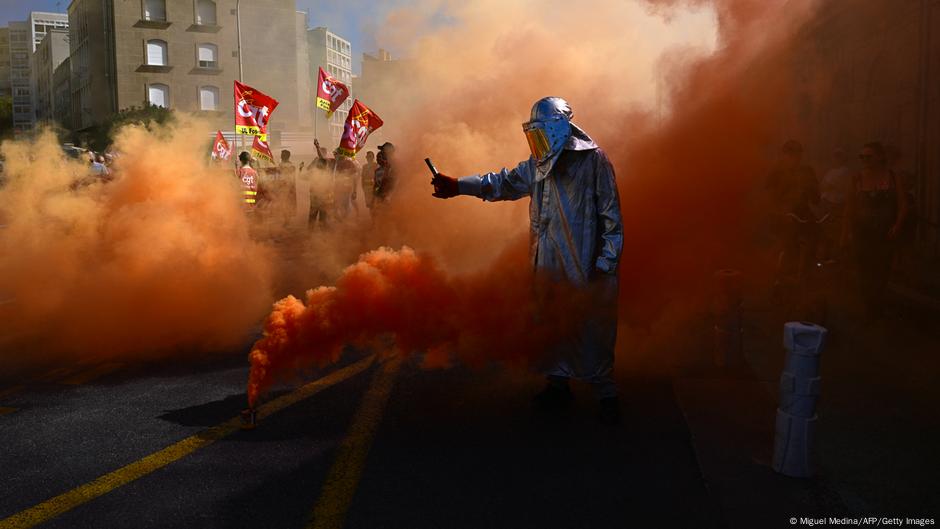
French trade unions initiated widespread protests and transport disruptions on Thursday, challenging President Macron's proposed austerity measures aimed at reducing public spending and the national deficit. These actions, impacting various sectors across France, pose a critical test for newly appointed Prime Minister Sebastien Lecornu, underscoring significant public and parliamentary resistance to fiscal consolidation efforts, particularly after his predecessor was ousted over similar budget-cutting proposals.
Widespread industrial action across France presents a significant challenge to President Macron's fiscal consolidation agenda, creating a climate of heightened political and economic uncertainty. The strikes, targeting critical infrastructure such as the Paris Metro and regional rail, directly disrupt economic activity in the EU's second-largest economy. This event serves as a critical test for the new Prime Minister, Sebastien Lecornu, whose predecessor was ousted for proposing a €44 billion budget cut, highlighting the deep-seated public and parliamentary resistance to austerity. The protests are not an isolated incident but a continuation of public opposition, following the unpopular 2023 pension reform. The government's struggle to reduce a mounting deficit against a backdrop of a 'restive parliament and an even more restless street' signals a high probability of legislative gridlock and sustained social unrest, increasing the risk profile for French assets.
AI-powered research, real-time alerts, and portfolio analytics for institutional investors.
Request DemoOverall Sentiment
strongly negative
Sentiment Score
-0.70
