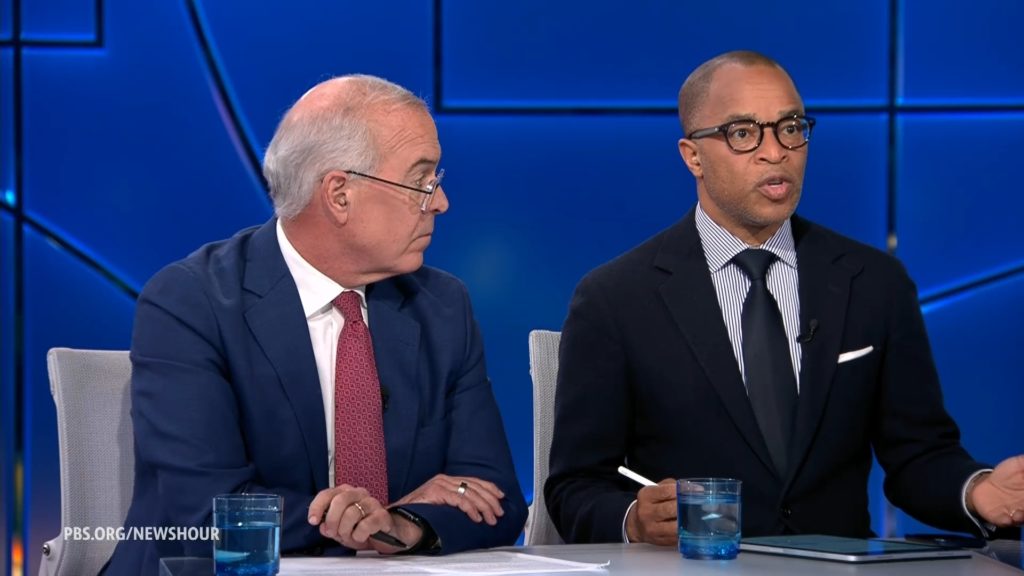
Commentators David Brooks and Jonathan Capehart highlight that President Trump’s remarks at Davos have prompted Western leaders to reassess their relationship with the United States, increasing geopolitical uncertainty. They also note rising domestic tensions following immigration enforcement operations in Minnesota, a development that reinforces political polarization and could weigh on policy stability and investor sentiment.
Market structure: Geopolitical friction from Trump’s Davos remarks and U.S. domestic enforcement escalations favor defense primes, cybersecurity names, and safe-haven assets while pressuring politically sensitive small caps and cross-border supply chains. Expect a 5–10% reallocation into defense/security budgets in Europe/US over 12–24 months if rhetoric persists, improving pricing power for prime contractors but tightening delivery lead times and component inflation.
Risk assessment: Tail risks include a diplomatic rupture or reciprocal trade measures (shock size: 5–15% tariff-equivalent hit) and a sharp regional deposit flight that would stress mid-sized banks (e.g., USB exposure in Minnesota) within days-weeks. Immediate window (0–14 days) is volatility spike; weeks–months see credit spread widening and safe-haven bid; quarters–years could reconfigure supply chains and defense procurement patterns.
Trade implications: Favor long-defense and cyber equities, long-duration Treasuries and gold as asymmetric hedges, and tactical volatility/put protection on regional banks and small caps. Use relative-value pair trades (cyber vs Russell) and short-dated volatility instruments to monetize near-term policy noise while keeping directional exposure modest (1–3% portfolio per idea).
Contrarian angles: The market may underprice export-control and supply constraints that cap upside for primes—so pure long positions are risky absent confirmed EU/NATO procurement commitments. Conversely, a provoked risk-off could overinflate gold and core bonds; watch sovereign yield curve moves (10y<+10bps intraday) as a signal to trim hedges.
AI-powered research, real-time alerts, and portfolio analytics for institutional investors.
Request DemoOverall Sentiment
moderately negative
Sentiment Score
-0.30
Ticker Sentiment
