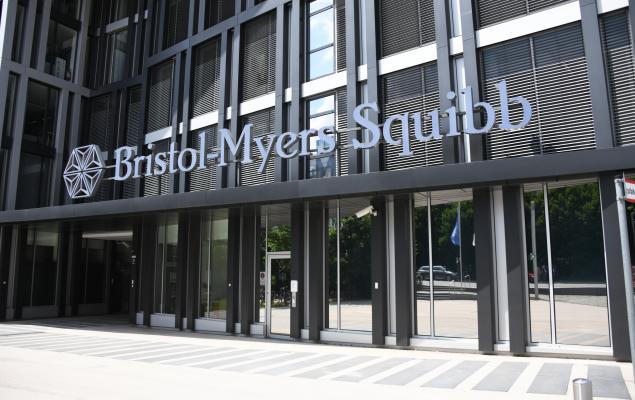
Bristol Myers’ oncology franchise showed momentum in Q3 with Opdivo sales of roughly $2.5 billion (up 7%) and Opdivo Qvantig contributing $67 million after a strong initial uptake and permanent J‑Code. The company raised its 2025 outlook for global Opdivo (with Qvantig) to high single‑digit to low double‑digit growth (from mid‑to‑high single digits), while noting pressure from Merck’s Keytruda and Roche’s Tecentriq and generic erosion of legacy products. Shares are down ~12.9% YTD and the stock trades at a discounted forward P/E of 8.17x versus the large‑cap pharma peer at 17.47x; Zacks consensus 2025 EPS estimates have been revised up recently while 2026 estimates slipped.
Market structure: Opdivo/Qvantig growth (Opdivo ~$2.5bn Q3; Qvantig $67m Q3) shifts incremental share within the PD‑1/PD‑L1 oligopoly toward BMY but does not change the dominance of MRK’s Keytruda or Roche’s Tecentriq. Expect modest pricing pressure in tendered markets and faster uptake in oncology clinics that prefer subcutaneous dosing; net effect is share gains for BMY of low‑single digits over 12–18 months versus peers, not a market‑reordering.
Risk assessment: Tail risks include regulatory setbacks (new label denials or safety signals), payer reimbursement cuts (Medicare policy changes or removal of favorable J‑code), or faster generic erosion of legacy Revlimid/Pomalyst revenues; any of these could knock 15–30% off consensus EPS. Short term (days–weeks) reactions will follow quarterly prints and J‑code developments; medium term (3–9 months) depends on label approvals and 2025 guidance execution; long term (1–3 years) hinges on sustained Opdivo share vs Keytruda and successful offset of legacy cliffs.
Trade implications: Tactical long exposure to BMY to capture re‑rating is sensible given 8.2x forward P/E vs industry 17.5x, but size positions to account for binary clinical/regulatory risk. Use 6–12 month call spreads to lever upside around upcoming label decisions and quarterly beats while pair‑trading vs MRK to neutralize macro/sector moves; reduce exposure if Opdivo growth decelerates below +5% y/y or Qvantig annualized sales < $250m by H2 2025.
Contrarian view: The market understates BMY’s optionality from subcutaneous Qvantig conversion (faster dosing, lower administration cost) which could increase share in IO combinations — a re‑rating catalyst that the consensus (Zacks Rank #3) is underpricing. Conversely, consensus underestimates payer pushback; if payers favor Keytruda on outcomes or negotiations force rebates >15% higher than peers, BMY downside will be amplified.
AI-powered research, real-time alerts, and portfolio analytics for institutional investors.
Request DemoOverall Sentiment
mildly positive
Sentiment Score
0.28
Ticker Sentiment
