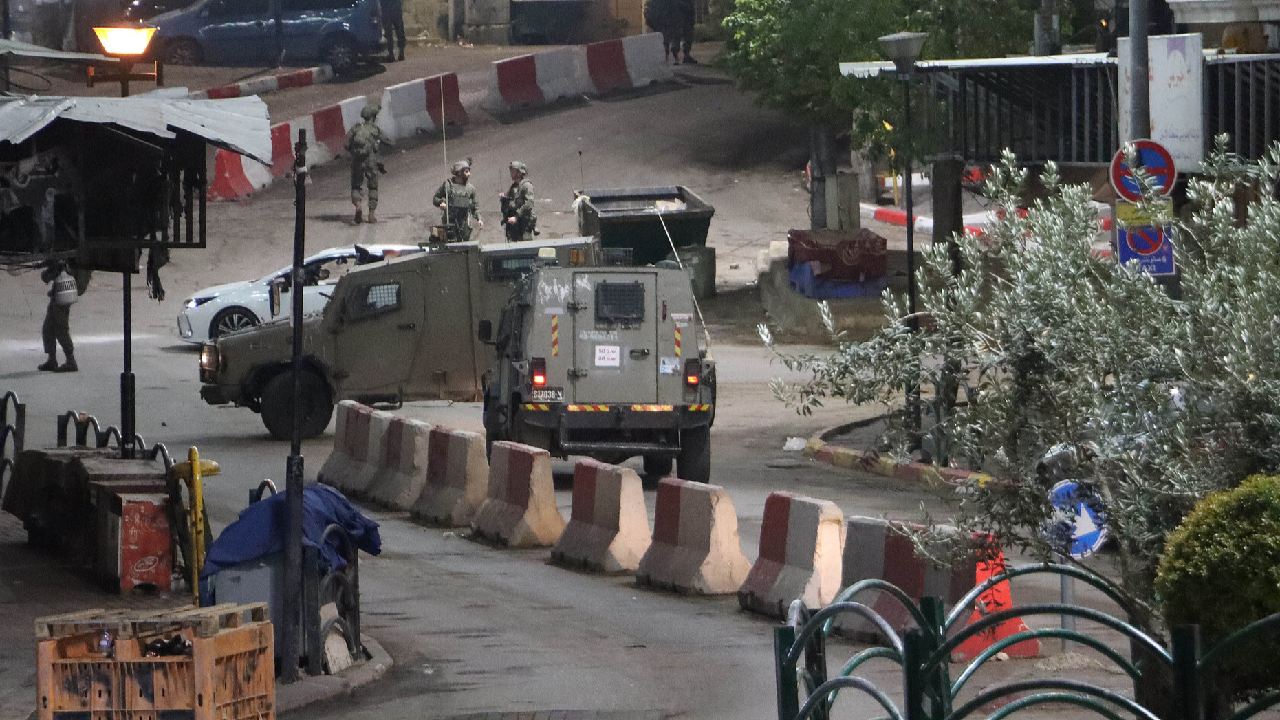
Israeli forces shot and killed two Palestinians in Hebron after the military said a vehicle accelerated toward soldiers at a checkpoint, with one soldier slightly injured; Palestinian sources offer a competing account and allege ambulances were blocked. The incident adds to a broader escalation in the West Bank since Oct. 7, 2023 — Palestinian authorities cite roughly 1,000 deaths, hundreds of injuries and demolition of dozens of homes — raising localized geopolitical risk that may prompt short-term risk-off positioning in regional assets and defense-related exposures.
Market structure: Immediate winners are defense primes (Lockheed LMT, RTX, GD) and classical safe-havens (gold GLD, US Treasuries TLT) as headlines drive a shallow risk-off bid; losers are tourism/airlines (UAL, LUV), Israeli equities (EIS) and regional SMEs exposed to Palestinian/West Bank instability. FX/bonds: expect USD and JPY/CHF strength and a 5–15bp drop in 10y UST yields in a shallow flight-to-quality; oil likely to move modestly (US$1–3/bbl) unless escalation triggers supply fears.
Risk assessment: Tail risks include a low‑probability regional escalation that spikes Brent by US$10–20 and triggers sanctions/shipping disruptions, or a cyberattack on Israeli tech exports disrupting semiconductor supply chains. Time horizons: headline volatility in days, risk-premium shift in weeks (defense order flows) and structural budget impacts in quarters (6–18 months). Hidden dependencies: Israeli tech/semiconductor links to global supply chains and insurance/shipping cost knock‑on effects that can amplify small headline shocks.
Trade implications: Prefer small, asymmetric positions — hedges in the next 1–14 days (short-dated volatility or index protection) and selective 3–12 month exposure to defense primes; tactically reduce travel/tourism and Israel-specific exposures. Use pair trades and options to harvest risk-premium rather than directional macro bets; scale into positions as escalation confirms (e.g., additional size if incidents >2/week or if US forces materially involved).
Contrarian angles: Consensus will likely overreact to individual incidents (market impact score 0.15), so avoid large directional allocations until pattern confirms escalation; history (2014, 2021) shows most spikes mean-revert in 2–8 weeks. Beware that defense equities may already price anticipated spending — prefer relative-value or hedged exposure and cap position sizes to 1–3% each to control event risk.
AI-powered research, real-time alerts, and portfolio analytics for institutional investors.
Request DemoOverall Sentiment
strongly negative
Sentiment Score
-0.60
