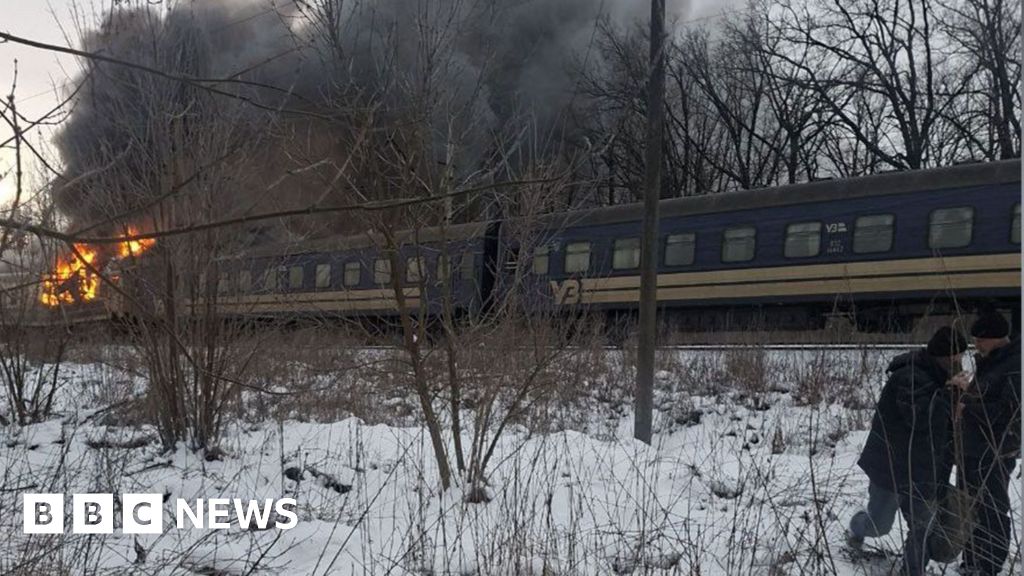
A Russian drone strike on a passenger train in Kharkiv region killed five people and injured others after a carriage was engulfed in flames; 291 people were on board the Chop–Barvinkove route at the time. The attack, condemned by President Zelensky as terrorism, hit a key node of Ukraine’s 21,000 km rail network, temporarily disrupting services though the Barvinkove–Chop line resumed hours later. The incident underscores rising security risks to critical transport infrastructure near the front line and may weigh on logistics reliability and investor perceptions of operational and geopolitical risk in Ukraine.
Market structure: The attack elevates security premium around Ukrainian logistics and regional civilian infrastructure, benefiting defense contractors (Lockheed LMT, RTX RTX, Northrop NOC, or ETF ITA) and specialist ISR/drone countermeasure vendors while hurting passenger rail operators and border logistics throughput. Expect localized pricing power for secure freight/evacuation services (5–20% premium in spot capacity) and tighter grain export supply vs pre-attack baseline, pressuring agricultural commodity availability. Cross-asset: safe-haven flows should support USD and gold, push sovereign risk premia wider for EM/Eastern Europe bonds, and lift volatility in FX and commodity forwards over 1–3 months.
Risk assessment: Tail risks include escalation into wider railway/port blockade or sanctions triggering a sharp wheat/oil spike (wheat +30% shock scenario; oil +10–20% possible if logistics threatened). Immediate (days): spikes in implied vol and flight-to-quality; short-term (weeks–months): defense order re-pricing and freight rerouting costs; long-term (quarters–years): sustained higher defense budgets and infrastructure rebuild demand. Hidden dependencies include insurance repricing for rail cargo, re-routing capex, and counterparty exposure in European rail carriers.
Trade implications: Direct plays—establish 2–3% tactical longs in ITA or split 1% each LMT/RTX/NOC for 3–12 months; buy wheat exposure via WEAT or 3–6 month ZW futures (1–2% notional). Add macro hedges: 1–2% GLD and 1–2% UUP for 1–3 months; buy 1–2% notional 30–90 day VIX call spreads (e.g., 30/60) as tail protection. Pair: long ITA, short European airline ETF (EURNAV/FLAL) or short individual carriers (IAG.L) to isolate defense vs travel risk.
Contrarian angles: Consensus prices in only modest disruption; markets may underprice sustained logistic friction — if grain corridors remain impaired for >3 months, agricultural names and fertilizer producers (MOS, CF) rerate higher. Reaction could be underdone in defense hardware backlog (orders booked but delivery lag 12–24 months), implying multi-quarter alpha for prime contractors. Unintended consequence: overbought defense exposure if a diplomatic de-escalation occurs within 60–90 days; keep defined-cost option hedges to limit downside.
AI-powered research, real-time alerts, and portfolio analytics for institutional investors.
Request DemoOverall Sentiment
moderately negative
Sentiment Score
-0.45
