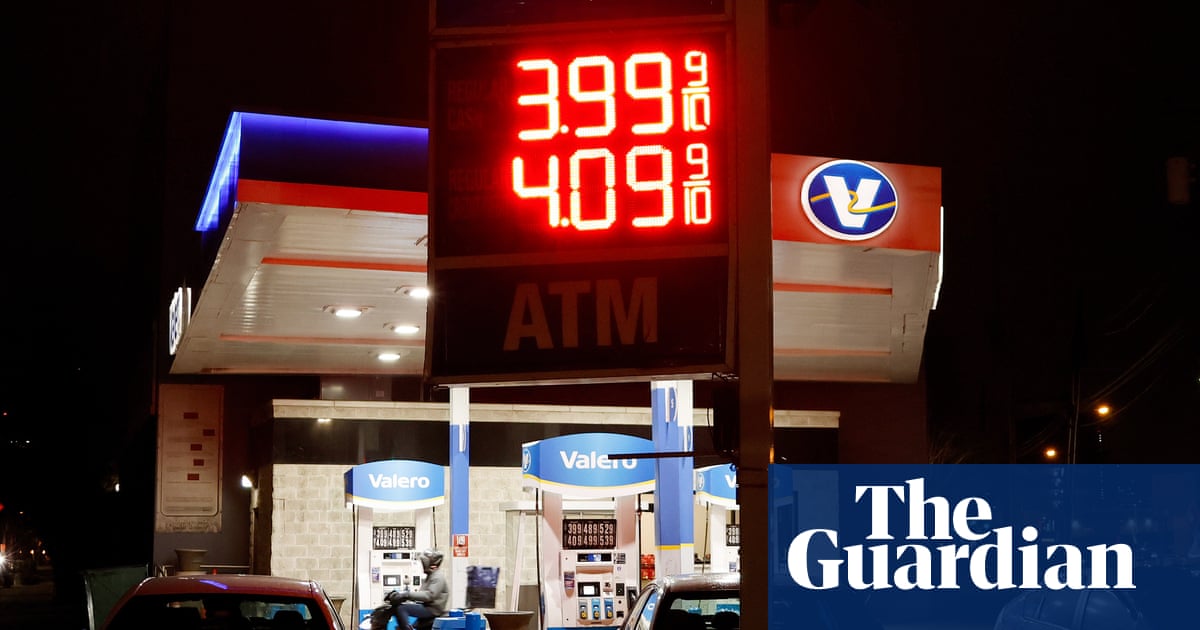
Average US fuel prices rose to $4.02/gal (up $1.04 from $2.98 a month ago, ~+35%), the first time above $4 in four years; California averages $5.89/gal and Washington $5.35/gal. Brent crude hit $115.48/bbl amid the US/Israel war on Iran, a key geopolitical driver for the oil-price surge. The jump in fuel costs risks adding to consumer inflation and political pressure ahead of US midterms, and represents a material market-wide shock to energy-sensitive sectors.
Upstream producers with low decline rates and high free-cash-flow sensitivity to spot oil are the structural winners: every incremental $10/bbl in realized price converts disproportionately into corporate FCF for pure-play shale names vs integrated majors, compressing the traditional valuation gap. Regional refining dynamics are equally important — coastal and CARB-compliant refiners can sustain materially wider crack spreads when inland grades or import flows are constrained, creating idiosyncratic alpha opportunities disconnected from the broad oil move.
The consumer and logistics complex will see meaningful second-order effects over the next 1–3 quarters: higher transport fuel raises freight per-ton-mile, which flows through to CPI-sensitive goods prices and compresses margins for smaller regional carriers and non-price-setting retailers. Over 6–12 months, sustained elevated energy costs will accelerate both demand destruction (some discretionary categories) and substitution (incremental EV adoption and modal shifts to public transport), which is a non-linear drag on GDP growth and corporate top lines if sustained.
Key catalysts to monitor are diplomatic/de-escalation signals, tactical SPR releases, and US refinery utilization delta vs inventories; any one can remove the geopolitical premium within weeks. The consensus risk appears to underweight rapid shale restarts and the elasticity of refined product demand — positioning that assumes long, linear supply shortages may be overstated if price signals persist and capex reallocation materializes within 3–9 months.
AI-powered research, real-time alerts, and portfolio analytics for institutional investors.
Request DemoOverall Sentiment
mildly negative
Sentiment Score
-0.30
