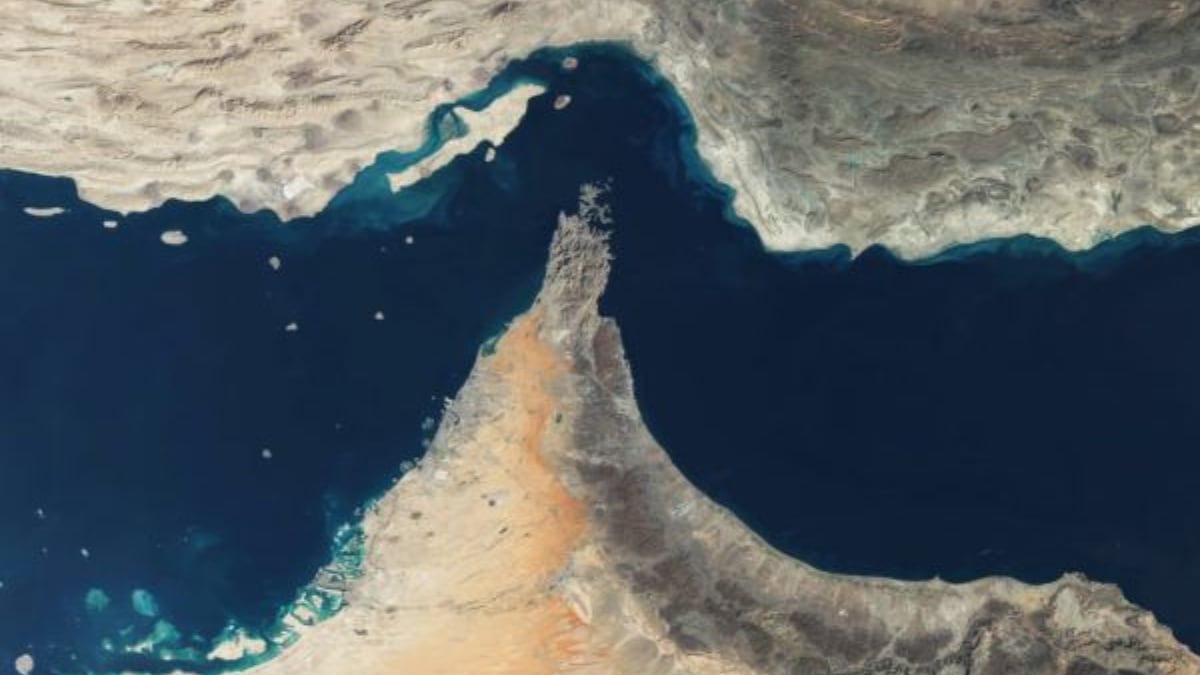
Iran warns the Strait of Hormuz will remain open only under Tehran's 'new rules' and 'not for' the United States after President Trump signaled a US withdrawal in 'two to three weeks.' The dispute raises immediate risk of disruption to a vital oil transit lane (a significant portion of global oil supply), likely upward pressure on oil prices and risk-off flows into safe-haven assets, and increased regional military and insurance costs for shipping. Portfolio implication: monitor oil futures, regional equity and currency weakness, and higher volatility in energy and shipping sectors.
Control or credible threat over the Strait raises a discrete, tradeable “access premium” that will show up first in maritime insurance and tanker spot rates, then in physical crude spreads. About 20% of seaborne crude transits the chokepoint; a 7–14 day reroute via the Cape of Good Hope increases voyage time and fuel burn materially, turning a $20k/day VLCC charter into a potential $60–120k/day payday in stress scenarios and creating a multi-week swing in refinery crude economics.
Second-order winners are owners of flexible tonnage and storage-capable VLCCs (they capture both freight and contango arbitrage), specialist marine insurers and reinsurers, and regional refiners with pipeline access who can pay a premium for uninterrupted feedstock. Losers include short-haul refined product carriers, spot-dependent refiners, and export-dependent Gulf sovereigns forced to sell into a dislocated market; logistics shifts will also boost bunker fuel demand and push freight forward curves steeper for 1–3 months.
Temporal risk ladder: immediate (days) — spike in war-risk premiums and spot freight; near-term (1–3 months) — freight and oil forward curves price in storage/contango and geopolitical risk; medium (3–12 months) — diplomatic/coalition naval responses, insurance corridor mechanics or tactical sanctions will determine reversion. Tail scenarios (mining/temporary closure) could add $10–20/bbl to physical differentials and force strategic SPR releases; a rapid de-escalation would collapse the premium quickly.
Consensus knee-jerk positioning will likely overprice a permanent shut — Iran lacks the sustained naval and legal apparatus to enforce long-term exclusive access without inviting overwhelming countermeasures. Expect overshoot in month-1 with a mean reversion window of 3–9 months absent kinetic escalation, which creates asymmetric short-term trading opportunities.
AI-powered research, real-time alerts, and portfolio analytics for institutional investors.
Request DemoOverall Sentiment
strongly negative
Sentiment Score
-0.60
