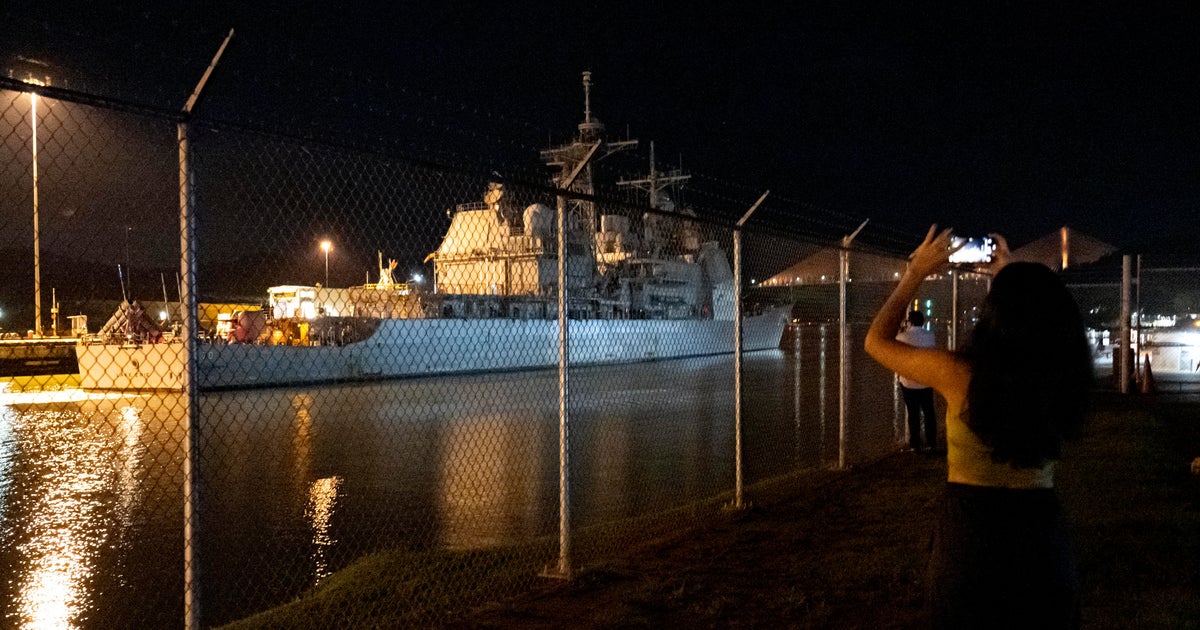
A U.S. guided-missile cruiser, USS Lake Erie, was observed transiting the Panama Canal into the Caribbean, following the deployment of U.S. warships near Venezuela for anti-drug trafficking operations. This action escalates U.S. pressure on Venezuela, which has responded with increased military mobilization, and aligns with the Trump administration's directive to use military force against Latin American drug cartels now designated as terrorist organizations. This policy shift signals a broadening of U.S. military engagement in the region, raising geopolitical tensions and potentially impacting regional stability and trade.
The transit of the U.S. guided-missile cruiser USS Lake Erie into the Caribbean via the Panama Canal represents a tangible escalation of U.S. military posture near Venezuela. While publicly framed as an anti-drug trafficking operation, this deployment aligns with the Trump administration's "maximum pressure" campaign against President Maduro, which includes a $50 million bounty and a standing oil embargo. The strategic significance is amplified by a recent U.S. policy shift designating some Latin American cartels, including one in Venezuela, as terrorist organizations, which the Secretary of State noted allows for the use of the Department of Defense to "target these groups." This has provoked a direct military response from Caracas, which has mobilized 15,000 security forces and its militia, increasing the potential for miscalculation and regional instability. The situation creates a climate of significant geopolitical uncertainty, with potential friction points extending to other regional powers, as evidenced by Mexico's explicit rejection of any U.S. military presence on its territory.
AI-powered research, real-time alerts, and portfolio analytics for institutional investors.
Overall Sentiment
moderately negative
Sentiment Score
-0.40
