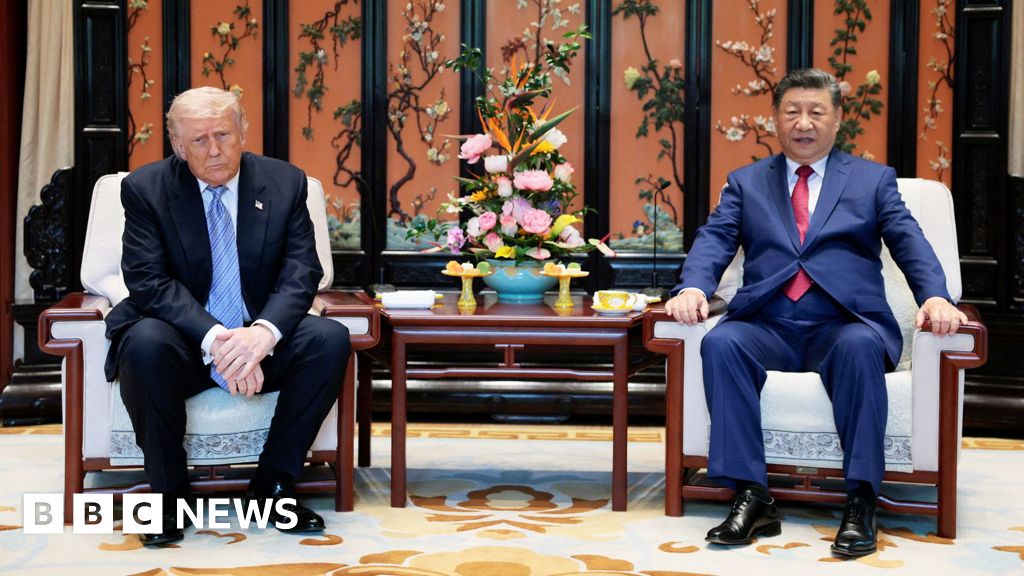
Trump warned Taiwan against formally declaring independence and said the U.S. is not looking for a war with China, underscoring elevated cross-strait tensions after his summit with Xi Jinping. He also said he would soon decide on the $11bn arms package for Taiwan, a decision with direct implications for regional defense risk and U.S.-China relations. Beijing continues to oppose Taiwanese independence, while Taiwan says it is monitoring the talks and defending the status quo.
The market implication is not a clean “risk-off” Taiwan trade; it is a higher-probability path toward strategic ambiguity with a lower near-term tail of formal escalation. That is marginally negative for Taiwanese semis and local industrial capex, but more importantly it supports a premium for suppliers that monetize “peace-through-deterrence” without needing actual conflict, especially US and allied defense electronics, munitions, and ISR platforms. The second-order effect is that Beijing has even more incentive to keep pressure below the level that would trigger broader export controls or alliance coordination, so the most investable outcome is a longer period of elevated drills, sanctions noise, and procurement urgency rather than immediate kinetic risk. The biggest underappreciated winner is likely the defense supply chain with long-cycle backlogs and hard-to-replace components: missile seekers, propulsion, radar, secure comms, and undersea systems. A Taiwan discount in equities can also create a temporary entry point for US listed semiconductor equipment and foundry-adjacent names if investors overprice an outright supply shock; the more probable path is capex delay and inventory buffering, not a multi-quarter destruction of Taiwan’s manufacturing base. Conversely, freight, insurance, and regional industrials are vulnerable to episodic repricing on every headline because even short spikes in perceived blockade risk can widen shipping and marine insurance spreads. The catalyst window is days to weeks for rhetoric and weapons-sale headlines, but months for procurement and budget confirmation. The key reversal would be a visible de-escalation package from Beijing or a renewed US signal that it will slow arms deliveries to Taiwan; absent that, volatility stays bid and defense names retain a structural floor. A true overdone move would be a broad selloff in US semis on fears of immediate disruption—without physical constraints, this remains a policy-risk premium, not a supply-chain break. Contrarian view: the market may be underestimating how this strengthens the odds of more U.S. weapons approvals and allied burden-sharing, because softer language on independence does not remove deterrence commitments. If investors focus only on the headline hawkishness, they may miss that Taiwan is being nudged toward greater self-defense spending, which is supportive for U.S. defense primes and certain Asian electronics suppliers with dual-use exposure.
AI-powered research, real-time alerts, and portfolio analytics for institutional investors.
Request DemoOverall Sentiment
mildly negative
Sentiment Score
-0.35
