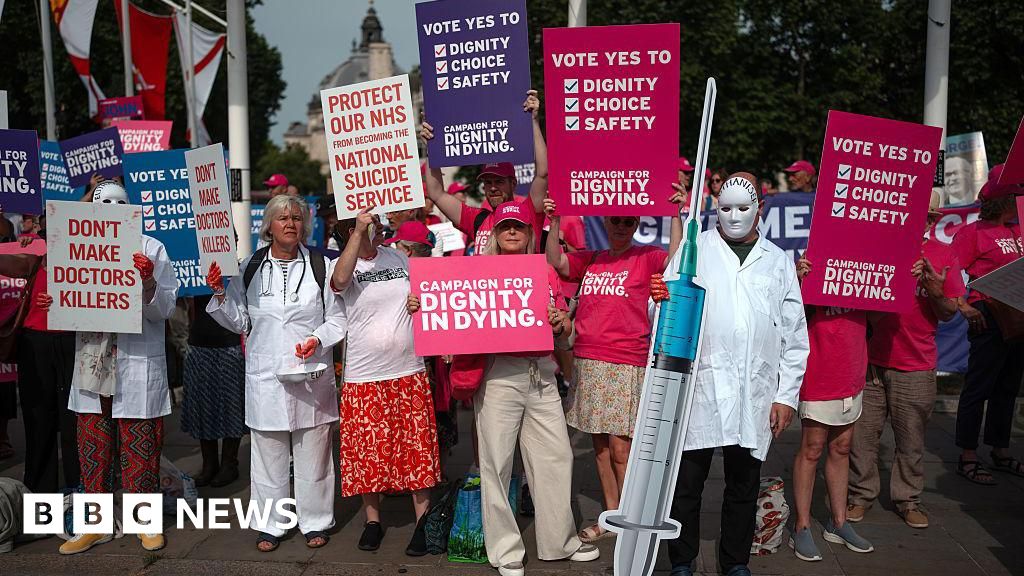
The assisted dying bill has effectively failed in the current Parliament after running out of time in the House of Lords, despite passing the Commons by 314 votes to 291. Supporters say the bill could be reintroduced by another backbencher and possibly use the Parliament Act, but no final legislative decision has been made. The issue remains politically contentious, but the immediate market impact is limited.
This is a classic case where the direct market impact is near-zero, but the second-order political signal matters for regulated sectors. The bill’s lapse lowers the probability of near-term legal change, which in turn delays any pricing-in of new compliance costs, provider liability, and capacity-constrained service models in the UK healthcare ecosystem. The bigger market read is that contentious social legislation can still consume parliamentary bandwidth for months, increasing the odds that economically relevant bills get delayed even when they are higher priority for markets.
The beneficiaries are incumbents with stable operating rules: private healthcare operators, insurers, and age-restricted consumer categories that would otherwise face policy uncertainty around end-of-life care governance, consent standards, and litigation exposure. The losers are small specialty providers and charities that had been positioning for a step-change in demand or service integration; any capital expenditure tied to assisted-dying infrastructure now gets pushed out at least one legislative cycle, likely 12–24 months. For public markets, the more material effect is on sentiment around UK regulatory drift: if Parliament can stall even a morally salient bill after the Commons vote, investors should assume slower throughput on more technically complex reforms.
The contrarian view is that the “failure” may actually raise the odds of eventual passage by making the political process cleaner next time: a narrower bill, better safeguards, and a more disciplined sponsor could improve odds in both Houses. That argues against overpricing a permanent status quo. The tail risk is not the bill itself but procedural acceleration—if the issue is revived through an unusually aggressive parliamentary mechanism, re-rating risk could reappear quickly, though the implementation window would still likely be measured in years rather than quarters.
From a trading standpoint, this is better expressed as a volatility-and-timing trade than a directional equity view. The immediate opportunity is to fade any short-lived uplift in UK healthcare regulatory uncertainty premium, while keeping optionality on a future legislative restart. The more attractive setup is long established UK healthcare names versus smaller, policy-sensitive care providers that would have benefited from a new service line and are now left with stranded narrative risk.
AI-powered research, real-time alerts, and portfolio analytics for institutional investors.
Request TrialOverall Sentiment
neutral
Sentiment Score
-0.05
