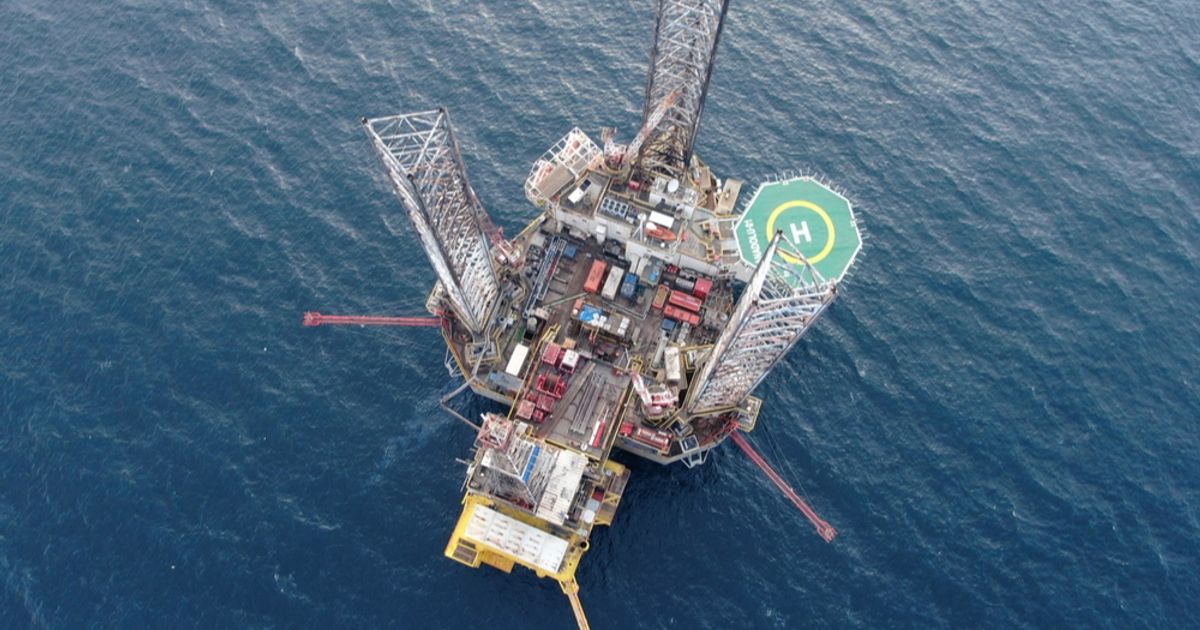
Tullow Oil agreed to buy the FPSO serving Ghana’s TEN fields for $205m (Tullow share ~$125.6m), a move intended to eliminate annual lease costs and lower fixed spend to extend TEN and Jubilee economics; completion is expected end-Q1 2027 and Tullow expects to fund the net consideration from in-year TEN cash flow. In 2025 Tullow reported working interest production of ~40.4 kboepd, overall FPSO uptime of 97% and free cash flow of ~ $100m (impacted by late-2025 commodity prices and delayed receipts including Kenya disposal proceeds and Ghana receivables). Guidance for 2026 is 34–42 kboepd and capex of about $200m; new wells J74-P came onstream at ~13 kbopd on 6 Jan 2026 and J75-P is expected by end-Q1 2026.
Market structure: Tullow (LSE:TLW) is the clear direct beneficiary — buying the TEN FPSO for ~US$125.6m (company share) removes roughly one year of lease expense and materially lowers fixed opex, improving free cash flow run‑rate and lowering breakeven on incremental barrels. FPSO leasing specialists (public peers like BW Offshore) and short‑term lessors are the marginal losers if more operators choose ownership over long leases; impact on global supply is negligible but makes TEN/Jubilee barrels economic at lower oil prices, supporting medium‑tail Ghanaian output (Tullow guided 34–42 kboepd for 2026).
Risk assessment: Tail risks include a prolonged delay (>90–180 days) in Government of Ghana receivables or Kenya disposal proceeds (already cited), an FPSO technical failure or increased maintenance/capex once ownership transfers, or adverse regulatory/royalty renegotiation in Ghana which could wipe expected savings. Immediate horizon (days‑weeks): market reaction to FY results and receivable updates; short term (1–6 months): realization of Kenya proceeds and regulatory approvals for the sale; long term (12–36 months): realized uplift to AISC and reserve economics if uptime remains ~97%. Hidden dependency: the transaction is contingent on regulatory approvals and Tullow funding the payment from asset cash flow — liquidity stress if prices slide below $60/bbl.
Trade implications: Tactical long TLW exposure is favoured with a 6–12 month horizon to capture re‑rating if receivables clear and Q1 2027 completion occurs; size 2–4% of risk capital given leverage to Ghana receipts and oil price. Options: use a 9–12 month call spread to express asymmetric upside (buy TLW 25% OTM / sell 60% OTM) to limit cash outlay; pair trade: long TLW vs short BW Offshore (OSE:BWO) to play operator ownership vs leasing exposure. Monitor triggers: upgrade if Ghana pays >US$50m within 90 days; cut if FCF falls below US$25m quarterly.
Contrarian angles: Consensus may underprice the multi‑year value of owning the FPSO — beyond one year of lease savings it lowers marginal lifting cost and extends field life, a potential catalyst for >20–40% IRR on incremental wells (J75‑P). Conversely, market may be underestimating decommissioning/maintenance capex and sovereign counterparty risk; if Ghana renegotiates fiscal terms or delays payments >6 months the uplift is wiped out. Historical parallels: asset purchases by operators often re‑rate equities only after demonstrable cashflow conversion (3–12 months), so event‑driven positioning with clear stop rules is preferred over outright long term conviction today.
AI-powered research, real-time alerts, and portfolio analytics for institutional investors.
Request DemoOverall Sentiment
mildly positive
Sentiment Score
0.28
