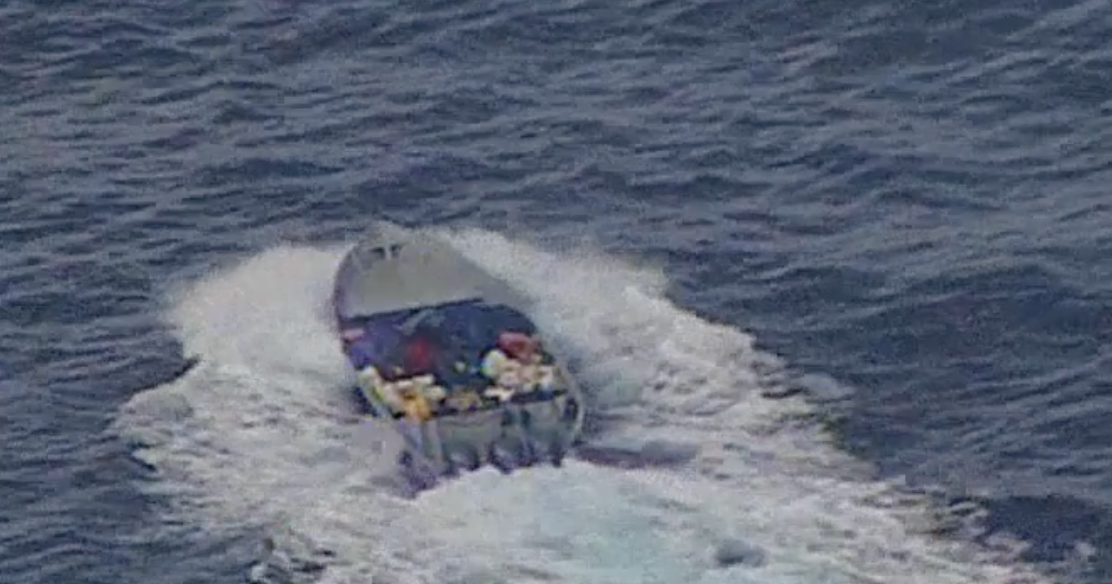
The U.S. Coast Guard cutter Munro seized more than 20,000 pounds of cocaine in the Eastern Pacific during Operation Pacific Viper, the largest at-sea interdiction in nearly 20 years after a helicopter disabled a non-compliant go‑fast vessel. The action, alongside Colombian navy seizures of over 7 tons of cocaine valued at roughly $340 million, underscores heightened U.S. and regional maritime counter‑narcotics activity and raises potential legal and political scrutiny related to prior lethal strikes authorized by the Trump administration.
Market structure: This seizure is a tactical victory that increases near-term political support for maritime interdiction and surveillance spending; primary beneficiaries are US naval shipbuilders and ISR/sensor primes (HII, LHX, NOC, LMT) and small-cap maritime security specialists (e.g., KTOS). Drug-trafficking networks are the direct losers but the macro demand for security remains intact, implying multi-year procurement tailwinds rather than a one-off windfall. Pricing power shifts toward specialized naval contractors because lead times for cutters, sensors and unmanned assets are 12–48 months, creating backlog-driven margin leverage.
Risk assessment: Tail risks include a political or legal backlash from lethal interdiction policies that could slow congressional support, and supply-side bottlenecks in shipyard capacity that could push costs up 5–15% on new contracts. Immediate effects (days) are PR and sentiment; short-term (3–9 months) hinge on FY appropriations and hearings; long-term (1–3 years) depends on awarded contracts and delivery schedules. Hidden dependencies: availability of qualified labor, steel, and avionics supply chains — a single supplier failure could delay multi-billion-dollar programs.
Trade implications: Direct plays include small, event-driven long exposure to HII and LHX via stock or call spreads timed to budget cycles (6–12 months); consider 9–12 month call spreads sized 0.5–2% of portfolio to limit capital at risk. Relative-value: favor small/mid-cap maritime security primes (KTOS) over broad industrials (XLI) to capture asymmetric upside from niche awards. Options: use calendar call spreads to exploit likely muted near-term volatility but directional upside once appropriations pass.
Contrarian angles: The market underestimates the multi-year follow-through from repeated high-profile interdictions; historical parallel: post-9/11 Homeland Security budget growth produced 3–5 year outperformance for security primes. Reaction is underdone in small caps that supply unmanned ISR; conversely, large defense mega-caps are already priced for baseline growth. Unintended consequence: higher insurance premia and rerouting costs for shippers could create winners in marine insurers (MMC) but tighter margins for logistics operators if incidents escalate.
AI-powered research, real-time alerts, and portfolio analytics for institutional investors.
Request DemoOverall Sentiment
neutral
Sentiment Score
0.00
