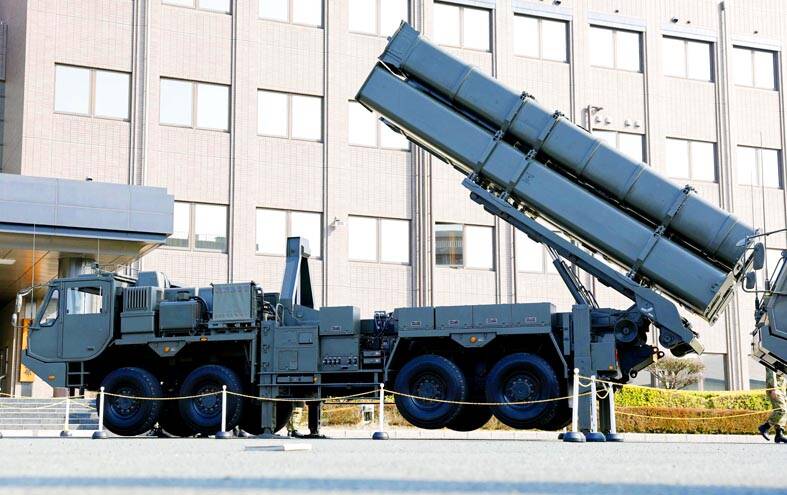
Japan deployed a surface-to-ship guided missile system with roughly a 1,000 km range in Kumamoto and a hyper-velocity gliding projectile in Shizuoka, bringing parts of the Chinese mainland (Shanghai ≈900 km) within reach. Taiwan's Nano 4 supercomputer (~86.05 petaflops) is scheduled for Q3 to train large language models for finance and defense, and former Taipei mayor Ko Wen‑je was sentenced to 17 years, increasing domestic political risk. Expect elevated regional geopolitical risk that could benefit defense contractors and semiconductor suppliers while exerting downward pressure on risk assets and regional sentiment.
This deployment is an accelerant for a multi-year reorientation of East Asian defense procurement toward standoff, precision and hypersonic-related technologies. Expect material budget tailwinds not just for missile airframes but for seekers, composites, power electronics and high-end semiconductors used in guidance and EW systems; procurement cycles mean capex will flow in waves over 12–48 months rather than as a single lump sum.
Second-order winners will be firms providing mission-critical subsystems and training/maintenance ecosystems — not just prime contractors. That favors companies with established supply relationships in Japan/Taiwan (logistics, long‑lead semiconductor fabs, specialty materials) and those that can win technology transfer partnerships; conversely, commodity OEMs and regional tourism/leisure travel exposure are vulnerable to episodic demand shocks if tensions spike.
Near-term catalysts: official procurement announcements, export-control reciprocity, and allied joint exercises — these can move equities within days to weeks. Larger regime shifts (bilateral dialogues, sanctions, or an escalatory incident) represent tail events on a 0–24 month horizon that could either accelerate orders or trigger sanctions/re‑routing of supply chains, materially altering winners and losers.
Contrarian posture: markets tend to front-run headline risk but underprice structural industrial capture — Japanese domestic primes and Asian specialty suppliers may capture a larger share of value as Tokyo prefers local content and technology transfer, compressing expected upside for outside primes over the medium term despite headline wins for US names.
AI-powered research, real-time alerts, and portfolio analytics for institutional investors.
Request DemoOverall Sentiment
mildly negative
Sentiment Score
-0.20
