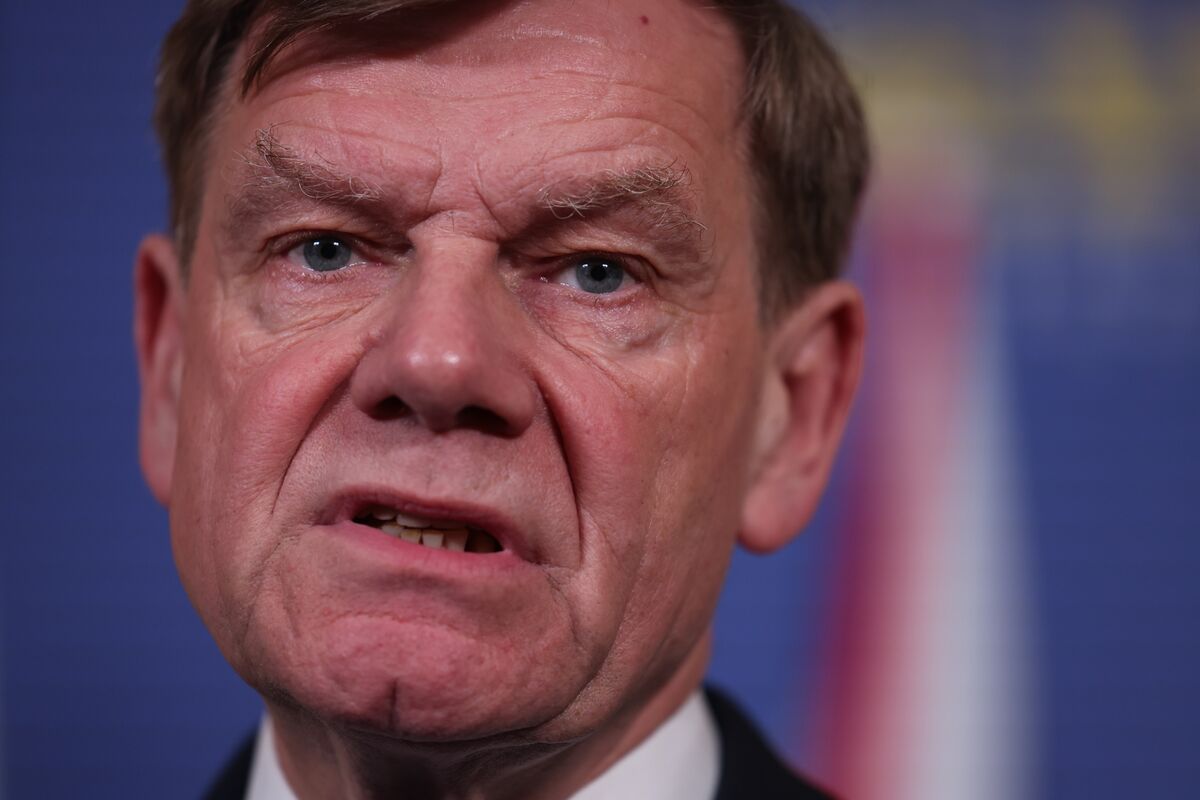
German Foreign Minister Johann Wadephul began a two-day visit to China focused on trade, rare earths and the war in Ukraine, meeting Commerce Minister Wang Wentao and stating China is Germany's "most important trading partner" with a desire to expand ties. The trip signals a diplomatic effort to reset strained relations and could have strategic implications for European supply chains and access to critical raw materials, making it relevant to investors tracking German exporters, industrials and commodity flows tied to rare earths.
Market structure: A German diplomatic push to reset trade with China favors large export-oriented industrials (autos, machinery, chemicals) and non-Chinese rare-earth/strategic-metal suppliers. Expect incremental order flow over 1–12 months that can boost sales by mid-single digits for exposed names; FX: EUR could strengthen 0.5–1% vs CNY on improved trade visibility, bund yields may tighten 5–15bp on risk-off-to-risk-on rotations.
Risk assessment: Tail risks include renewed Western sanctions on China or China countermeasures that could cut German exports (low-probability, high-impact) and a Ukraine escalation that derails negotiations. Immediate (days) reaction will be headline-driven; short-term (weeks–months) depends on MOUs and supply contracts; long-term (quarters–years) hinges on structural rare-earth sourcing and EU industrial policy. Hidden dependency: many German exporters rely on China demand for >15% of sales and on Chinese component sourcing that can’t be reshifted inside 12–36 months.
Trade implications: Direct trades — establish 1.5–3% long positions in Siemens (SIEGY) and BMW (BMWYY) targeting 8–20% upside over 3–9 months if China orders materialize; buy REMX ETF or MP Materials (MP) 3–6 month call spreads (buy 3–6 month ATM calls, sell 20–30% OTM) to express rare-earth upside while capping premium. Pair trade: long MP (2%) vs short a China-domiciled rare-earth miner ETF (2%) to hedge China policy tail risk. Use 8–12% stop-loss / take-profit band and re-evaluate at 3 months.
Contrarian angles: Consensus underestimates time-to-ship and onshore substitution costs — supply-chain gains are likely front-loaded to negotiation headlines but real delivery lags 6–24 months, so short-lived EPS beats are possible. Overdone optimism could rerate cyclicals prematurely; monitor EU Commission talks and any German export-credit announcements in next 30–90 days as reversal catalysts. Historical parallel: post-2018 US-China truce rallies that faded when structural issues persisted.
AI-powered research, real-time alerts, and portfolio analytics for institutional investors.
Request DemoOverall Sentiment
mildly positive
Sentiment Score
0.25
