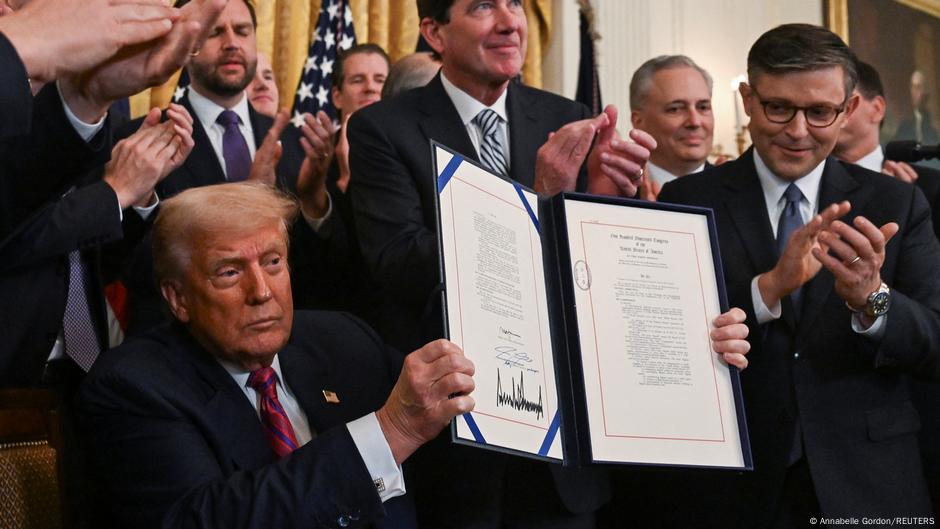
US President Donald Trump signed the GENIUS Act into law, establishing a regulatory framework for dollar-based stablecoins. This legislation, a major victory for the crypto industry, aims to facilitate the use of these digital assets for payments and could significantly expand the dollar's global reach, with the stablecoin market projected to grow from $260 billion to $2 trillion by 2028. While proponents highlight its potential to buttress the dollar and boost demand for US Treasuries, critics warn of inadequate anti-money laundering protections.
The United States has enacted the GENIUS Act, establishing a formal regulatory framework for US dollar-based stablecoins, a landmark development for the digital asset industry. This legislation provides crucial regulatory clarity, which is expected to legitimize the use of stablecoins for payments and encourage broader adoption by banks, retailers, and consumers. The potential economic impact is substantial, with projections from Standard Chartered suggesting the stablecoin market could grow from its current valuation of over $260 billion to $2 trillion by 2028. Proponents, including the Treasury Secretary, argue the law will buttress the U.S. dollar's global reserve status and create a significant new demand channel for U.S. Treasuries, as these will be the primary liquid assets backing the stablecoins. However, the legislation faces criticism for perceived weaknesses in its anti-money laundering (AML) provisions and its failure to prohibit foreign-based issuers. Critics, such as Transparency International US, warn these loopholes could expose the U.S. financial system to illicit finance, posing a significant long-term risk. The bill's passage, supported by over $245 million in crypto industry donations, also highlights the sector's growing political influence.
AI-powered research, real-time alerts, and portfolio analytics for institutional investors.
Overall Sentiment
strongly positive
Sentiment Score
0.65
