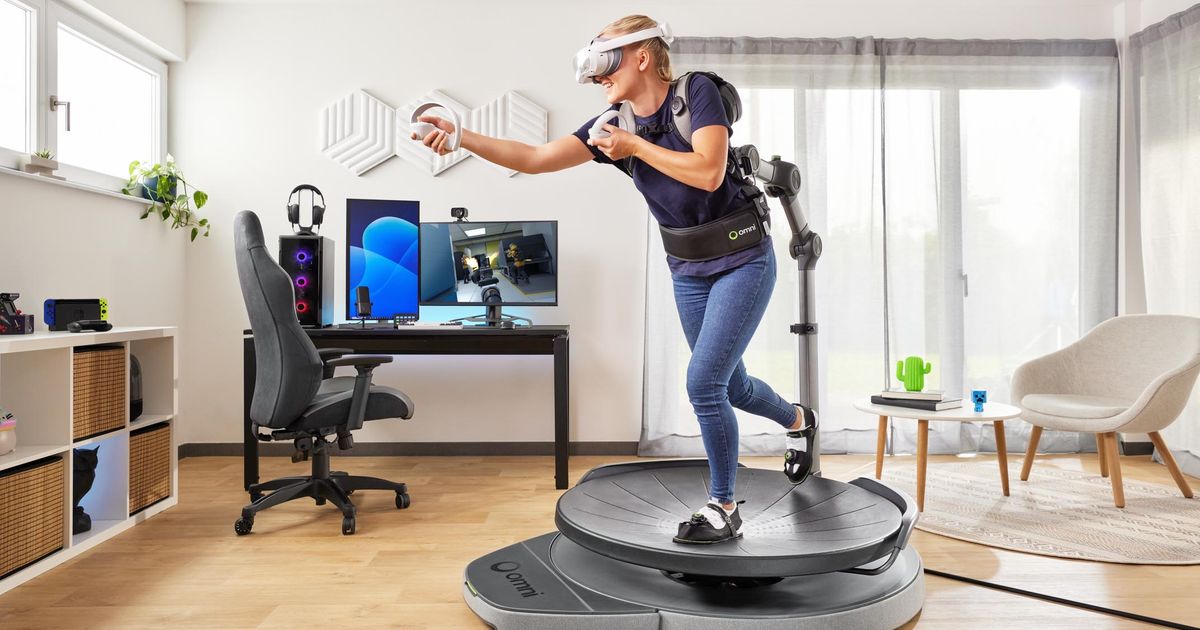
Virtuix Holdings (NASDAQ: VTIX) debuted on Nasdaq after reporting a 138% year-over-year revenue increase for the six months ended Sept. 30 and over $20 million in systems sold across three product generations, driven by its Omni One home VR treadmill. The company has 25 issued patents (five pending), has raised $11 million from Chicago Venture Partners and secured a $50 million equity line, and claims production capacity of up to 3,000 units per month (roughly $100 million annual revenue potential). Virtuix is pursuing a dual-use strategy — scaling consumer sales while expanding higher-margin defense deployments (test units at US Air Force locations) and leveraging AI-driven 3D reconstruction for mission rehearsal.
Market structure: Virtuix (VTIX) is a direct winner — patents + vertical integration give it defensible pricing power versus commodity VR accessories, and implied ASP (~$100M / 36,000 units ≈ $2.8k) with 3,000 units/month capacity creates a realistic near‑term revenue ceiling ($100M/year). Winners also include AI 3D-content vendors and defense simulation integrators; losers include mid‑price fitness incumbents (e.g., PTON) and low‑barrier VR peripheral makers whose products are substitutable. Pricing dynamics will be driven by content network effects and unit economics (manufacturing yield and warranty costs).
Risk assessment: Key tail risks are (1) ITAR/dual‑use export restrictions or denied foreign sales, (2) major safety recall/manufacturing defect, and (3) dilution from the $50M equity line if used at depressed prices. Near term (days–weeks) expect IPO volatility and dilution risk; short term (3–12 months) execution risk around ramp yields and gross margin; long term (2–5 years) adoption depends on content partnerships and defense procurement cycles. Hidden dependency: revenue flips on third‑party platform integrations (Meta/Steam) and signed defense contracts (> $5M each).
Trade implications: Tactical allocation: small, event‑driven long exposure to VTIX (buy and/or buy LEAP call spreads 12–18 months) sized to conviction; pair trades (long VTIX, short PTON) play VR fitness substitution. Rotate modestly into defense training primes (LHX, RTX) on confirmed contract wins. Entry: initiate within 2 weeks of IPO; materially scale only after shipment and backlog verification (thresholds below).
Contrarian angle: Consensus underestimates adoption friction — home space, price, and content scarcity can cap penetration; the $50M equity line raises downside dilution not priced into a post‑IPO pop. Historical parallels (early VR hardware cycles) show high early revenue growth can still be followed by multi‑year margin compression if scale costs or returns from defense contracts lag. Require KPI triggers (monthly shipments >1,000 or contracted backlog >$20M) before increasing exposure above 3–5%.
AI-powered research, real-time alerts, and portfolio analytics for institutional investors.
Request DemoOverall Sentiment
moderately positive
Sentiment Score
0.52
Ticker Sentiment
