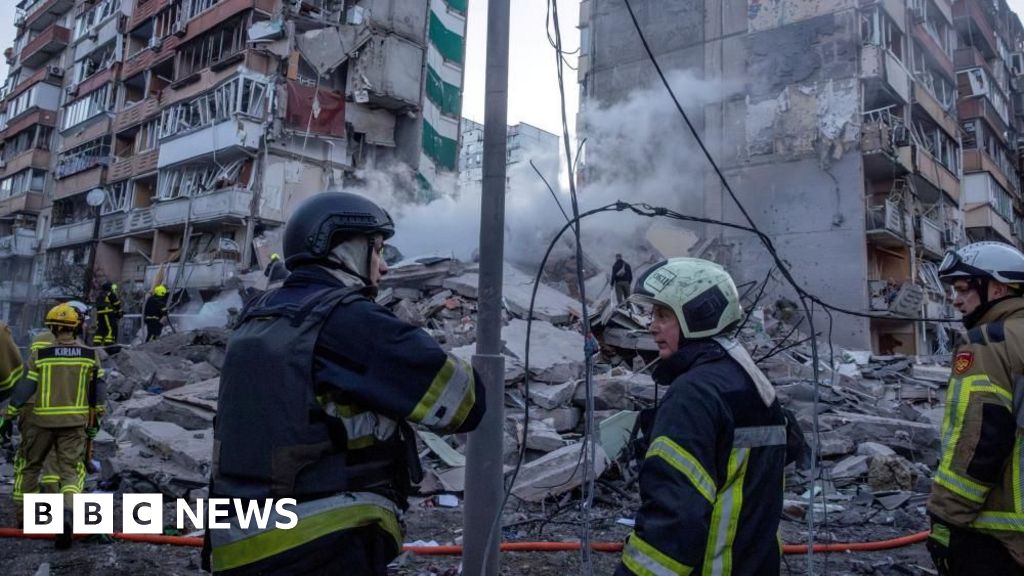
Russia launched a massive overnight wave of strikes across Ukraine, killing 1 person and wounding dozens, after a prior attack reportedly involving 892 drones in 24 hours. Kyiv suffered major damage, including a hit on a nine-storey apartment block with 18 apartments destroyed and water supply disruption, while other cities and infrastructure were also struck. Separately, a Kyiv court ordered 60 days' pretrial detention for Andriy Yermak in a corruption case, adding a domestic political and governance shock.
The immediate market read is not about one more strike headline; it is about the regime shift from episodic conflict to sustained infrastructure attrition. That matters because air defense is now the binding constraint, so the marginal value of interceptors, radar, electronic warfare, power backup, and rapid-repair contractors rises faster than headline defense spending. The second-order effect is on Ukrainian urban utilities and logistics: repeated hits to water, power, and transport nodes degrade civilian function, but also raise the probability of emergency procurement and donor-funded capex in communications, grid hardening, and decentralized generation. The governance angle is equally important. A senior aide’s detention amid corruption allegations increases execution risk precisely when Kyiv needs cleaner procurement, faster foreign financing, and tighter donor confidence. Even if the case is ultimately contained, the near-term effect is likely a higher political discount on aid disbursement and more scrutiny on defense and reconstruction contracts. That creates a bifurcation: external support for the war effort may remain intact, but the financing mix shifts toward conditional, slower, and more audited flows. Consensus may be over-weighting the tactical battlefield escalation and under-weighting the institutional drag from the corruption probe. The war can intensify without producing an immediate strategic breakthrough for Russia, while Ukraine’s internal governance problems can quietly raise the cost of capital for reconstruction and delay procurement cycles. The contrarian view is that this combination is not a binary bearish catalyst; it is a longer-duration earnings opportunity for selected defense, cyber, and critical-infrastructure names, while broad risk assets tied to reconstruction timing may be prematurely priced for a clean postwar rebuild.
AI-powered research, real-time alerts, and portfolio analytics for institutional investors.
Request DemoOverall Sentiment
strongly negative
Sentiment Score
-0.82
