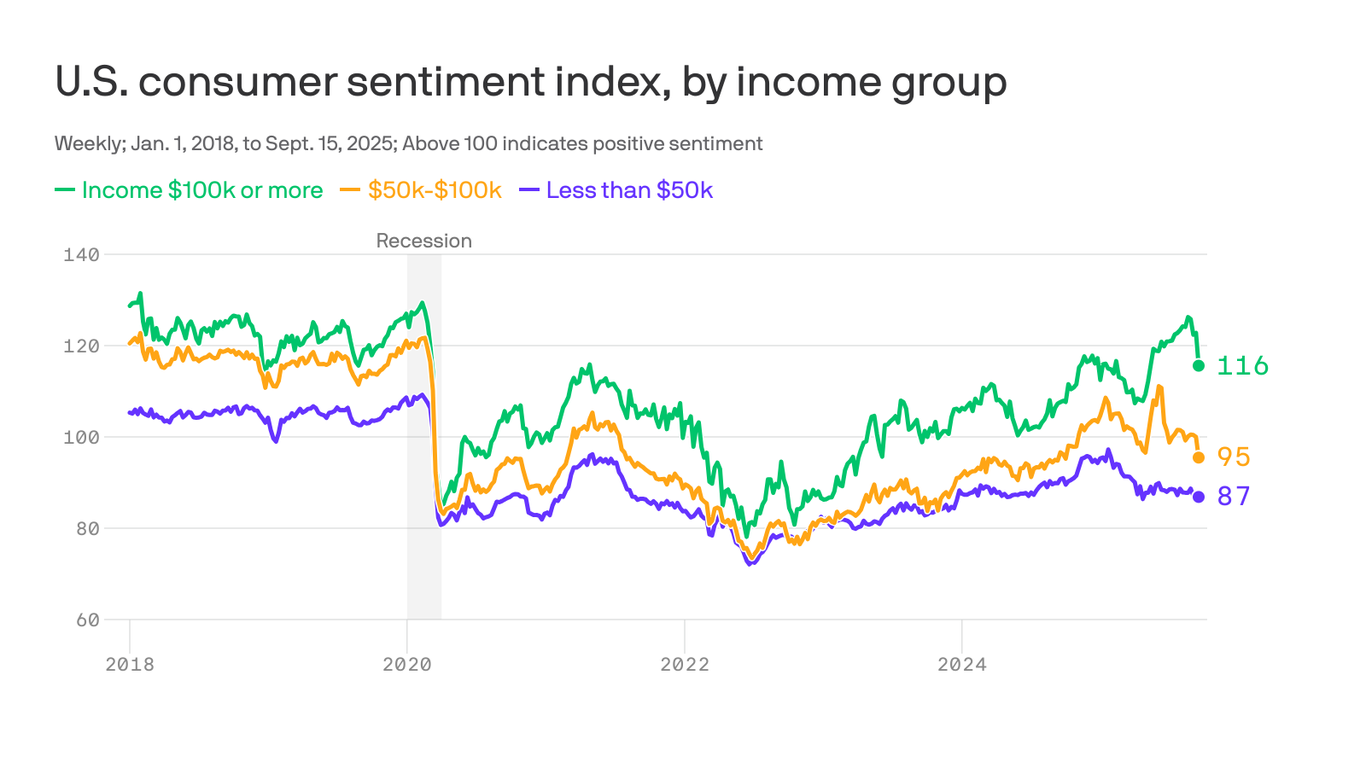
Consumer sentiment among high-income earners (>$100k) has declined by approximately 10 points over the past month, driven by a slowing labor market and "white-collar recession" concerns. This trend is significant as the top 10% of earners account for nearly half of all U.S. spending, making their increasing caution a critical factor for broader economic stability and a potential precursor to economic trouble, particularly with anticipated tariff impacts.
Consumer sentiment among high-income earners, defined as those with incomes over $100,000, has deteriorated significantly, falling approximately 10 points over the past month according to Morning Consult's index. This downturn is directly linked to a weakening labor market, specifically an ongoing "white-collar recession" and a slowing August jobs report, which are fueling job anxiety within this demographic. The macroeconomic implications of this shift are substantial, as an analysis from Moody's Analytics indicates the top 10% of earners accounted for nearly half of all U.S. spending in the three months ending in August. According to Moody's chief economist, the U.S. economy's ability to avoid a recession is heavily dependent on this group's continued spending. This vulnerability is expected to be further tested toward the end of the year as the full impact of higher tariffs is anticipated to add pressure on personal finances and sentiment.
AI-powered research, real-time alerts, and portfolio analytics for institutional investors.
Request DemoOverall Sentiment
moderately negative
Sentiment Score
-0.50
Ticker Sentiment
