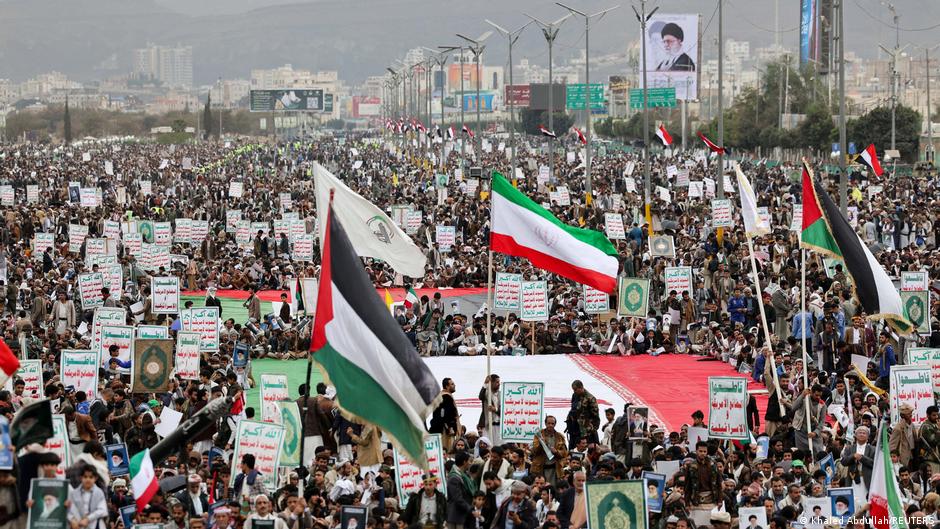
Houthi militia remains largely inactive in the Iran war despite explicit threats, reducing immediate risk of a wider regional escalation. However, analysts warn the group could later target commercial shipping in the Red Sea — the most likely and economically damaging option — which would pressure Saudi oil flows routed via the Red Sea and strain global energy markets and shipping routes, creating sector-level risk for energy and logistics exposures.
The Houthis’ current restraint is a de facto option to preserve inside bargaining power; that leaves a low-probability, high-impact tail that markets are underpricing. If negotiations with Saudi Arabia falter or a decapitation strike materially weakens command-and-control, the group can reprice risk for global trade by reactivating inexpensive but highly disruptive asymmetric strikes in the Bab al‑Mandeb / southern Red Sea chokepoint. A single sustained campaign there would mechanically add 7–12 days to Asia‑Europe voyages (round‑trip), lift tanker and containership voyage costs by an estimated 10–25% and shove marginal barrels onto longer routes — a shock that translates into upward oil price pressure and widening freight rate volatility over weeks to months.
Second‑order winners include players who monetize elevated transits and premiums: large integrated refiners with flexible crude slates (they capture widened crude differentials), owners of VLCC/aframax tonnage that can deploy on longer voyages, and firms that underwrite / brok e war‑risk cover (revenue via rising premiums). Losers are chokepoint‑dependent exporters and just‑in‑time manufacturers exposed to container rate spikes and inventory reorders; supply‑chain elasticity means semiconductor and chemical intermediates are the likely first real demand casualties after freight rate inflation passes a 20% threshold.
Tail risk is binary and clustered: days for isolated incidents, months if political reconciliation collapses. Triggers to watch in real time are threefold — Saudi‑Houthi negotiation breakdown, credible intelligence of an Israeli/US strike on Houthi leadership, and a discreet uptick in insurance premium notices for trans‑Red Sea transits. A rapid market repricing would be obvious in 24–72 hour jumps in Baltic/TC rates and Brent/WTI spreads; absent those signals, the market should treat current exposure as latent conditional risk rather than an immediate shock.
AI-powered research, real-time alerts, and portfolio analytics for institutional investors.
Request DemoOverall Sentiment
mildly negative
Sentiment Score
-0.25
