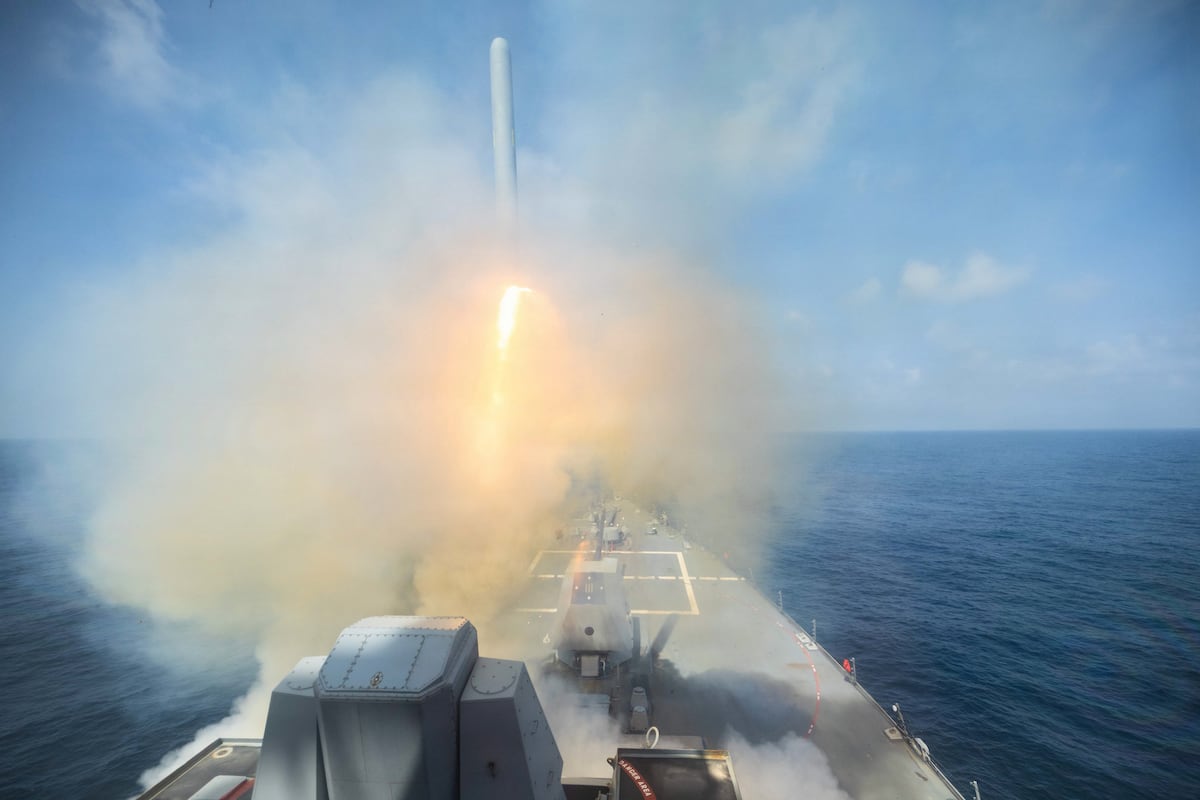
Two-week ceasefire declared by President Trump after a 38-day U.S. campaign (Operation Epic Fury) in which the Pentagon reports >800 strikes; officials claim 80% of Iran’s air-defense systems destroyed, 800 one-way drone storage facilities and 450 ballistic missile storage facilities hit, and 150 ships sunk. Since Feb. 28, 13 U.S. service members killed and >365 wounded; Iran reportedly launched up to ~120 drone/missile attacks per day and maintained control of the Strait of Hormuz, driving oil prices higher. Defense Secretary Hegseth said U.S. forces will remain in the region for the duration of the armistice and warned the U.S. may seize Iran’s highly enriched uranium if not handed over voluntarily, signalling ongoing military and geopolitical risk to markets.
A sustained U.S. forward presence in the Gulf region is a structural revenue kicker for defense primes and logistics providers, not just a one-off order flow event. Expect multi-quarter follow-on contracts for sustainment, ISR, munitions replenishment, and maritime logistics; modeled conservatively, a 6–12 month elevated tempo can add low‑single-digit percentage points to annual revenue for mid/large primes and expand services-margin capture for contractors focused on ship/airbase support.
Energy-market transmission will be dominated by higher freight & insurance bills and strategic chokepoint risk premia rather than permanent supply loss. That mechanism tends to raise spot oil and tanker rates quickly while leaving refiners with volatile feedstock economics — beneficiaries are asset-light producers and tanker owners in the short run; losers are integrated refiners with tight HSE/insurance exposures and petrochemical players facing margin compression.
Catalysts and tail risks are asymmetric and time-staggered: a diplomatic de-escalation or emergency SPR release can compress risk premia in 2–8 weeks, while episodic attacks or special-operations strikes can spike prices and premiums in days. Volatility in energy and defense implieds is the primary trading handle — position sizing should assume 20–40% realized vol over the next 3 months and be re-evaluated on intel-driven headlines rather than calendar time alone.
AI-powered research, real-time alerts, and portfolio analytics for institutional investors.
Request DemoOverall Sentiment
mildly negative
Sentiment Score
-0.25
