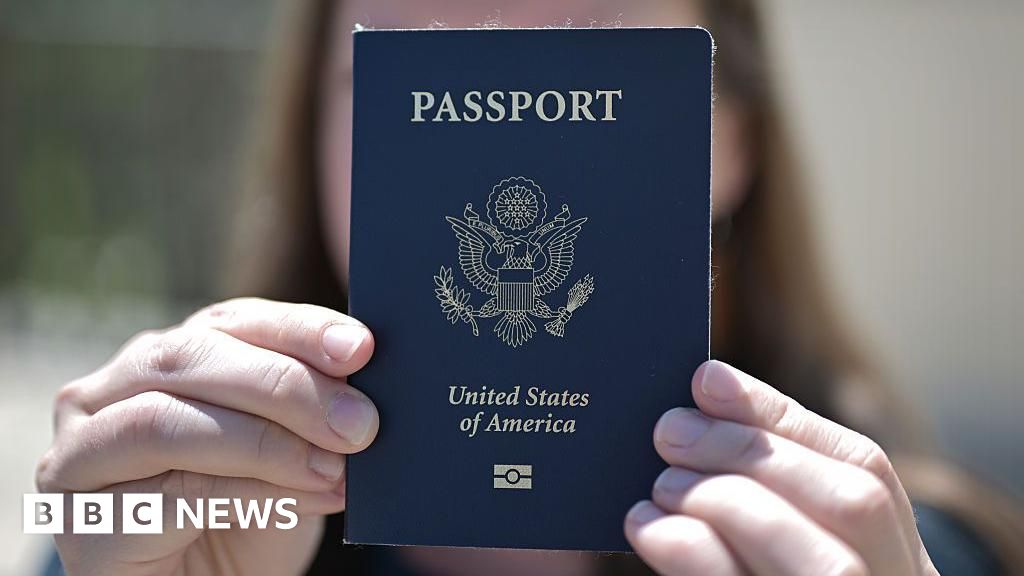
The US State Department will begin revoking passports of Americans with more than $2,500 in unpaid child support, using a 1996 federal law that was previously enforced mainly at passport renewal. Affected parents must settle debt with state agencies to restore eligibility, while those abroad would need emergency travel documents to reenter the US. The policy is regulatory and administrative in nature, with limited direct market impact.
This is less a macro event than a targeted enforcement shock, but the second-order effect is a small negative impulse to discretionary travel and a modest positive to state-level collections efficiency. The direct economic hit is likely limited because the affected population is relatively small and many passports are already not freely usable for international travel unless there is cash flow behind them; the more important impact is behavioral, as it raises the perceived cost of delinquency and may improve payment compliance ahead of renewal cycles.
The main market read-through is on the domestic consumer edge cases: lower-income households facing sudden mobility constraints can see elevated stress in transport, legal services, and emergency liquidity demand. Over a 3-12 month horizon, this could marginally increase volume for prepaid debit, remittance, and short-duration credit products serving financially constrained consumers, while being a small headwind to leisure spend that depends on cross-border travel. The policy also creates administrative friction at the consular level, but that is a low-probability, low-salience operational issue rather than an earnings driver.
The contrarian point is that enforcement headlines often overstate actual collections. A passport sanction is a blunt instrument, so the biggest effect may be on high-visibility cases rather than broad compliance; if implementation is uneven, the deterrent value fades quickly. The real catalyst to watch is whether other federal agencies copy this playbook for unrelated debts, which would meaningfully expand the policy surface area and create a broader behavioral drag on mobility and consumer confidence.
AI-powered research, real-time alerts, and portfolio analytics for institutional investors.
Request DemoOverall Sentiment
neutral
Sentiment Score
-0.05
