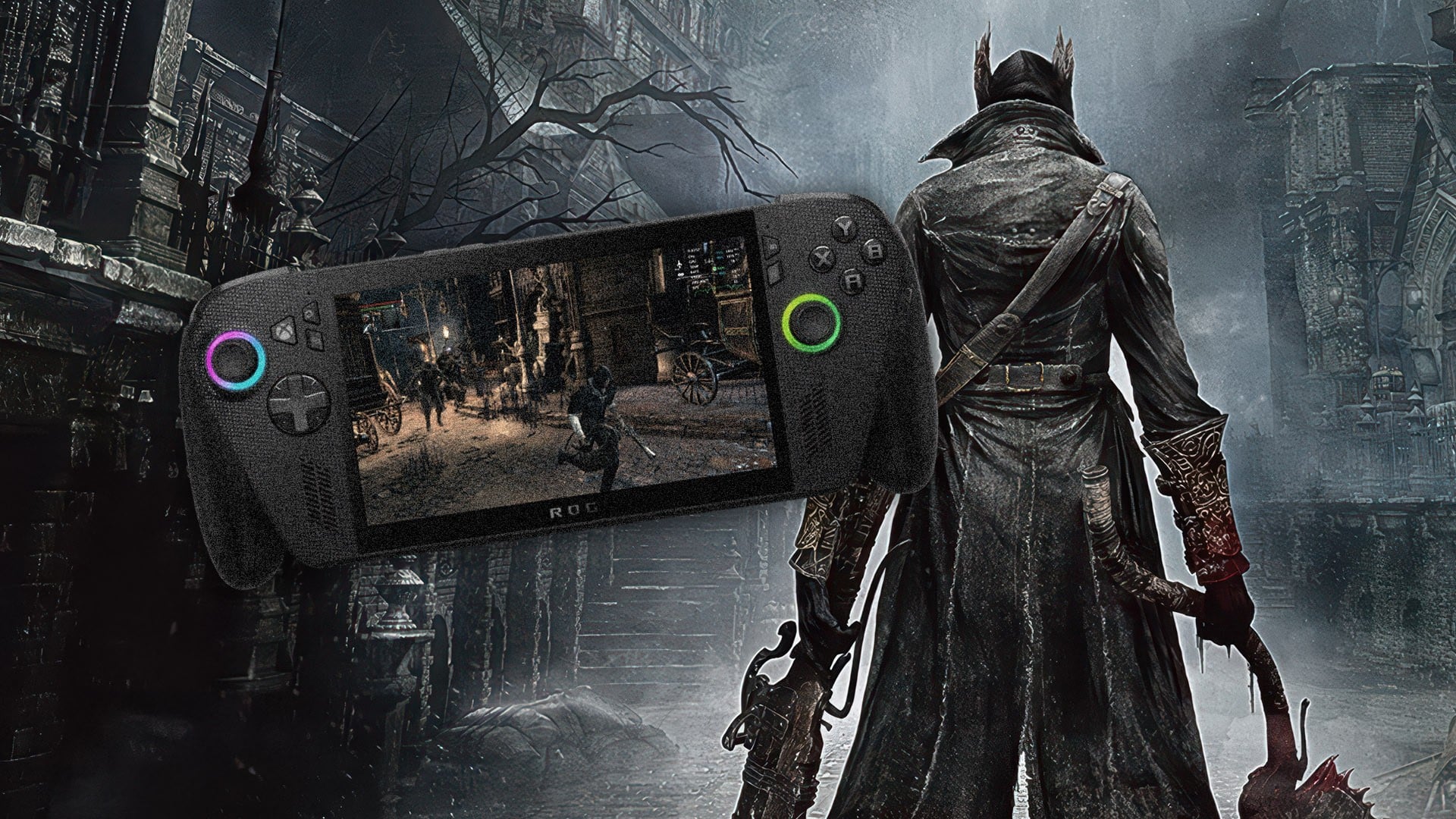
Emulation testing using the latest ShadPS4 Nightly build demonstrates that Bloodborne can run smoothly on handheld PC hardware: the ROG Xbox Ally X at 720p and 35W achieves roughly 50–70 FPS (33–40 FPS at native 1080p), while the GPD Win 5 (Ryzen AI Max+ 395/Strix Halo) delivers high-50s to ~70 FPS at 1080p at 35W, with TDP increases to 65W and 80W yielding ~8% and ~17% boosts respectively. Key caveats include initial shader-compilation stutters, ~10% performance degradation unplugged (battery), recommended power-profile tweaks (SPL/SPPT to 25W) for better battery/thermal balance, and ~2 hours battery life at the 35W efficiency sweet spot; unlocked Strix Halo performance is likened to an RTX 4060.
Market structure: This article signals an accelerating shift of high-performance portable gaming demand toward AMD-powered handheld PCs (GPD Win 5, ROG Ally X configurations) and the broader PC GPU/APU ecosystem versus traditional console exclusives. Expect AMD to gain pricing power in mobile APUs and notebook GPUs over the next 2–8 quarters, while Intel (INVT: INTC) faces pressure in the gaming-mobile segment where power-efficiency and integrated GPU performance matter most. Peripheral demand (LPDDR5X, NVMe, power management chips) should see a modest lift; incremental demand could be +3–7% in portable gaming SKUs within 6–12 months if adoption continues.
Risk assessment: Tail risks include IP/legal action around emulation (Sony pushback) and rapid software patches that erode performance advantages; both could materialize within 30–180 days and materially reduce adoption. Operational risks include thermal/battery limits and supply-chain bottlenecks for high-bin APUs — if power/thermal constraints cap sustained performance, realized sales could undershoot analyst expectations by 20–40% over a year. Key catalysts: AMD earnings, CES hardware reveals, and Microsoft/Asus/MSI product cycles over the next 90 days.
Trade implications: Tactical idea: establish a 2–3% long position in AMD (AMD) over 2–12 weeks to capture mobile APU upside, paired with a 1% short or underweight in INTC to play relative share shift (1:0.5 weight). Use a 3–6 month call spread on AMD (10–20% OTM) to limit capital; consider buying short-dated protective puts if AMD rallies >15% to lock gains. Modestly overweight semiconductors and consumer hardware suppliers, trim pure console-exposed names if legal/regulatory noise increases.
Contrarian angles: The market likely underestimates software/emulation-led demand elasticity — a sustained userbase could boost aftermarket sales (SSD, batteries) and games remasters, amplifying AMD’s TAM beyond current forecasts by 5–10% over 12–24 months. Conversely, the hype may be overdone for Microsoft/Ally hardware; without exclusive software or better battery endurance, consumer substitution may be limited. Watch for historical parallels (PC modding driving hardware cycles) and be ready to reverse positions if Sony pursues aggressive enforcement within 30–90 days.
AI-powered research, real-time alerts, and portfolio analytics for institutional investors.
Request DemoOverall Sentiment
mildly positive
Sentiment Score
0.35
Ticker Sentiment
