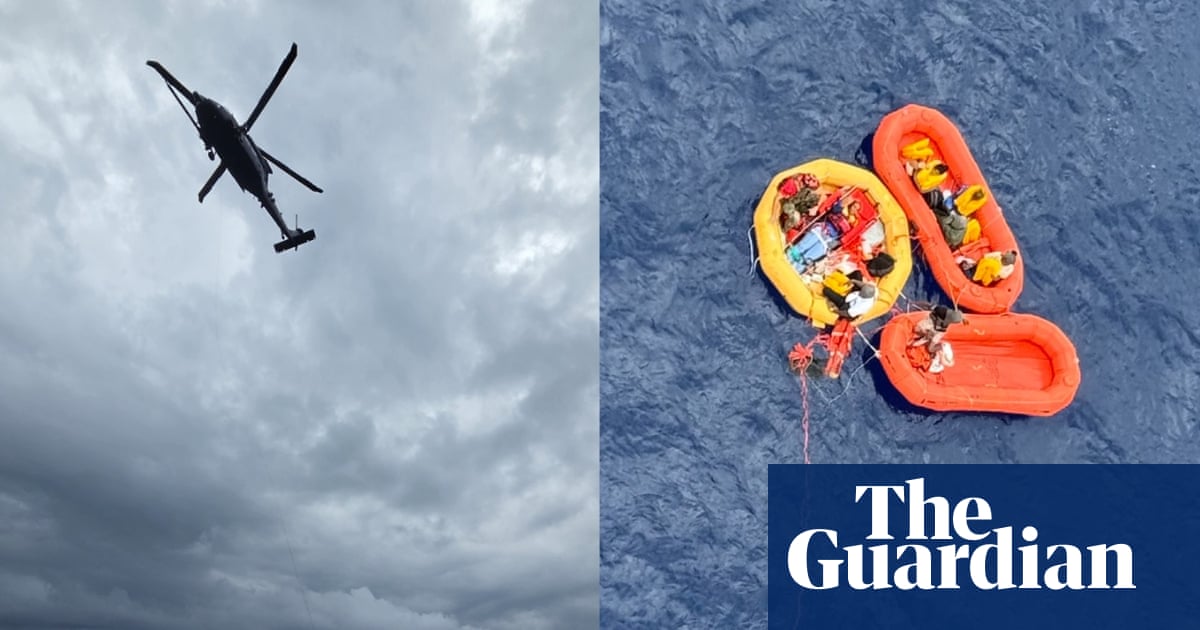
All 11 passengers and crew survived a plane ditching in the Atlantic after a U.S. military rescue team reached them with only about five minutes of fuel remaining. The rescue involved nine winch lifts over nearly 90 minutes as thunderstorms and rising seas created urgency. The incident is a human-interest and emergency response story with no direct market-moving implications, though the crash cause remains under investigation.
The immediate market read is not the rescue itself but the reminder that Caribbean/Florida regional aviation is an underpriced operational risk surface. The second-order beneficiaries are not airlines broadly, but companies tied to emergency response, avionics, satellite comms, and weather-risk mitigation: one-off incidents like this tend to accelerate procurement cycles for ELT/ADS-B upgrades, dispatch software, and crew training contracts. The tailwind is modest in dollars, but the narrative supports a higher valuation multiple for defense/logistics suppliers exposed to search-and-rescue and mission systems rather than pure passenger traffic. For travel and leisure, the near-term impact is reputational and insurance-related, not demand destruction. Small aircraft operators serving island-hopping routes are more vulnerable than scheduled carriers because the incident highlights the hidden cost of flying into volatile weather with thin fuel margins and limited redundancy; expect insurers to tighten underwriting and operators to pass through higher premiums over the next 1-2 renewal cycles. That raises operating leverage for better-capitalized regional operators and squeezes smaller charter/Bahamian niche players. The contrarian point is that this is not a broad aviation thesis. Safety headlines tend to transiently boost spend on equipment and training, but they also reinforce the value of scale, maintenance discipline, and integrated dispatch systems—meaning the winners are incumbents with operating maturity, not necessarily the OEMs that sell the aircraft involved. The most actionable trade is to express a relative view: long the beneficiaries of compliance/safety spend and short the most operationally fragile exposure in regional travel if weather volatility persists into hurricane season.
AI-powered research, real-time alerts, and portfolio analytics for institutional investors.
Overall Sentiment
mildly positive
Sentiment Score
0.20
