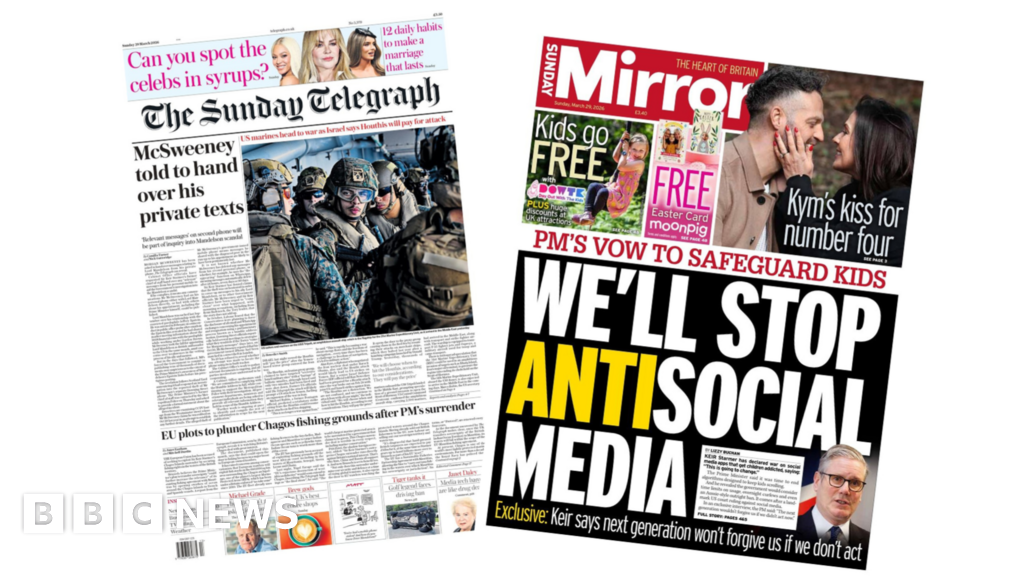
Thousands of US Marines have deployed to the Middle East as the US-Israel war involving Iran enters its second month and Yemen's Iran-backed Houthis enter the conflict, heightening geopolitical and potential energy‑supply risks. Other headlines: up to 70 Britons reportedly arrested in the UAE for photographing drone/missile attacks; Tiger Woods arrested for DUI and released on bail; the UK prime minister's former chief of staff ordered to hand over private texts amid scrutiny of Lord Mandelson's appointment, while the PM signals tougher action on social media and outlets warn of AI being used to 'dodge justice.'
Military escalation in the Gulf is re-pricing short-duration risk premia across shipping, insurance and oil markets. Expect war-risk and P&I premiums on tanker/container routes servicing the Red Sea/Gulf to rise 15–40% within 2–6 weeks, translating into spot freight spikes and higher bunker pass-through into refined product cracks; a 1m b/d effective Gulf supply disruption should move Brent on the order of $5–8/bbl and meaningfully re-allocates free cashflow to upstream producers over the following quarters.
Concurrently, political momentum behind tougher regulation of youth-targeting social apps and rising deployment of deepfake technology will shift cost structures for platforms and law enforcement. Platforms face incremental compliance and moderation costs (one-off integration plus ongoing tech/moderation) that can shave 3–8% off near-term UK/Europe ad margins over 12–24 months, while demand for deepfake detection, chain-of-custody and forensic SaaS will accelerate spending cycles for cloud and cybersecurity vendors.
From a timing/risk perspective, market moves are concentrated: shipping/insurance and oil prices will react within days–weeks; defense procurement and capex reallocation play out over 3–18 months; regulatory and legal impacts on media platforms evolve over 12–36 months. The main reversal risks are a rapid diplomatic de-escalation (30–90 days) or an outsized central bank response to commodity-driven inflation that compresses risk asset multiples before defense/oil earnings catch up.
AI-powered research, real-time alerts, and portfolio analytics for institutional investors.
Overall Sentiment
mildly negative
Sentiment Score
-0.25
Ticker Sentiment
