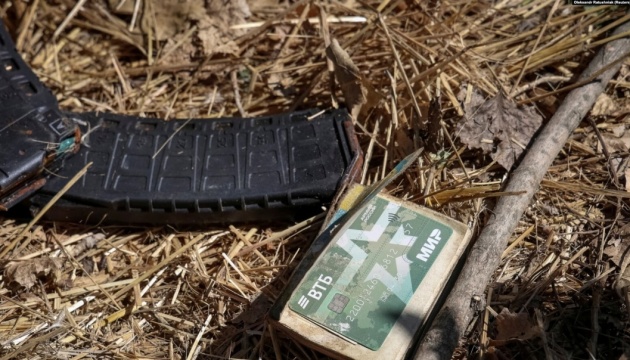
According to Viktor Tregubov, Head of Communications for the Joint Forces Group, Russian units are entrenched in Hrabovske in Sumy region but have not made significant territorial gains; attempts to infiltrate toward the nearby settlement of Riasne were repelled. He confirmed Russian presence in Hrabovske and Ukrainian forces recorded 279 combat engagements on January 29. The situation implies a tactical stalemate that preserves regional security risk and could sustain cautious positioning around Eastern European assets and defense-related exposure, while limiting immediate prospects for major market-moving developments.
Market structure: Localized Russian presence in Hrabovske increases demand for defense and tactical logistics over the next 3–12 months, benefiting large aerospace & defense primes (LMT, NOC, RTX) and ETFs (ITA, XAR) while pressuring regional EM and Ukrainian assets. Energy and commodity volatility will remain elevated; a limited supply shock could push Brent toward $80–95/bbl in weeks, supporting oil services and metals producers while weighing on European cyclicals.
Risk assessment: Tail risks include a larger offensive or NATO-related escalation that could send Brent >$100 and equity vol spiking >50% in days; alternatively, a frozen front keeps impacts contained. Immediate window (days): risk-off flows, FX swings (USD/CHF up, RUB volatile); short-term (weeks–months): defense spending announcements and budget re-allocations; long-term (quarters–years): reconstruction demand for steel, cement, heavy machinery.
Trade implications: Favor modest, tactical long defense exposure and convex hedges rather than outright directional commodity bets; expect 10–25% total return potential for defense names if budgets rise, but watch valuation—use options to cap downside. Cross-asset: allocate 1–2% to gold (GLD) as tail hedges and buy volatility protection (VIX/VXX) for 1–3 month windows when headlines intensify.
Contrarian angles: The market may already price “permanent escalation”; defense equities can be expensive—prefer 3–6 month call spreads to capture upside while limiting carry. Underappreciated is multi-year reconstruction demand: over 12–36 months, materials and infrastructure contractors in EU/US could outperform vs short-term geopolitical winners; sanction-driven supply-chain frictions are a hidden margin risk for mid-cap defense suppliers.
AI-powered research, real-time alerts, and portfolio analytics for institutional investors.
Request DemoOverall Sentiment
moderately negative
Sentiment Score
-0.35
