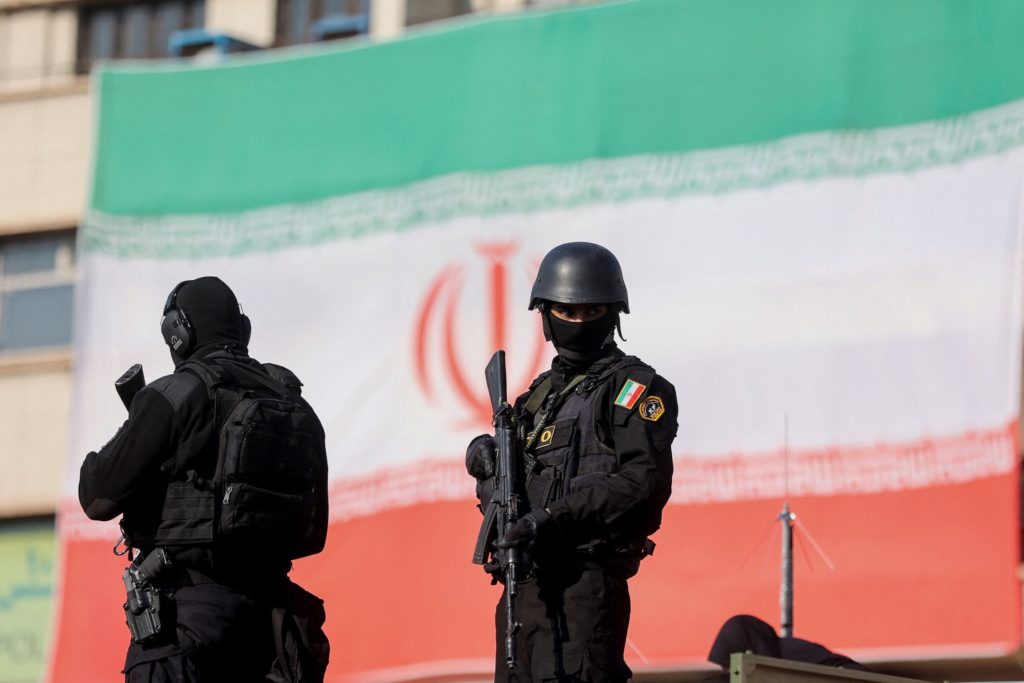
Widespread protests in Iran have been met with a brutal crackdown and an unprecedented internet shutdown, with activists saying at least ~2,500 people have been killed; U.S. officials considered a spectrum of military responses ranging from targeted strikes on security forces to attacks on Iran's nuclear and missile infrastructure. President Trump signaled the immediate threat of a U.S. military strike has eased, saying planned executions were halted, while the U.S. partially evacuated Al Udeid base amid heightened risk. Separately, U.S. officials announced technical governance arrangements for a phase-two Gaza reconstruction plan. The combination of sustained domestic repression, communications blackouts, and elevated regional military risk creates ongoing geopolitical uncertainty that could pressure risk assets and defense/energy-related instruments until the situation clarifies.
Market structure: Near-term winners are defense primes (Lockheed LMT, Raytheon RTX, Northrop NOC) and cybersecurity/satellite comms (CrowdStrike CRWD, Fortinet FTNT, Iridium IRDM) as governments and corporates re-rate security spend; losers include regional airlines (AAL, DAL) and tourism/leisure names exposed to MENA routes. Pricing power shifts toward primes with backlog-driven revenue visibility — expect 3–8% upside consensus revisions over 3–12 months if U.S. leans diplomatic restraint but funds accelerate aid/reconstruction. Energy markets show asymmetric risk: military action off-table mutes an immediate spike, but supply-side vulnerability (Hormuz chokepoint) keeps a volatility premium in crude options.
Risk assessment: Tail scenarios include a heavy U.S.-Iran military exchange (Brent >$120 within weeks; geopolitical premium >$30/bbl) or targeted strikes on Gulf infrastructure — low probability (<15%) but high impact. Time horizons separate cleanly: days (local risk-off, FX flows to USD/treasuries), weeks/months (oil and defense repricing), quarters/years (nuclear/missile program implications and sustained defense budgets). Hidden dependencies: insurance/shipping rerouting that raises costs for global trade, and internet blackouts accelerating satellite/VPN capex. Catalysts to watch: confirmed executions, attacks on shipping, OPEC emergency meetings, U.S. budget language on defense aid.
Trade implications: Favor 3–4% net overweight in large defense primes (LMT/RTX/NOC) over 3–12 months; size with 6-month call spreads (buy 6-month 10% OTM calls, sell 20% OTM). Use conditional energy plays: if Brent >$85 buy a 2-month $85–$95 Brent call spread sized to 1–2% NAV; if Brent sustains >$80 for 4 weeks, rotate 2% into XOM/CVX. Hedge equity tail risk with 3-month SPY 5% OTM puts sized to cover a 3–5% portfolio drawdown or buy VXX call spread if VIX >25.
Contrarian angles: Consensus expects near-term military action; markets may underprice a protracted cyber/information-security spend cycle driven by Iranian internet blackouts — CRWD/FTNT could outperform defense primes by 5–10% over 6–12 months. Defense multiples already rose; prefer hybrid trades (buy calls rather than stock) to capture upside while limiting downside if conflict remains limited. Reconstruction narratives (Gaza governance) create a small-cap infrastructure window — consider selective contractor exposure (CAT) only after clarity on funding and timelines (trigger: U.S./EU commitments >$5bn).
AI-powered research, real-time alerts, and portfolio analytics for institutional investors.
Request DemoOverall Sentiment
moderately negative
Sentiment Score
-0.35
