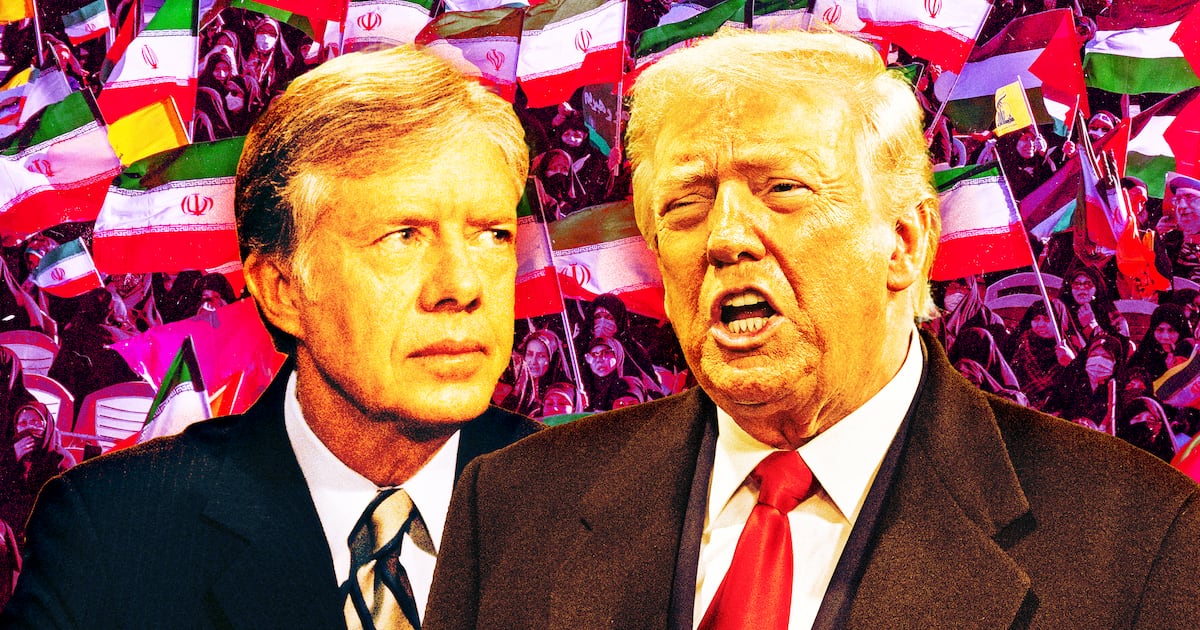
Widespread protests in Iran—likened to the 1979 revolution and reporting more than 2,000 deaths—have prompted President Trump to publicly encourage regime change and contemplate military options, raising fears of U.S. intervention. Analysts cited warn Iran’s Islamic Revolutionary Guard Corps remains the strongest domestic institution, meaning military action risks escalation without guaranteed regime collapse, leaving the administration politically constrained. For investors, this increases geopolitical tail risk for the Middle East (notably oil, emerging-market and defense exposures), but the piece suggests elevated uncertainty rather than an imminent market-moving event.
Market structure: Escalating unrest in Iran is asymmetric — immediate winners are defense primes (Lockheed LMT, Northrop NOC, RTX) and commodity/energy suppliers; losers are regional EM equities, carriers (JETS), and banks exposed to trade with the Gulf. If shipping through the Strait of Hormuz is threatened even briefly, expect a short-term oil risk premium of $10–30/bbl and a rotation into USD, gold (GLD) and US Treasuries.
Risk assessment: Tail risks include a full US strike or prolonged closure of shipping lanes (low-to-moderate probability; 5–20% for wider conflict, ~20–40% chance of transient oil shock). Immediate (days) effects: volatility spike and safe-haven flows; short-term (weeks–months): defense order re-rating and higher energy earnings; long-term (quarters–years): sustained sanctions, higher insurance/freight costs and re-routing that raise input costs for global trade.
Trade implications: Favor tactical long defense equity exposure, short sensitive travel/airline names, and buy convexity in oil and volatility — use 1–3 month call spreads on Brent/WTI and short-dated S&P protective puts sized as a ~1% portfolio cost. Cross-asset hedges: GLD/UUP and short EM beta (EEM) as flight-to-quality hedges; scale positions on objective triggers (Brent +10–15% in 3–7 days, VIX >28, S&P decline >3%).
Contrarian angles: Consensus pricing assumes either rapid US intervention or immediate regime collapse; both are low-probability outcomes given IRGC strength — risk premia may overshoot on headline fear. Once shipping/insurance adjustments are priced (weeks), oil and defense spikes can mean-revert; plan to trim after >25–40% rallies or if on-the-ground indicators show regime stability (IRGC control intact >30 days).
AI-powered research, real-time alerts, and portfolio analytics for institutional investors.
Request DemoOverall Sentiment
moderately negative
Sentiment Score
-0.45
