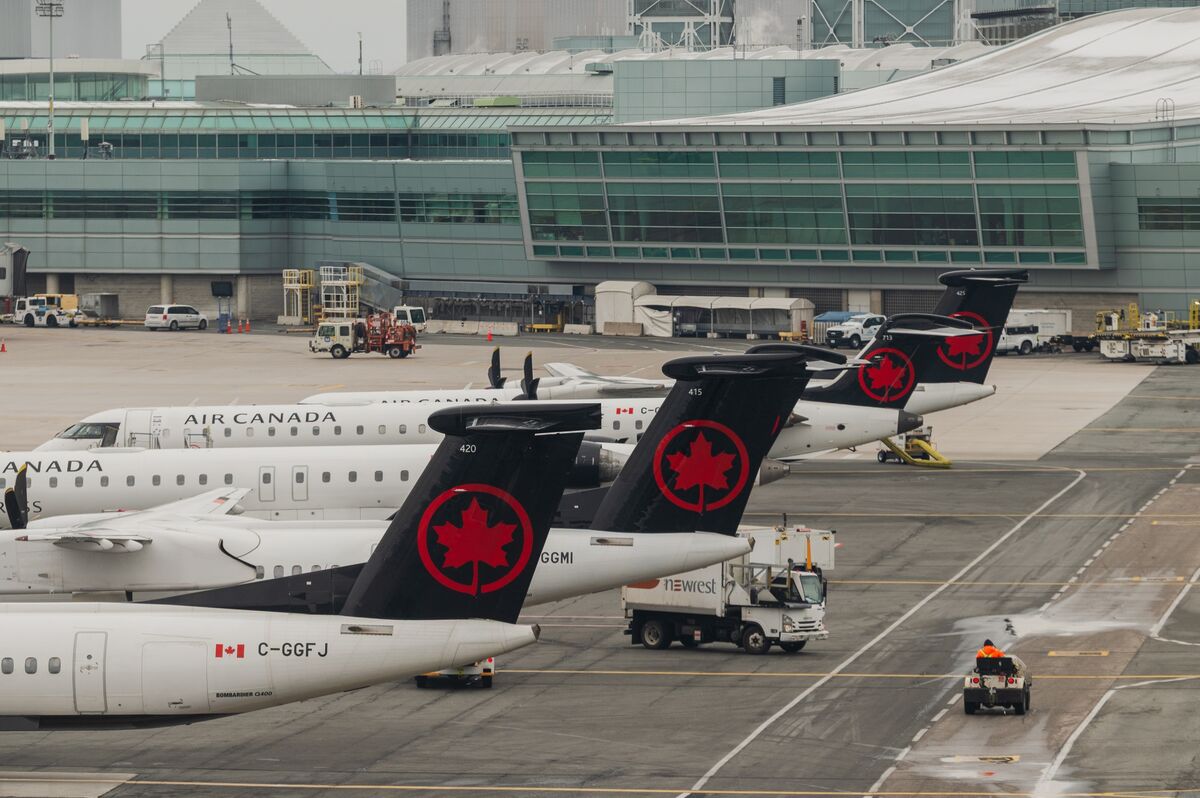
Air Canada suspended its full-year 2026 guidance because volatility in jet fuel prices has made second-half 2026 fuel forecasts unreliable. The airline cited ongoing disruption in global energy markets tied to recent Middle East developments. The update is a modest negative for sentiment, reflecting higher input-cost uncertainty rather than an immediate operational shock.
The key takeaway is not the guidance withdrawal itself; it is that AC.TO is signaling its margin structure is now being re-priced on a near-term input it cannot hedge cleanly and that the market is likely underestimating the lagged earnings effect. In airlines, fuel shocks rarely hit just one quarter—they bleed into booking behavior, fare mix, and capacity discipline over 2-3 reporting periods, so the real risk is a slower reset to consensus rather than a one-time EPS miss. That dynamic tends to favor carriers with stronger loyalty revenue, better ancillary mix, or more flexible fleet/route economics, while pressuring smaller or more leisure-exposed operators first. Second-order winners are not obvious airlines but adjacent beneficiaries of a higher-fare environment: airport operators, aircraft lessors, and premium/travel-exposed credit names can hold up better if airlines protect yield by trimming capacity instead of discounting. Conversely, the consumer pain is broader than aviation; if fuel remains elevated for months, discretionary travel demand can soften with a lag, which disproportionately hurts package travel, online travel agencies, and lower-income leisure routes. The market may be too focused on jet fuel as a cost item and not enough on the possibility that higher fuel becomes a demand destruction event by late summer rather than a simple margin squeeze. The contrarian view is that guidance suspension can be a peak-negative signal if fuel prices stabilize quickly: airlines often regain visibility faster than investors expect once hedge ratios, spot prices, and fare pass-through line up. If geopolitical headlines cool and crude retraces, AC.TO could rerate sharply because the market will have already discounted a worst-case 2H26 margin compression. The setup is therefore asymmetric: near-term downside is driven by estimate cuts, but the reversal could be swift if energy volatility normalizes over the next 4-8 weeks.
AI-powered research, real-time alerts, and portfolio analytics for institutional investors.
Overall Sentiment
mildly negative
Sentiment Score
-0.35
Ticker Sentiment
