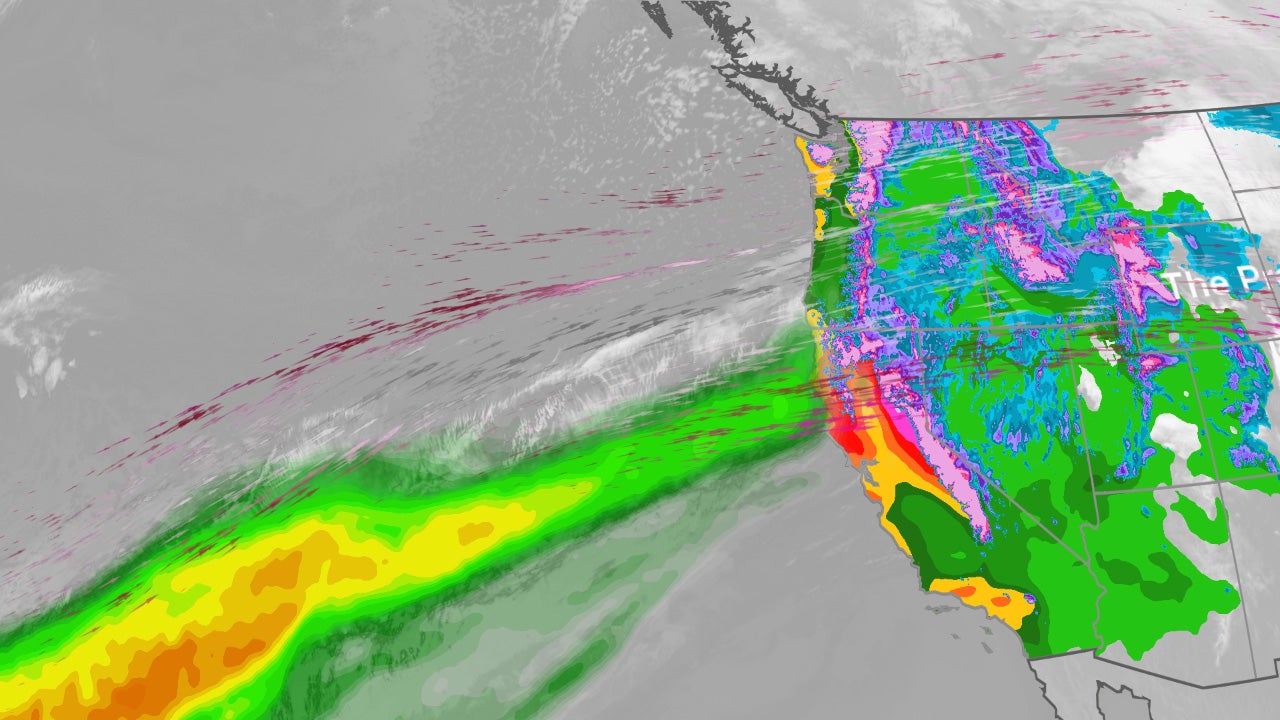
A sequence of Pacific storms and atmospheric rivers will continue into and through Christmas, bringing widespread heavy rain — generally 3+ inches in Northern California (8+ inches likely in coastal ranges and foothills, parts of the Bay Area over 5 inches), 1–3 inches more in western Washington and Oregon, and several feet of Sierra snow with the Christmas-week systems. The events have already produced record flooding in western Washington, levee breaches in King County (Green River/Tukwila and Pacific), very strong wind gusts (regional reports up to 144 mph; Spokane 75 mph; Pullman 81 mph), injuries and at least one fatality in Idaho, and long-duration flood watches for Northern California; forecasts warn of flash flooding, landslides, prolonged river flooding and power outages.
Market structure: Near-term winners are infrastructure/engineering contractors, materials suppliers and logistics landlords (favorable bid pipelines and warehouse demand); losers are regional utilities, residential builders and property insurers facing claims and outages. Expect contractors (ACM, J) and materials (VMC) to gain pricing power for 3–9 months as emergency repair demand outstrips local capacity, potentially lifting bid spreads by ~10–25% in impacted corridors.
Risk assessment: Tail risks include a multi-basin levee/urban-flood event producing >$3–$10bn insured losses, regulatory rate caps on utilities or accelerated litigation versus insurers; these would hit insurer equity and credit in 30–90 days. Immediate operational disruption (days) shifts to claims and reserve builds (weeks–months) and finally to public capex and permit-driven construction cycles (quarters–years).
Trade implications: Direct plays favor 1–3 month to 9 month exposure to contractors (ACM, J) and logistics REITs (PLD) while trimming CA-focused homebuilders (PHM, DHI) and selectively hedging insurers (TRV, ALL). Option IV should spike for insurer names—use defined-risk put spreads to limit capital. Rebalance cash to short-dated Treasury bills for liquidity during the next 30 days.
Contrarian angles: The market may underprice the medium-term boost to materials and heavy-equipment demand (6–18 months) from reconstruction; conversely, initial equity sell-offs in large reinsurers could be overdone if reinsurance rate hardening lifts pricing into 2025. Watch public emergency declarations and state bond issuance as catalysts that rerate construction vs. residential exposure.
AI-powered research, real-time alerts, and portfolio analytics for institutional investors.
Request DemoOverall Sentiment
moderately negative
Sentiment Score
-0.60
