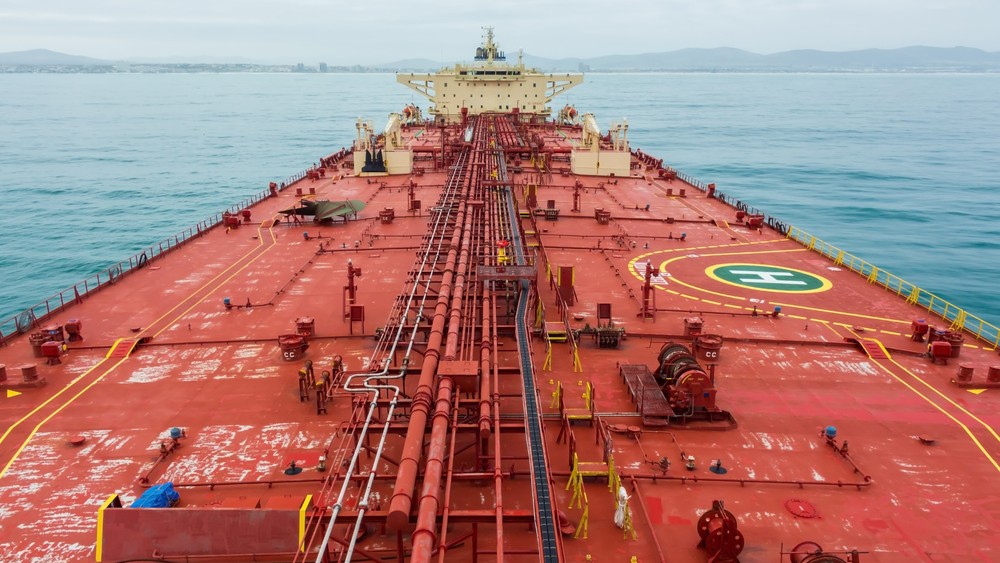
Only the second Japan-bound tanker has passed through the Strait of Hormuz since U.S. and Israeli strikes on Iran, carrying 1.2 million barrels of Kuwaiti crude and 700,000 barrels of Emirati crude. The tanker reportedly switched off its transponder while transiting, highlighting ongoing security risks and disruption concerns around the key oil chokepoint. The article underscores supply vulnerability for Japan, which gets about 95% of its crude feedstocks from the Middle East and roughly 70% of those volumes via Hormuz.
The key market signal is not the crude barrel itself but the proof that the Strait remains partially operational under a more selective, negotiated risk regime. That reduces the probability of a true supply cliff, but it increases dispersion across freight, insurance, and regional crude differentials: cargoes with the right routing, chartering, and implicit permissions will clear, while everyone else pays a premium to avoid being the marginal ship exposed to seizure or delay. In practice, this is bullish for shipping market volatility and for energy majors with trading desks that can arbitrage destination and routing dislocations. The second-order impact is on Asian refining behavior. Japan is structurally vulnerable to any duration extension because its refiners have limited near-term ability to replace Middle Eastern barrels, so even a few days of uncertainty can push them into defensive buying, higher inventory targets, and potentially lower refinery utilization. That means the more important price response may show up first in prompt physical premiums and jet/diesel cracks rather than headline Brent, especially if Gulf loadings continue but insurance and routing costs widen. The contrarian read is that the market may be overweighting the headline blockade narrative and underweighting the fact that selective passage can actually preserve Iran's leverage without fully stopping flows. If this is a managed harassment campaign rather than a hard closure, the biggest beneficiary is not crude bulls but volatility sellers who own convexity in shipping and options on refined products. The real tail risk is escalation from selective interference to actual seizures of sovereign-linked or Western-linked cargoes, which would reprice the entire basin within days, not months.
AI-powered research, real-time alerts, and portfolio analytics for institutional investors.
Request DemoOverall Sentiment
mildly negative
Sentiment Score
-0.12
