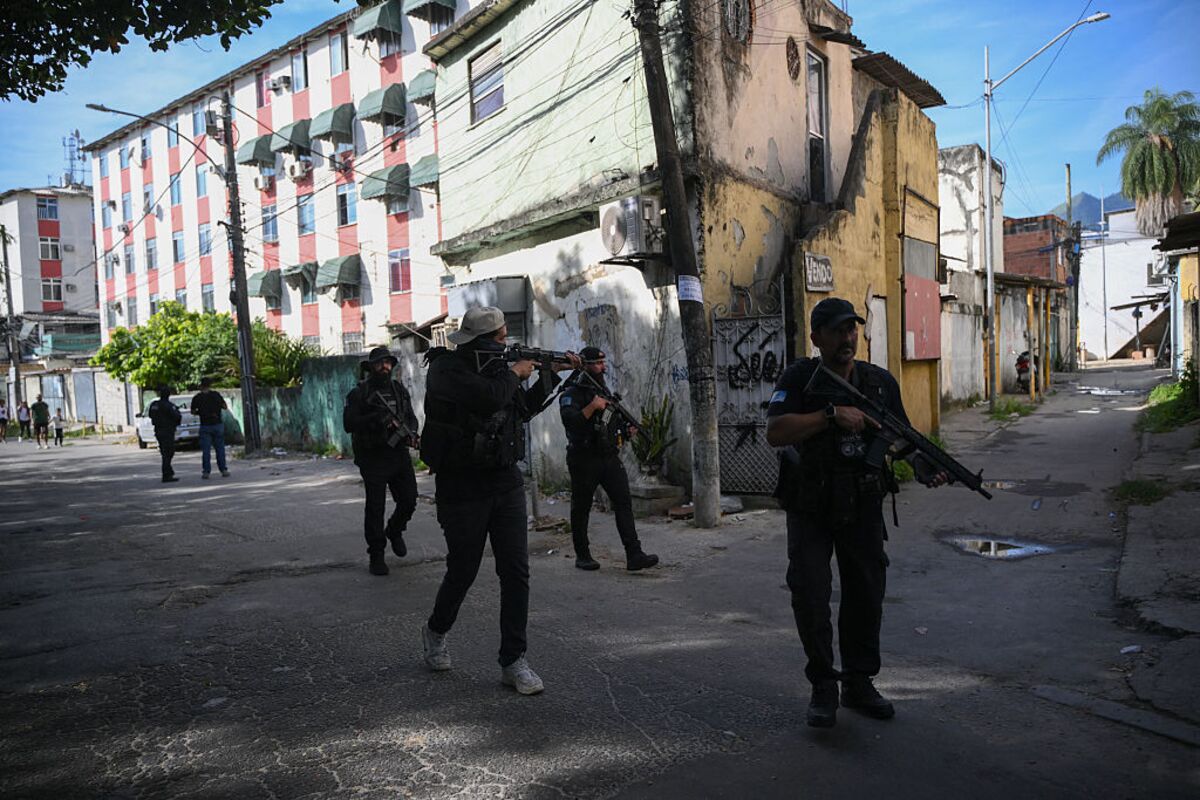
Finance Minister Fernando Haddad said Brazil will seek US assistance to combat organized crime and weapons smuggling as part of ongoing trade negotiations, announced after a police operation targeting tax evasion and money laundering in the country's fuel sector. The announcement highlights heightened enforcement and regulatory risk in Brazil's energy/fuel industry and could become a component of US-Brazil trade talks, with potential implications for investors exposed to Brazilian fuel companies and cross-border trade flows.
Market structure: A US-Brazil coordinated crackdown shifts share away from informal fuel suppliers and smuggling networks toward compliant large players (e.g., Petrobras PBR). Expect domestic refined-product availability to tighten short-term (weeks) raising local prices by an estimated 5-10% if smuggled volumes decline ~10-20%; fiscal receipts could rise materially (+0.2–0.5% of GDP) if enforcement sticks, improving sovereign credit metrics over 6–18 months.
Risk assessment: Tail risks include political backlash (populist price caps or renewed intervention in Petrobras) and supply-chain retaliation by criminal networks causing localized disruptions (days–weeks). Near-term volatility in Brazilian equities and BRL is likely; medium-term (3–12 months) outcomes hinge on concrete trade-negotiation deliverables and measured declines in EMBI spreads (>50bp moves possible).
Trade implications: Direct winners are large, audited energy/refining firms and state fiscal balance; losers are small regional distributors and opaque trading houses. Cross-asset: stronger fiscal prospects compress sovereign spreads (positive for Brazilian bonds), BRL likely to appreciate 5–8% medium-term, and commodity crude remains neutral while local gasoline/diesel margins rise; use options to manage elevated IV around enforcement news.
Contrarian angles: Consensus underestimates upside from governance improvement — a sustained US partnership could cut illicit fuel flows >15% and materially lower country risk premia. Conversely, markets may underprice the probability of political price controls; a contrarian hedge is warranted through short-dated puts on Brazilian equity exposure if policy intervention risk spikes within 3 months.
AI-powered research, real-time alerts, and portfolio analytics for institutional investors.
Request DemoOverall Sentiment
neutral
Sentiment Score
-0.10
