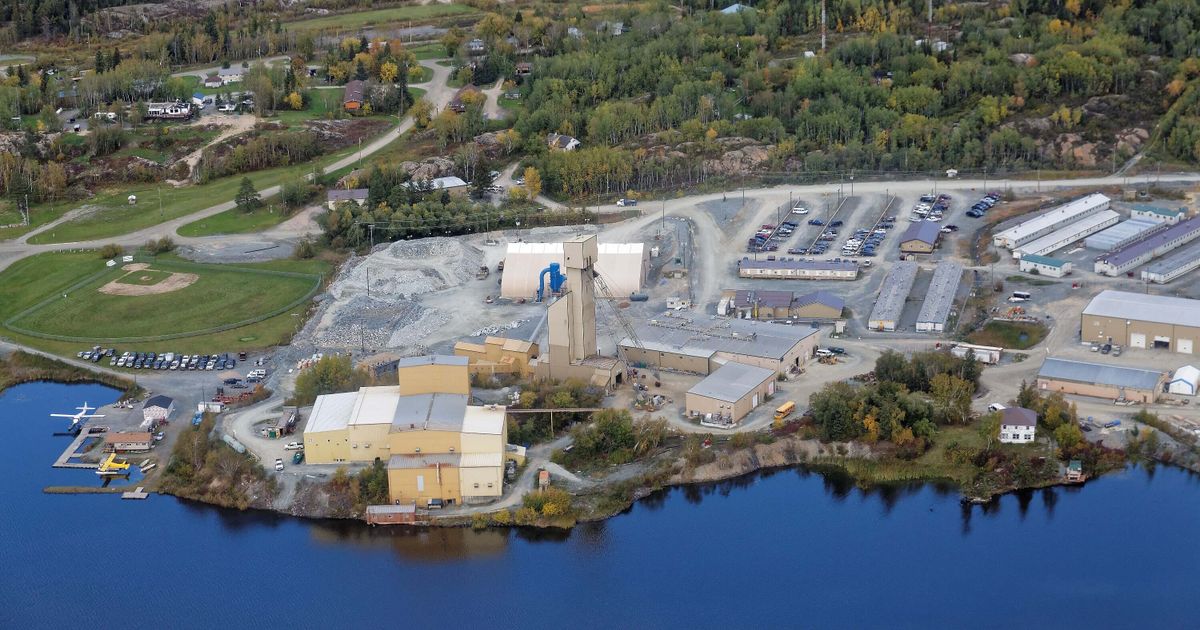
1911 Gold's PEA for the True North mine outlines an 11-year underground operation averaging 58,100 oz Au/year with a base-case (US$3,000/oz) after-tax NPV of C$391m, IRR of 105% and a 2.2-year payback, generating C$545m free cash flow; at US$4,800/oz after-tax NPV rises to C$998m with ~C$1.3bn free cash flow and ~1-year payback. Management is targeting a 2027 production restart, plans near-term integration of high-potential zones (SAM SE could add +500,000 oz) and expects to fund growth organically from cash flow while requiring additional financing for mill start-up despite ~C$26m in treasury. The PEA provides a conservative baseline with material upside from nearby discoveries and higher gold prices, supporting a constructive investment case but contingent on dewatering, financing and execution.
Market structure: 1911 Gold (AUMBF / AUMB) is the direct winner—a restart targeting ~58k oz/year from 2027 with base-case after‑tax NPV C$391M at US$3,000/oz implies >100% IRR and material free cash flow at current spot gold (~US$4,500–5,000). Regional service providers, underground contract miners and Canadian junior explorers will benefit from renewed activity; global supply impact is negligible (<0.05% of annual gold supply) so pricing power remains driven by macro gold demand, not this restart. Higher spot gold tightens project economics and lowers break-even AISC (PEA ~US$1,900/oz), increasing optionality to add SAM SE and Shore targets.
Risk assessment: Key tail risks are operational (failed dewatering, mill recovery shortfalls), financing (need for incremental capital beyond ~$26M treasury), and permitting/community issues; a single failed bulk sample or a financing that forces >20% equity dilution would materially reset the upside. Immediate (days–weeks): sentiment and share volatility around drill/bulk-sample updates; short-term (3–12 months): financing terms, bulk-sample recovery rates, and PEA sensitivity releases; long-term (2027): execution risk to restart, ramp and grade reconciliation. Hidden dependencies include mill capacity/recovery improvements, water treatment logistics, and contract mining availability.
Trade implications: Direct tactical play is idiosyncratic long AUMBF exposure sized to 2–3% NAV with staged buys into catalysts (bulk sample results in 3–6 months, financing close within 6–9 months). Hedge with a short position in GDXJ or GDX (50–75% dollar hedge) to isolate company-specific upside versus gold direction; consider buying 18–24 month call LEAPS on AUMBF (or AUMB) 40–60% OTM sized 0.5–1% notional if liquid, otherwise use small long equity + hedge. Rotate modestly into Canadian junior/exploration services and away from high‑AISC open‑pit producers if gold remains >US$4,200 over next 6–12 months.
Contrarian angles: Consensus underappreciates two outcomes: (1) rapid integration of SAM SE could add +500k oz resource and re-rate AUMBF materially; (2) conversely, PEA grade assumptions and recovery targets may be optimistic—if bulk sample recoveries stay <70% or dewatering delays >6 months, downside is large. Historical parallels: past True North cycles show steep grade swings and capital gaps; unintended consequences include aggressive M&A interest (takeover premium) or punitive financing that wipes early equity holders. Trade accordingly with catalyst-triggered scaling and explicit dilution/financing stop-loss rules.
AI-powered research, real-time alerts, and portfolio analytics for institutional investors.
Request DemoOverall Sentiment
moderately positive
Sentiment Score
0.56
Ticker Sentiment
