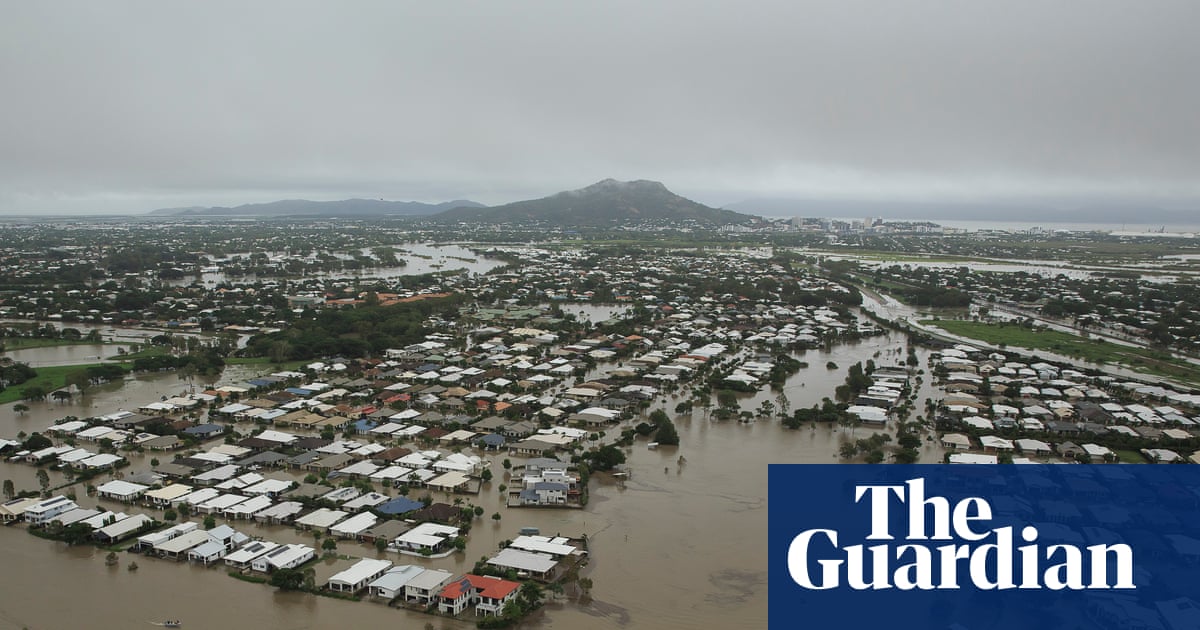
A new federal government report warns that up to 185,000 properties in Queensland, predominantly in northern regions, face "very high risk" of natural disasters and potential uninsurability if global heating continues, with 175,000 homes at risk even under the 1.5C warming scenario, a level Australia has already reached. This compounds existing vulnerabilities, as northern Australia already reports a 20% home building non-insurance rate, double the national average. The findings signal substantial financial risk for property markets and underscore a pressing need for climate adaptation and mitigation strategies.
A new Australian federal government report quantifies a significant and escalating financial risk concentrated in Queensland's property market. The report identifies up to 185,000 properties at "very high risk" of natural disasters under a 3C global heating scenario, a figure that stands at 175,000 even under the 1.5C warming level that the continent has already reached. The most critical financial implication is the explicit warning that these properties could become uninsurable, creating a material threat to asset values and the viability of mortgage collateral. This is not a hypothetical future event but an acceleration of a current trend, as northern Australia already exhibits a home non-insurance rate of 20%, nearly double the national average, driven by affordability issues. The concentration of this risk is notable, with 18 of the 20 highest-risk local government areas in Australia located within Queensland. For financial institutions, this signals a potential for systemic risk, impacting not only the insurance sector's loss ratios and underwriting strategies but also the loan books of banks with significant mortgage exposure in these regions. The report's release and the associated calls for government intervention suggest that regulatory and policy risks are also increasing, potentially leading to stricter building codes, land-use restrictions, or state-backed insurance schemes.
AI-powered research, real-time alerts, and portfolio analytics for institutional investors.
Request DemoOverall Sentiment
extremely negative
Sentiment Score
-0.85
