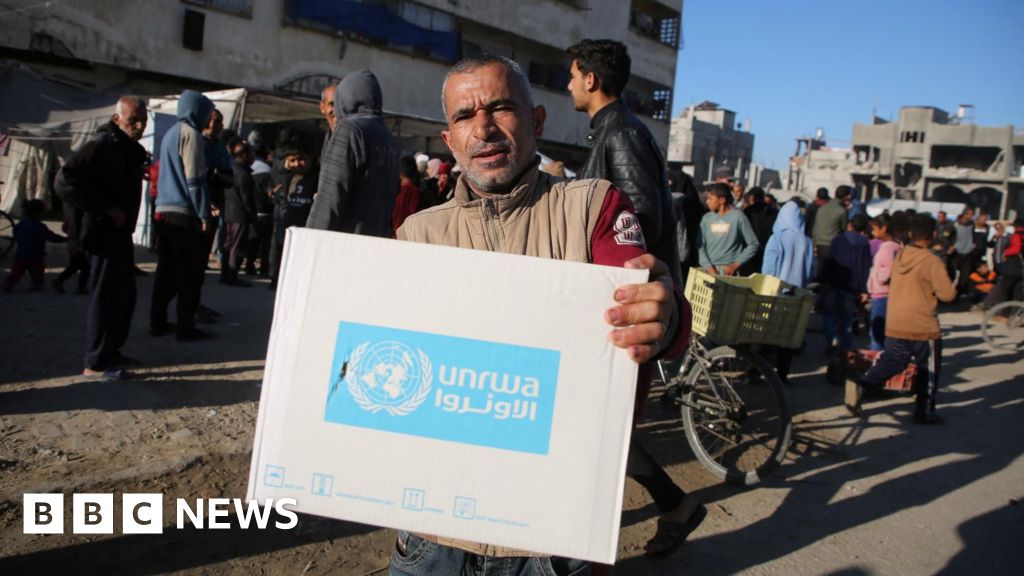
The International Court of Justice (ICJ) is set to issue a non-binding advisory opinion on Israel's legal obligations concerning UN agencies, particularly Unrwa, and humanitarian aid delivery in the West Bank and Gaza, following Israel's restrictions and accusations against the agency. This opinion, requested by the UN General Assembly, will clarify whether Israel's actions violate UN conventions and international humanitarian law, with Israel asserting its national security concerns. The case carries significant diplomatic weight, testing the international system's ability to enforce its rules and potentially impacting regional geopolitical stability and humanitarian aid flows, which are critical considerations for institutional investors assessing risk.
The International Court of Justice (ICJ) is set to issue a non-binding advisory opinion on Israel's legal obligations regarding UN agencies, particularly Unrwa, and humanitarian aid delivery in the West Bank and Gaza. This follows Israel's legislative ban on Unrwa activities and accusations of Hamas infiltration, which Unrwa denies, prompting the ICJ to assess potential breaches of UN conventions and international humanitarian law. Israel's tightened blockade on Gaza has led to severe food insecurity, with UN-backed experts estimating an "entirely man-made" famine. Israel rejects these findings, citing its own aid provisions and blaming Hamas for theft.
Israel dismisses the ICJ procedure as a "political circus," asserting its right to self-defense and arguing against cooperation with agencies it deems a security risk. However, UN officials emphasize Israel's obligations as an occupying power and UN member to facilitate UN entities, especially given severe food insecurity estimates in Gaza. This case represents a critical test of the international system's rule enforcement capabilities, being the first formal legal inquiry into a UN member state excluding a UN agency.
The opinion, while non-binding, holds substantial moral and diplomatic weight, potentially influencing international relations and aid operations. Israel has already restricted Unrwa's ability to deliver aid and issue staff visas, impacting the region's largest humanitarian organization. This unprecedented legal inquiry could reshape perceptions of UN institutional legitimacy and operational scope in conflict zones.
AI-powered research, real-time alerts, and portfolio analytics for institutional investors.
Request DemoOverall Sentiment
moderately negative
Sentiment Score
-0.40
