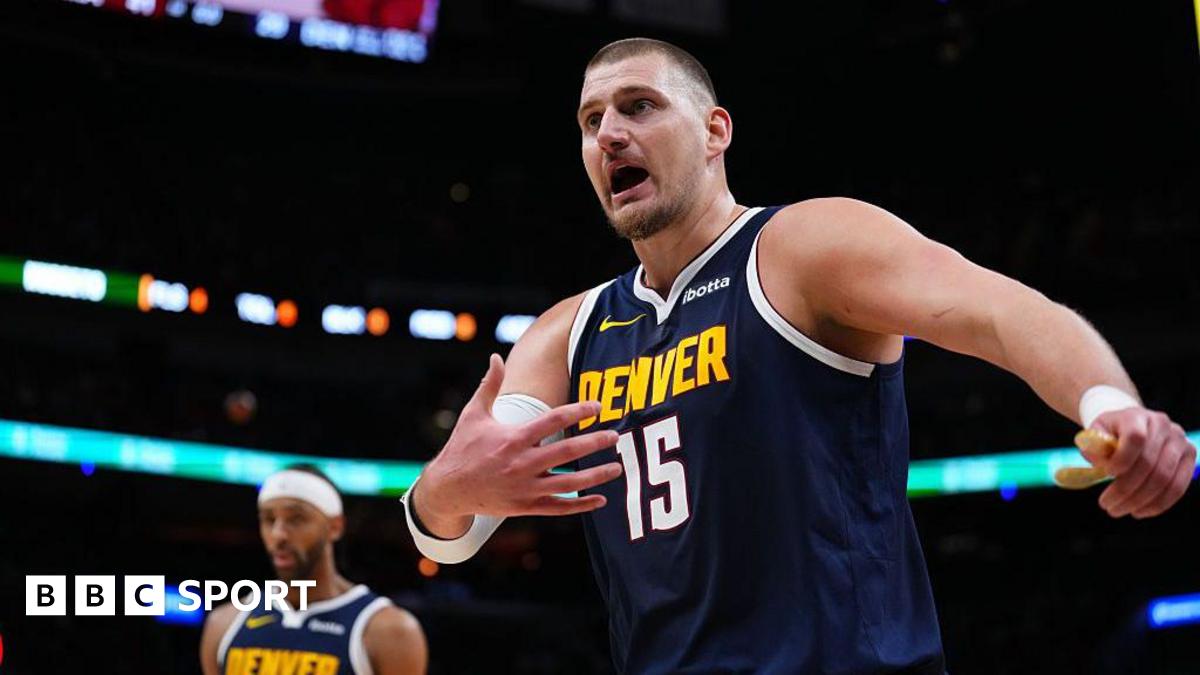
Denver Nuggets three-time MVP Nikola Jokic suffered a knee injury late in the first half of a 147-123 loss at the Miami Heat after teammate Spencer Jones accidentally stepped on his foot; Jokic collapsed clutching his knee and will undergo an MRI on Tuesday to determine the severity. The 30-year-old, who leads the NBA in rebounds and assists, had 21 points and eight assists before exiting; his availability will materially affect the Nuggets' on-court competitiveness, related revenue drivers (ticketing, sponsorships) and short-term betting and fantasy exposures.
Market structure: This is a localized shock to NBA viewership, fantasy/player-prop markets and sports-betting flow rather than a macro demand shock. Short-term winners are sportsbooks (DKNG, CZR) and live-betting platforms that can monetize line volatility and increased hedging activity; losers are local Denver-dependent merchants, fantasy operators and any single-player dependent sponsorships. Broadcasters (DIS, WBD) face minor audience fragmentation risk if absence lasts weeks, but national rights fees/advertising are unlikely to reprice on one injury.
Risk assessment: Immediate (0–7 days) risk is volatility in betting handles and social sentiment; short-term (weeks–months) risk is team performance dragging local ratings and merchandising revenue if Jokic misses multiple games; long-term (quarters) tail risk is a season-altering injury that could reduce playoff viewership and advertising renewal momentum. Hidden dependencies include sponsorship contracts with player-injury clauses, fantasy subscription churn and franchise valuation covenants; catalysts are MRI results (within 48–72 hours), team medical timelines and trade-deadline roster moves.
Trade implications: Tactical volatility trades on sportsbooks and short-dated player-prop markets are highest-conviction: buy options-driven exposure to betting volatility (DKNG) around the MRI window and hedge with casino operator exposure (CZR) for relative safety. Avoid large directional bets on broadcasters; favor small, event-driven option structures and capital-light pairs. Consider micro exposure (1–3% portfolio) to medical-device names (SYK, ZBH) only if market prices >5% overreaction into 1–3 months.
Contrarian angles: Consensus will focus on immediate sympathy selling of sports-betting names; what's missed is that operators often widen vig and improve margins during uncertainty, cushioning revenue downside. Historical parallels (LeBron, Durant short absences) show short-term viewership dips recover; if MRI clears in 7–14 days, expect a >40% rebound in sentiment and an asymmetric long re-entry opportunity.
AI-powered research, real-time alerts, and portfolio analytics for institutional investors.
Request DemoOverall Sentiment
mildly negative
Sentiment Score
-0.30
