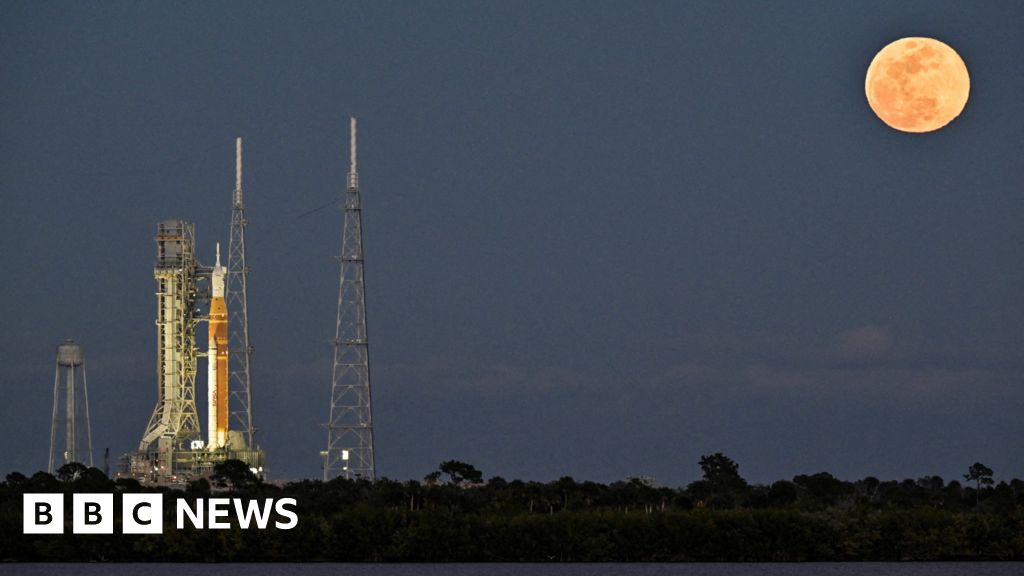
NASA has targeted 6 March (7 March UK) for the Artemis II launch, a 10-day crewed lunar flyby that will carry three Americans and one Canadian aboard the Orion capsule atop the 98m Space Launch System. The date follows a successful wet dress rehearsal at Kennedy Space Center after fixes for hydrogen leak issues; the mission will travel ~4 days to the Moon, fly 6,500–9,500 km above the far side for several hours of observations, then return with a Pacific splashdown. This represents a key operational milestone for the Artemis program and could incrementally de‑risk near-term schedules for prime contractors and suppliers supporting future lunar landings.
Market structure: A successful Artemis II run is a positive demand signal for NASA primes and specialized suppliers—Lockheed Martin (Orion), Northrop Grumman (boosters/mission systems) and Aerojet Rocketdyne (engines/components) see near-term contract optionality and spare-parts revenue over 6–24 months. Boeing (SLS core contractor) has revenue exposure but greater execution risk; commercial launchers (SpaceX/Starship, private firms) remain longer-term competitive threats that cap pricing power for single-purpose systems.
Risk assessment: Tail risks include a launch anomaly that could trigger multi-month program pauses, Congressional reallocation of funds toward commercial providers, or major supplier bankruptcies; probability low–medium but impact high (>$1bn program adjustments). Immediate (days): market reaction around launch outcome; short-term (weeks–months): contract awards/appropriations; long-term (years): structural shift to commercial lunar services and material suppliers.
Trade implications: Event-driven volatility should compress if launch succeeds; expect 3–7% positive re-rating for small-cap suppliers and 1–3% for large primes if no anomaly. Instruments to prefer: selective equity exposure to mission-critical tier-1 contractors and niche component suppliers, modest defensive shorts on legacy integrators with visible execution issues. Options: short-dated call spreads to capture upside while limiting premium bleed around the March 6–10 window.
Contrarian angles: Consensus prizes headline success as durable revenue growth; history (Space Shuttle/Apollo) shows single programs rarely create sustained commercial demand. The market may underprice the risk of accelerated procurement shift to SpaceX/Commercial Lunar Payload Services within 12–36 months, creating cyclical losers among heavy bespoke platforms and hidden winners among small avionics/parts suppliers.
AI-powered research, real-time alerts, and portfolio analytics for institutional investors.
Request DemoOverall Sentiment
neutral
Sentiment Score
0.10
