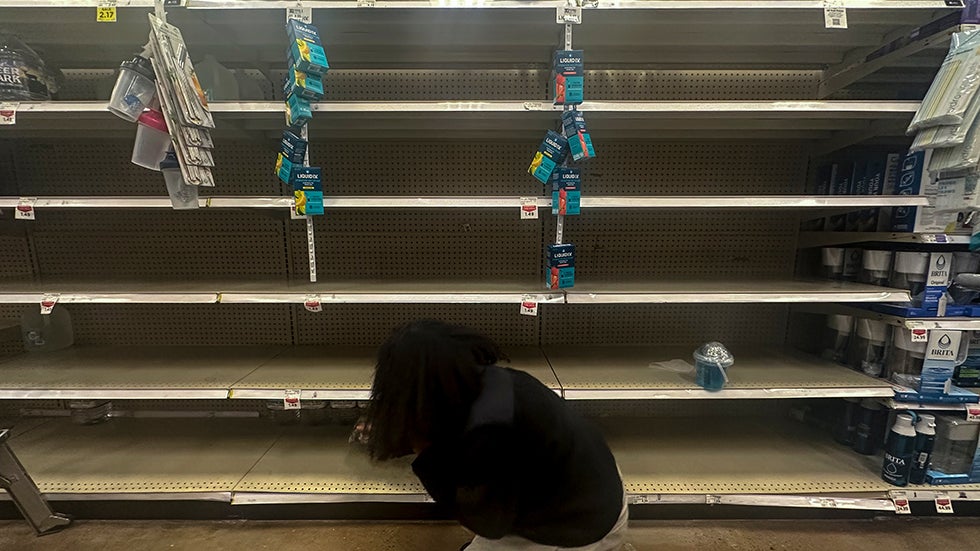
A major winter storm, dubbed Winter Storm Fern, threatens over 30 states and could deliver at least 6 inches of snow and ice to areas affecting more than 230 million people, prompting multiple state emergencies and the call-up of 500 National Guard members in Georgia. Preparations include widespread road salting and brining, localized salt shortages in Michigan, depleted retail inventories of ice-melt and propane, and event cancellations — developments that may cause short-term disruptions to transportation, local energy demand, and retail supply chains in affected regions.
Market structure: Acute demand shock for de-icing, backup power and emergency fuels benefits suppliers with concentrated upstream control (eg. Compass Minerals [CMP]) and retail distribution (Home Depot [HD], Lowe’s [LOW]). Logistics and travel (airlines, parcel carriers) face short-term revenue loss and higher costs from delays; expect 1–3% hit to weekly volumes in affected regions with concentrated outages. Propane and spot natural gas markets should see a short spike — 5–20% directional move over 1–21 days depending on temperature persistence.
Risk assessment: Tail risks include prolonged grid outages (multi-day widespread blackouts) that could trigger state-level price controls on propane or emergency procurements; this would compress supplier margins for 30–90 days. Immediate window is days–2 weeks for retail/propane/generator demand; supply-chain knock-on effects (grocery restocking, trucking delays) play out over 2–8 weeks. Hidden dependency: county-level salt inventories and procurement contracts — vendors with fixed-price supply may see margin expansion if spot salt shortages occur.
Trade implications: Favor near-term longs in CMP and GNRC for inventory-driven price power and surge sales (trade size 1–3% portfolio each), tactical long nat-gas (UNG or 1–3 month futures call spreads) for 2–6 week horizon; short regional airline exposure (UAL/DAL) via 2–4 week puts to capture travel disruption. Rotate modest overweight to HD/LOW for 1–3 week transitory hardware sales; hedge with short-dated options to cap theta loss.
Contrarian angles: Consensus panic buying is highly front-loaded — retail restocking typically normalizes in 7–14 days, so pure retail longs past 2 weeks risk mean reversion. CMP’s scarcity premium may be priced quickly; require >10% inventory drawdown disclosure or county rationing to justify multi-quarter hold. Historical parallels (2013 polar vortex) show generator and gas spikes fade; prioritize options to play directionality, not outright long-term exposure.
AI-powered research, real-time alerts, and portfolio analytics for institutional investors.
Request DemoOverall Sentiment
moderately negative
Sentiment Score
-0.30
