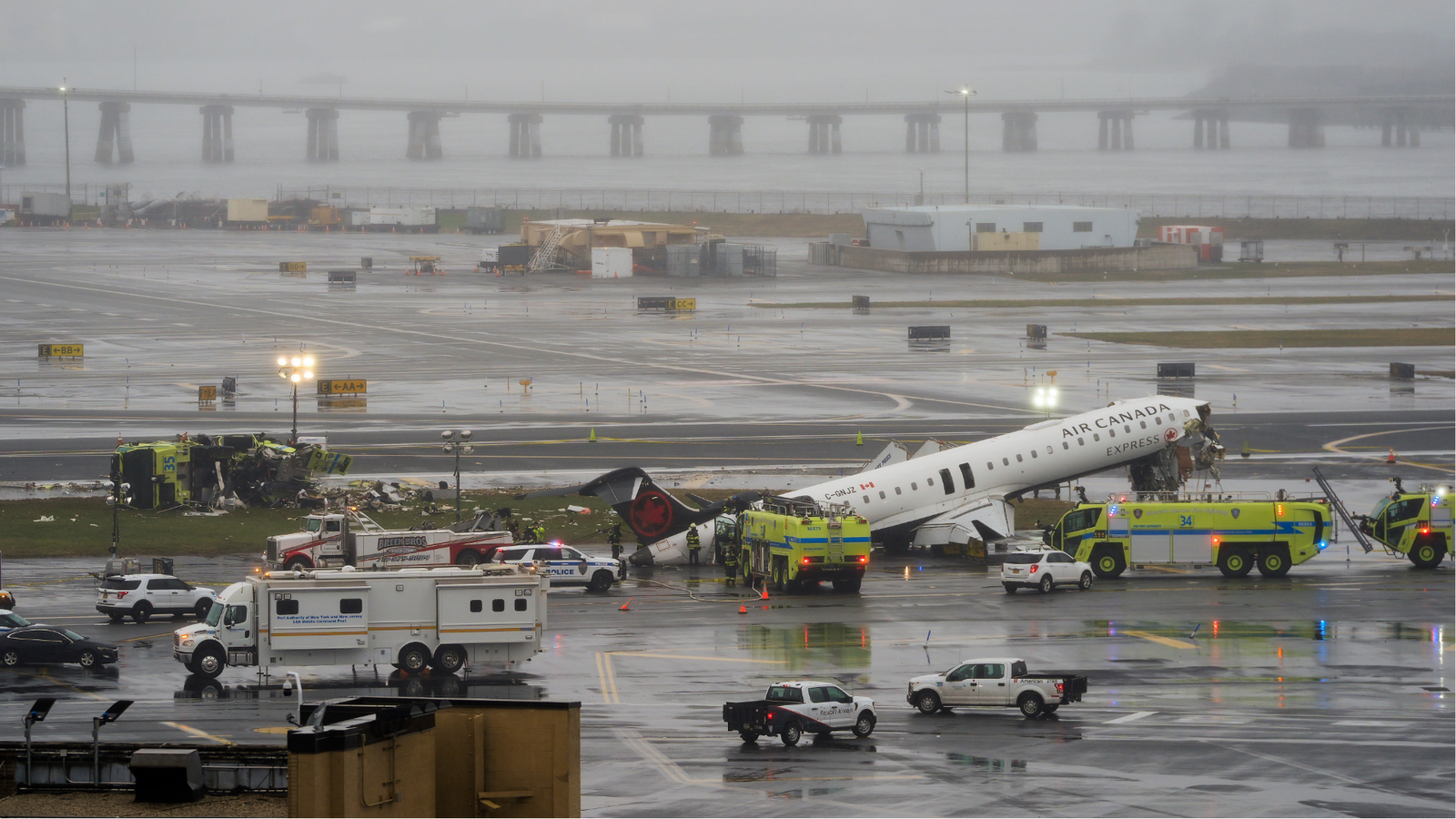
An Air Canada jet carrying more than 70 passengers collided with a fire truck while landing at LaGuardia; the plane's nose was destroyed and both the pilot and copilot were killed. A flight attendant strapped into a four-point crew jump seat was thrown from the aircraft but survived with multiple fractures to one leg and will need surgery; experts say the robust, four-point restraint likely prevented a worse outcome. The incident will prompt regulatory and investigative scrutiny of ground-vehicle and runway procedures, but immediate market impact on airlines is limited.
This is an idiosyncratic operational shock concentrated on Air Canada whose immediate P&L and equity valuation will be driven by three linked channels: accident liability accruals, insurance recovery timing, and near-term capacity disruption from inspections/regulatory scrutiny. Expect the market reaction to unfold in days (initial readjustment and credit spread widening), weeks (regulatory statements and provisional reserve disclosures), and 6–18 months (litigation settlements and reinsurance recoveries that determine net balance‑sheet hit). Quantitatively, materially adverse regulatory findings or protracted litigation could plausibly shave 10–25% off market-implied equity value; absent those, the adjustment should be contained within a single-digit EPS hit spread over 2–4 quarters.
Second‑order operational impacts will be felt across airport ops and scheduling: increased inspection tempos and mandated procedural reviews at major hubs (US and Canada) will raise unit costs and reduce effective seat capacity by a few percent for several weeks, creating revenue opportunities for competitors who can absorb displaced demand. Equipment and safety‑retrofit vendors stand to get accelerated orders over 12–24 months as carriers and airports prioritize stronger crew restraints and ground‑vehicle separation tech. Meanwhile, aviation insurers and reinsurers will reassess pricing and retentions for ground‑collision exposures, a change that can lift airline insurance costs sustainably if reinsurers push through repricing.
Key catalysts to watch that will materially change thesis: preliminary regulator fault attribution (days–weeks), Air Canada’s disclosed reserve and insurer recovery amounts (days–weeks), and any temporary operational constraints imposed by authorities (weeks). A ruling that places primary fault on airport/ground services rather than the airline would likely reverse most of the equity damage within 2–6 weeks. The consensus risk is overreaction: markets often price in worst‑case litigation totals before insurers and courts allocate liability, creating a tactical entry window if facts point away from systemic carrier negligence.
AI-powered research, real-time alerts, and portfolio analytics for institutional investors.
Request DemoOverall Sentiment
mildly negative
Sentiment Score
-0.30
Ticker Sentiment
