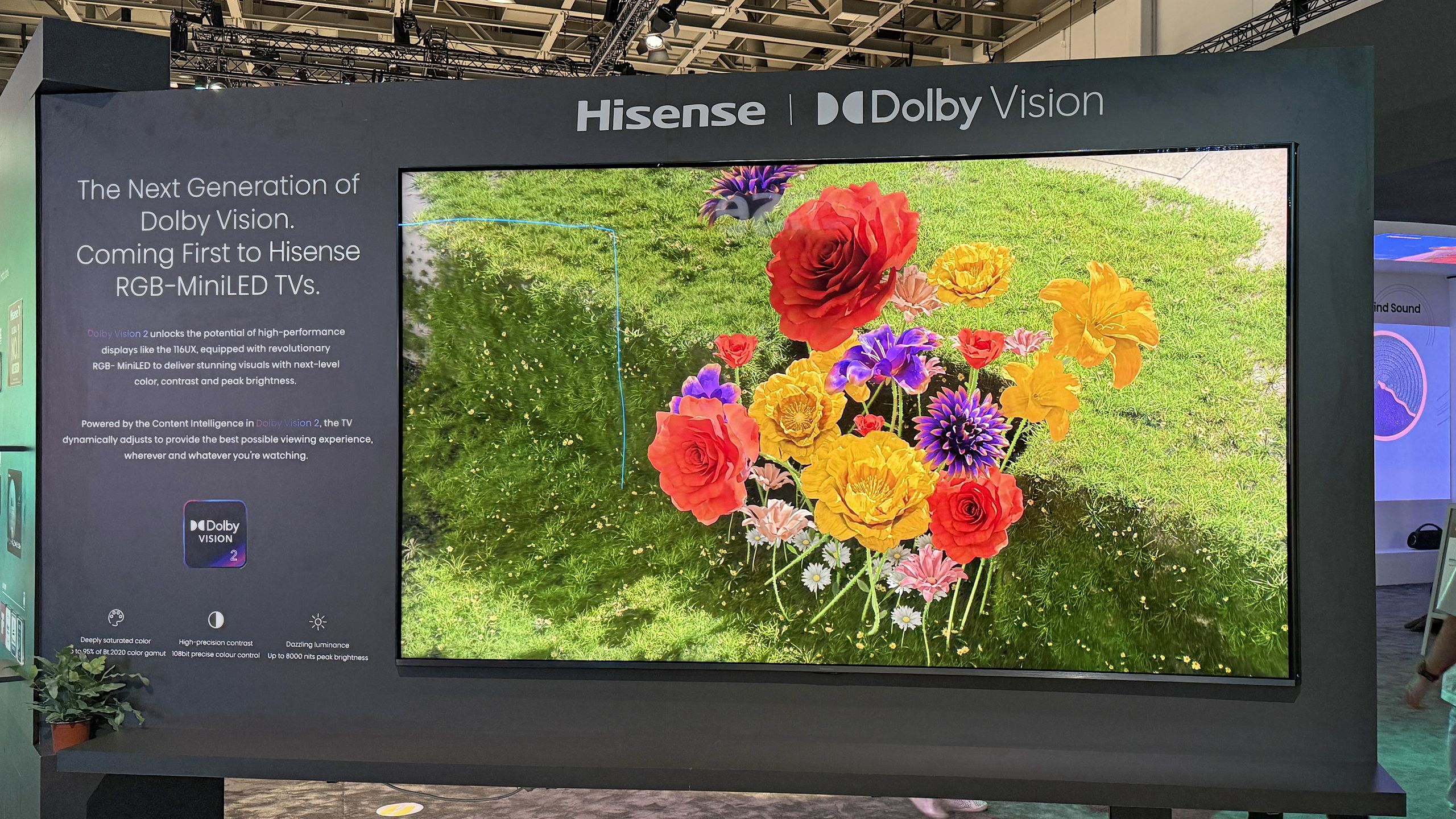
At CES 2026 Dolby confirmed that select 2026 TV models from Hisense (RGB mini‑LED UX, UR9, UR8 and other mini‑LEDs via future updates), TCL (2026 X QD‑mini LED X series and C series via updates) and TP Vision’s Philips (OLED811, OLED911, OLED951) will support the next‑generation HDR format Dolby Vision 2, while Peacock is the first streamer to support Dolby Vision 2 and next‑gen Dolby Atmos. The new format (Dolby Vision 2 and Dolby Vision 2 Max) introduces Precision Black, Light Sense and Authentic Motion features; the vendor and software update rollout could modestly accelerate adoption of the standard, provide product differentiation for OEMs and streaming platforms, and subtly influence competitive positioning in the TV and content markets.
Market structure: Dolby Vision 2 adoption concentrates value upstream (Dolby Laboratories DLB) and in component suppliers for mini‑LED/QD mini‑LED (panel makers, backlight drivers, and SoC vendors). TV OEMs that quickly certify 2026 models (Hisense, TCL, TP Vision/TPV) gain short‑term share vs slower adopters; expect a 5–15% ASP premium on enabled sets in 2H26 if content follows. Streaming platforms that support DV2 (Peacock/CMCSA) obtain a product differentiation wedge that can modestly lift engagement and ad yields within 6–12 months.
Risk assessment: Tail risks include format fragmentation (multiple Dolby Vision 2 variants and rival HDR standards), patent/licensing disputes, and slower content encoder adoption that could push hardware demand out by 12–24 months. Near term (days–weeks) market moves will be noise around CES announcements; meaningful revenue impact should materialize over 3–12 months as firmware updates and model rollouts occur. Hidden dependency: mini‑LED supply tightness (controller ICs, quantum dot materials) could inflate COGS and compress OEM margins if demand spikes faster than capacity.
Trade implications: Favor selective longs: DLB (licensing leverage) and panel suppliers with mini‑LED roadmaps (AUO/Innolux/TPV exposure) for 6–12 month holds; use size limits (1–2% portfolio each) and stop losses of 10–12%. Consider a pair: long CMCSA (Peacock content differentiation) vs neutral/small short on ROKU (ROKU) if ad inventory share shifts—target relative outperformance of 5–10% in 6–12 months. Use call spreads on DLB with 3–9 month expiries to capture adoption upside while capping downside.
Contrarian angle: Market underestimates the risk of slow content rollout—if major streamers delay DV2 encoding, hardware adoption may still drive only replacement demand, not new volumes; that compresses upside to ~10–15% vs consensus 20–30%. Conversely, if Dolby Vision 2 Max or Authentic Motion proves a clear consumer differentiator in sports, expect accelerated replacement cycles in 2027, creating a late‑cycle surge in ODM/OEM earnings—position sizing should reflect binary outcomes.
AI-powered research, real-time alerts, and portfolio analytics for institutional investors.
Request DemoOverall Sentiment
mildly positive
Sentiment Score
0.28
Ticker Sentiment
