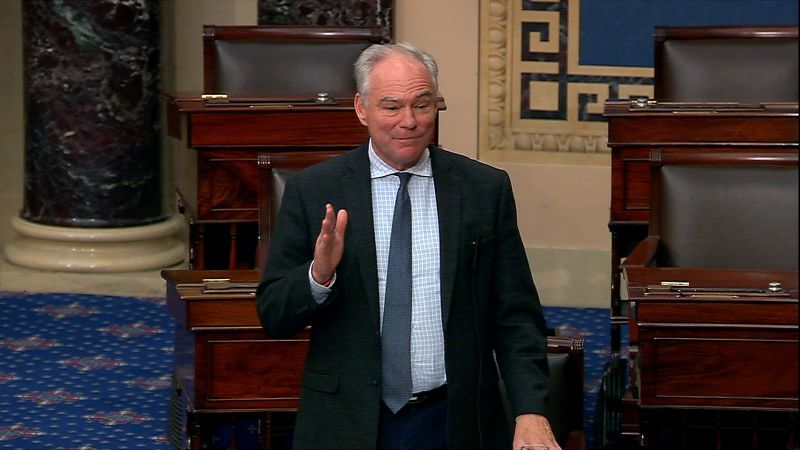
The U.S. Senate rejected a Democrat-led resolution, 53-47, that aimed to curb the president's authority to conduct military action against Iran without congressional approval, following recent U.S. strikes on Iranian nuclear facilities. This vote, which saw fewer Republicans support the measure compared to a similar 2020 attempt, reinforces the executive branch's discretion in foreign policy and military engagements, particularly concerning Iran. The outcome highlights continued congressional division over war powers and signals a prevailing sentiment among many lawmakers that the president retains necessary authority to act in national security interests, potentially reducing immediate legislative checks on future actions in the region.
The U.S. Senate's rejection of a war powers resolution regarding Iran, by a 53-47 vote, solidifies the executive branch's discretion in conducting military operations without immediate congressional approval. This outcome, following recent U.S. strikes on Iranian nuclear facilities, marks a notable shift from a similar 2020 vote, where eight Republicans joined Democrats in favor of such a measure. This time, only one Republican, Senator Rand Paul, supported the resolution, while several GOP senators who previously voted for it, including Bill Cassidy and Todd Young, reversed their positions, citing the current context and the President's stated intentions as reasons. This reinforces the President's authority to act unilaterally in what is deemed a national security interest, thereby reducing the immediate legislative risk of constraints on further military action. While proponents warned of ceding constitutional authority and the risk of uncontrolled escalation, the prevailing view, articulated by figures like House Speaker Mike Johnson and Senator Susan Collins, is that the President's actions fall within existing Article Two powers. The result maintains the status quo of heightened geopolitical tension, granting the executive significant operational freedom in a volatile region, though a similar resolution may still be introduced in the House.
AI-powered research, real-time alerts, and portfolio analytics for institutional investors.
Overall Sentiment
neutral
Sentiment Score
0.00
