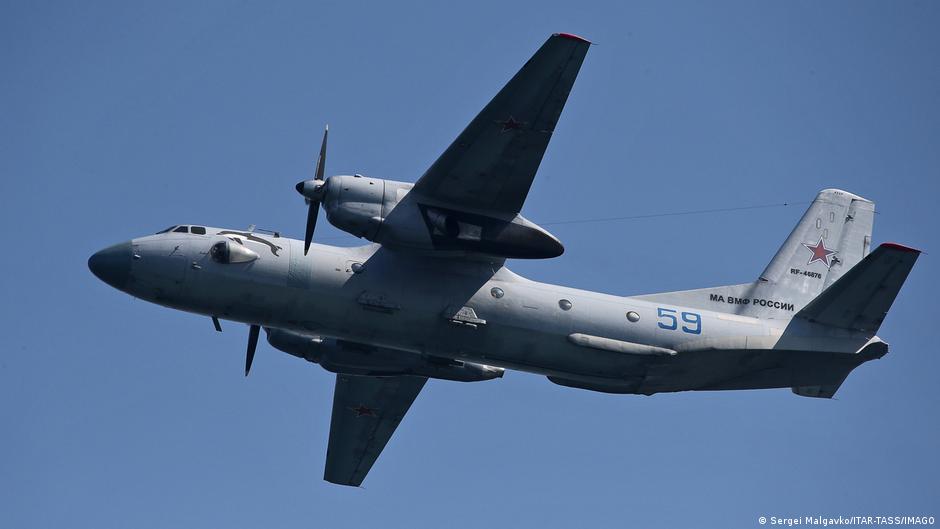
29 people were killed when an Antonov An-26 military transport crashed near Kuibyshevo in Russian-annexed Crimea on 31 March 2026; Russian agencies reported six (TASS) or seven (Investigative Committee) crew members and 23 passengers. The Defense Ministry cited a technical malfunction with no 'damaging interference' and the Investigative Committee has opened a criminal probe into flight safety violations; the incident heightens localized geopolitical risk but is unlikely to materially move broad markets beyond regional/defense sentiment.
This incident should be read as another data point in a persistent maintenance/attrition dynamic that has been degrading Russian tactical airlift and rotary-wing reliability for years. Expect localized reductions in sortie tempo around contested littoral hubs for weeks-to-months as commanders reallocate scarce serviceable airframes and impose safety inspections—a 10–20% short-term hit to scheduled tactical lift in contested corridors is plausible without immediate replacement capacity.
The immediate market transmission is indirect: accelerated demand for Western air-defence, ISR, and precision-munitions capabilities that offset Russian mobility advantages, and a parallel rise in premium for war-risk logistics and specialty maintenance/repair vendors operating in sanctioned or grey markets. Over a 3–12 month horizon this should translate into incremental contract flow for major defense primes and imagery/intelligence providers, and higher unit economics for niche MRO firms that can service legacy Soviet airframes via neutral intermediaries.
Catalysts to watch: (1) domestic crackdowns/groundings that temporarily reduce sortie rates within days, (2) rapid clandestine sourcing of spares or alternative resupply routes (sea/rail) that restore capacity within 4–12 weeks, and (3) a political decision to escalate or to re-prioritize logistics protections which could either amplify or blunt the demand impulse. Contrarian point: a single accident often drives disproportionate headlines; absent an operational grounding of a class of aircraft, the macro effect is diffuse—position sizing should reflect that uncertainty.
AI-powered research, real-time alerts, and portfolio analytics for institutional investors.
Request DemoOverall Sentiment
strongly negative
Sentiment Score
-0.70
