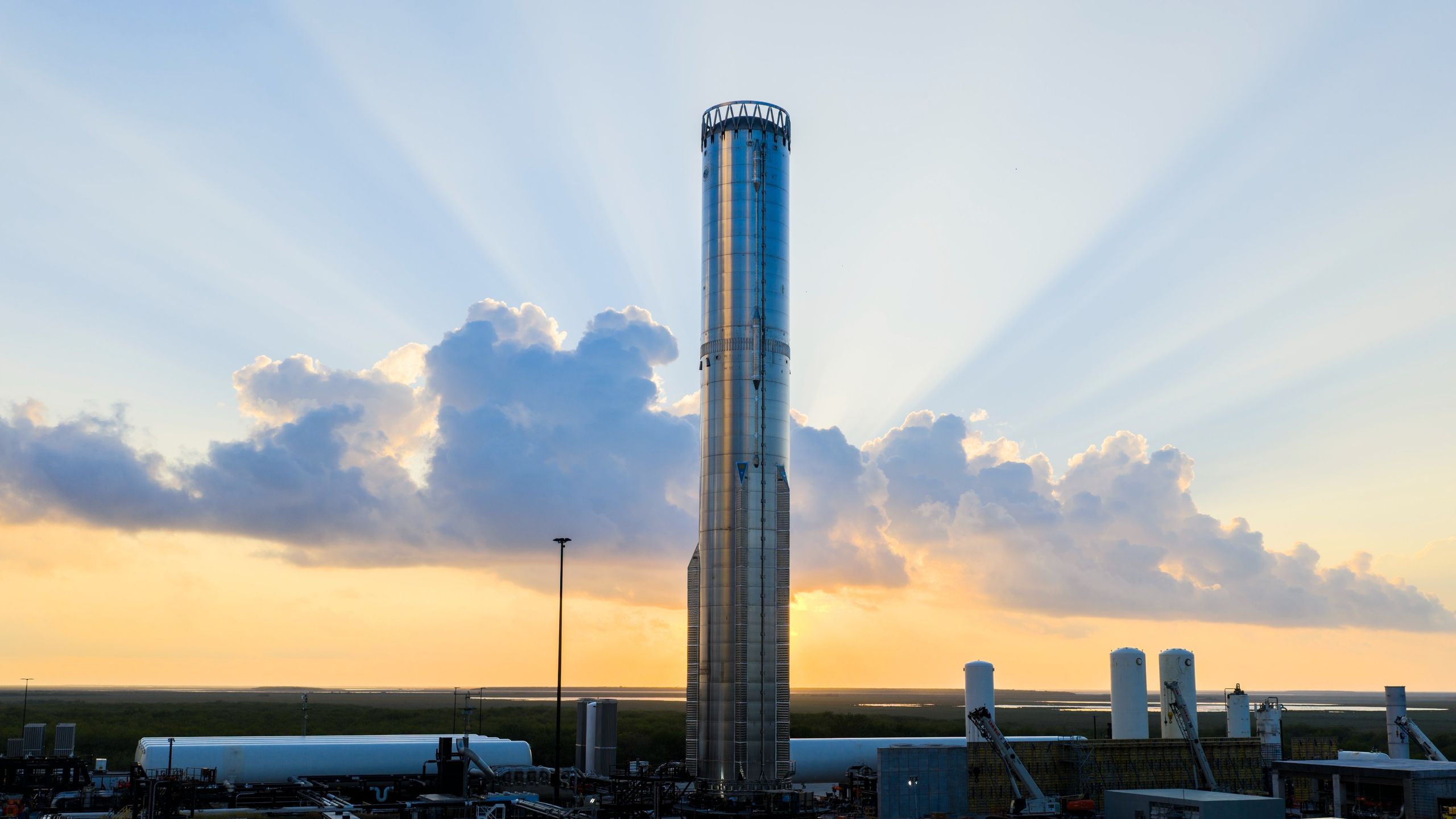
SpaceX's first 'Version 3' Super Heavy booster, Booster 18, suffered catastrophic buckling of its LOX tank during a gas‑system pressure test at Starbase; no propellant or engines were installed and no personnel were injured as teams investigate the anomaly. V3 — slightly taller than V2, with an integrated hot‑stage ring, upgraded Raptor 3 engines and three larger grid fins — was designed to advance Starship capability, but this structural failure will necessitate additional testing and likely slow program momentum. The incident heightens uncertainty around qualification of Starship as NASA's Artemis 3 lunar lander, could push internal timelines already sliding toward 2028, and reinforces NASA's interest in alternative lander options.
SpaceX's first Version 3 Super Heavy booster (Booster 18) suffered catastrophic buckling of the LOX tank section during a gas-system pressure test at Starbase on Nov. 20–21; SpaceX said no propellant or engines were installed, no personnel were injured, and teams are investigating the anomaly while securing the site. Visual reports and a company X post characterize the damage as significant to the liquid-oxygen tank, and SpaceX framed the test as preliminary operations to validate redesigned propellant systems and structural strength.
Version 3 is designed to be ~5 feet taller than V2, incorporate an integrated hot-stage ring, use upgraded Raptor 3 engines and three 50%-larger grid fins; the failure therefore raises direct questions about ground fueling and structural margins specific to V3's design changes. V2 completed five launches in 2025 with the last two deemed successes, so this setback threatens recently regained momentum and will require design fixes and additional proof tests before flight-readiness can be declared.
The incident increases schedule risk for NASA’s Artemis 3 lunar-lander contract (targeted internally for 2027 but pushed to 2028 in reports) and reinforces NASA interest in alternative landers; former NASA criticism of Starship’s unproven milestones (in-orbit cryogenic transfer and uncrewed lunar landings) amplifies programmatic uncertainty. Market signals show moderately negative sentiment and a modest market-impact score (sentiment_score -0.5; market_impact_score 0.35), implying event-specific downside for aerospace exposures but limited broad-market contagion unless investigations reveal systemic design flaws.
AI-powered research, real-time alerts, and portfolio analytics for institutional investors.
Request DemoOverall Sentiment
moderately negative
Sentiment Score
-0.50
