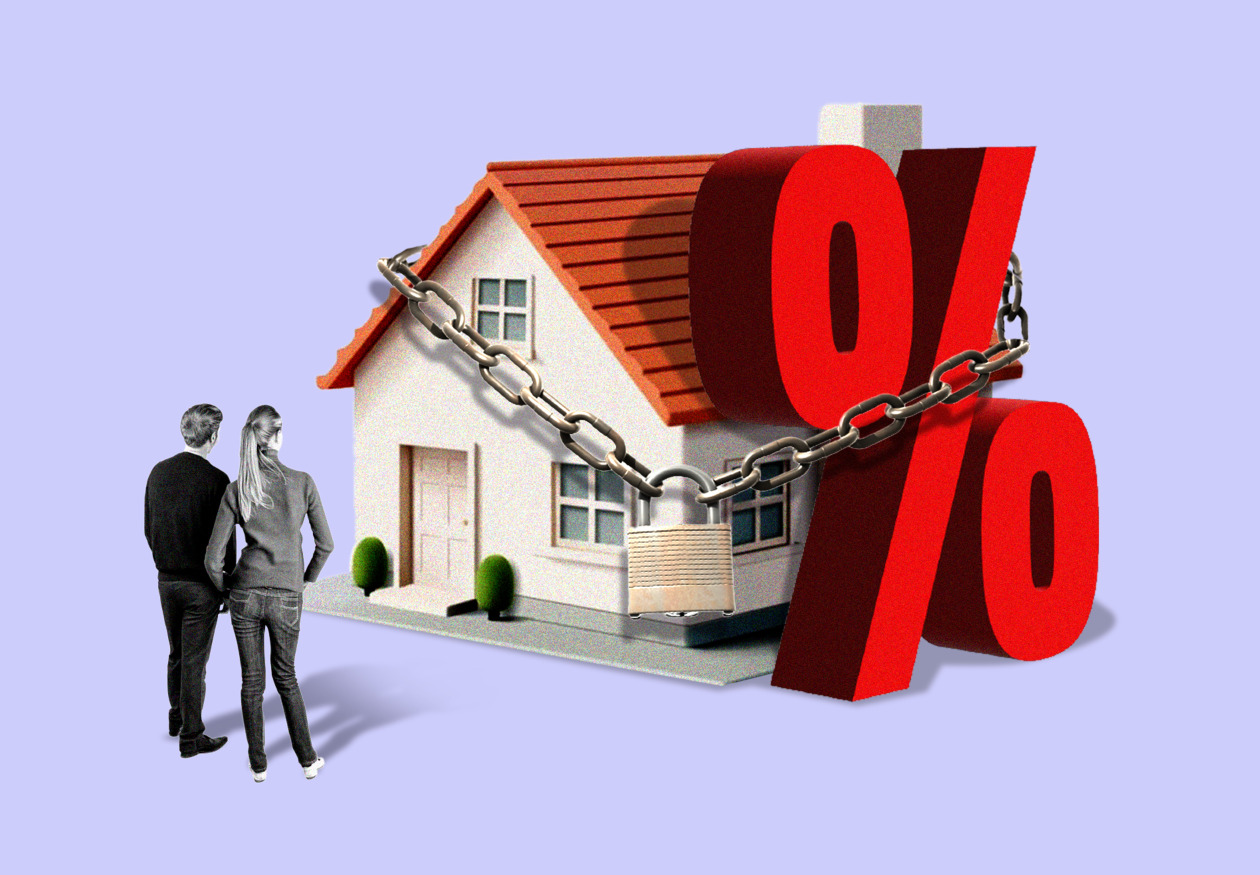
Mortgage rates rose to 6.37% Thursday as spring home buying remains volatile, prompting more buyers to consider locking in rates. The article frames rate-lock decisions as a response to whipsawing borrowing costs rather than a major shift in fundamentals. Impact is limited and primarily relevant to housing-market participants.
The immediate market implication is not just affordability stress; it is a sequencing issue. When mortgage shoppers lock earlier, they shorten the decision cycle and reduce optionality, which tends to pull demand forward in bursts rather than sustain it evenly — a setup that increases volatility in homebuilder order books and mortgage pipeline economics. That favors lenders and servicers with strong pull-through and hedging discipline, while exposing originators and builders to more quarter-to-quarter noise in volume and pricing power.
The second-order winner is likely not the homebuilder complex itself but the fee-based plumbing around it: title, appraisal, and mortgage servicing economics can improve if lock activity stays elevated even when purchase volumes remain choppy. Conversely, higher rate-lock usage can backfire for marginal borrowers if locked loans fail to close, creating higher fallout and wasted acquisition spend for lenders. Over the next 1-3 months, the key variable is not the level of rates alone but the direction of daily volatility; whipsawing yields generally help lenders with strong recapture, and hurt pure-play originators that rely on smooth funnel conversion.
The contrarian view is that “locking” may be a signal of fear, not strength. If buyers are rushing to secure rates, that can indicate deteriorating confidence in near-term affordability and a pending demand air pocket once the front-loaded cohort is absorbed. If rates stabilize or drift lower over the next 4-8 weeks, the current lock spike could reverse quickly, leaving short-duration mortgage desks overhedged and homebuilders with a false sense of demand durability.
AI-powered research, real-time alerts, and portfolio analytics for institutional investors.
Overall Sentiment
neutral
Sentiment Score
-0.05
